Ebook (EPUB)£85.00
IMESEdinburgh Studies on the Ottoman Empire
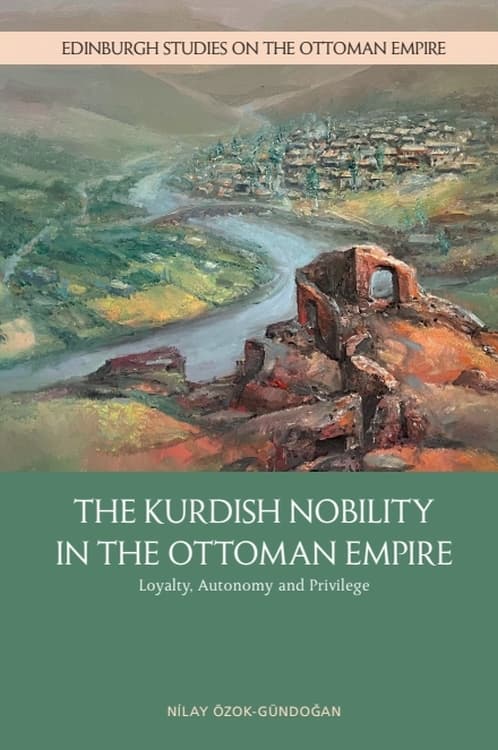
The Kurdish Nobility in the Ottoman Empire
Loyalty, Autonomy and Privilege

Our ebooks are read in the Academic Reader app. After you buy, we’ll email you how to open your ebook in it.
Description
Winner of the Ottoman and Turkish Studies Association Book Prize 2023
Studies the making and unmaking of the Ottoman Empire’s Kurdish nobility
- Challenges a long-standing spatial-geographical bias in Ottoman-Middle East history by bringing Kurdish and Armenian histories back into the Ottoman imperial framework
- Presents the first study to use the framework of hereditary nobility to examine Kurdish elite formation and its decline in the Ottoman Empire
- Demonstrates the complex social, economic and political background to massacres and pogroms that targeted the Armenian population of Palu before the Armenian Genocide
- Provides a much-needed bottom-up historical perspective to Kurdish and Armenian historiographies
- Uses an array of sources that includes Ottoman, British and American archival documents and interviews conducted with the Palu beys’ descendants
This book narrates the rise and fall of Kurdish nobility in the Ottoman Empire from the sixteenth through to the nineteenth century. Focusing on one noble Kurdish family based in the emirate of Palu, a fortressed town in the eastern provinces of the Ottoman Empire, it provides the first systematic analysis of the hereditary nobility in Kurdistan.
The book centres on the crucial moment in the 1840s during which the Ottoman state set out to abolish the hereditary privileges of the Kurdish beys, confiscating their large landholdings and setting the stage for a conflict over the fertile lands of Palu that would last nearly six decades. This tug-of-war between Armenian financiers, Armenian and Muslim sharecroppers, the Kurdish beys and the Ottoman state ended in 1895 with a series of massacres against the Armenian population of Palu. Through exhaustive archival research in an untapped body of sources, this book sheds light on the impact this conflict-filled process had on the intercommunal relations in the locality. In doing so, the author brings the voices of Armenian and Kurdish commoners to the fore and highlights the important roles that they, too, played in the local struggles and wider changes in governance.
As the first study to present the dissolution of the Kurdish nobility using a social history lens, the book gets to the heart of the historical transformations that changed Palu from a diverse and economically affluent town into an ethnoreligiously homogenised, culturally conservative and economically deprived place. Peppered with vignettes and stories culled from a wide range of archival sources, the author presents a cohesive narrative of the region’s socio-economic and political history between 1720 and 1895, situating developments taking place in the small province of Palu within the larger developments in the Ottoman Empire and the world at large.
Contents
Introduction
Part I: A Tenuous Accord
Chapter 1: At the Beginning: The Formation of the Kurdish-Ottoman Nobility of Palu in the Sixteenth Century
Chapter 2: Noble Privilege on the Ground, 1720s-1820s
Part II: A Quasi-Rift
Chapter 3: The Kurdish Nobility and the Making of Modern State Power in Kurdistan
Chapter 4: A System in Transition: Negotiating Nobility in the Locality
Chapter 5: The Weşin Incident: The Spark that Burnt a Village...And the Arsonist
Part III: Restructuring and Violence
Chapter 6: After Abdullah Beg: The Politics of Dividing the Kurdish Nobles' Lands
Chapter 7: Provincial Administration After the Palu Nobility
Chapter 8: The Beginning of the Endgame? The Road to the 1895 Massacres in Palu
Conclusion
Author
Reviews
This path breaking, meticulously researched, and beautifully written study transforms how we think about the place of Kurdistan in Ottoman history. Özok-Gündoğan’s compelling account of the shifts in Ottoman governance includes and acknowledges the centrality of those actors—Kurds and Armenians—who are often left out of mainstream narratives of Ottoman history without bowing to post-imperial nationalist histories. A major contribution on so many levels, this book shakes up how we understand Ottoman nobilities, ethno-religious violence, and the making of the modern state, and should be read by specialists and non-specialists alike.
This book is enriched by the author’s impeccable efforts to link social, economic, environmental, military, domestic, and foreign political factors. It is a must-read for anyone working on the eastern provinces of the Ottoman Empire, on Ottoman imperial rule, the Tanzimat, privatization of property, and Kurdish and Armenian history.
[C]ombines meticulous archival research with a profound theoretical sophistication. This combination results in a work that considerably advances our knowledge of the dynamics that shaped the social and political evolution of Ottoman Kurdistan.
[A] scholarly masterpiece that deconstructs and reconstructs conventional ways of viewing Kurdish and Ottoman history
This empirically rich and theoretically sophisticated book addresses multiple complex topics, including ongoing debates about the existence of hereditary, de jure nobility in the Ottoman Empire, landholding patterns, land privatization, and the long-durée effects of changes in landholding regime on inter-communal relations.
Goes well with this book
From the same series or subject.
- The Kurdish Nobility in the Ottoman Empire, Ebook (EPUB), £31.00
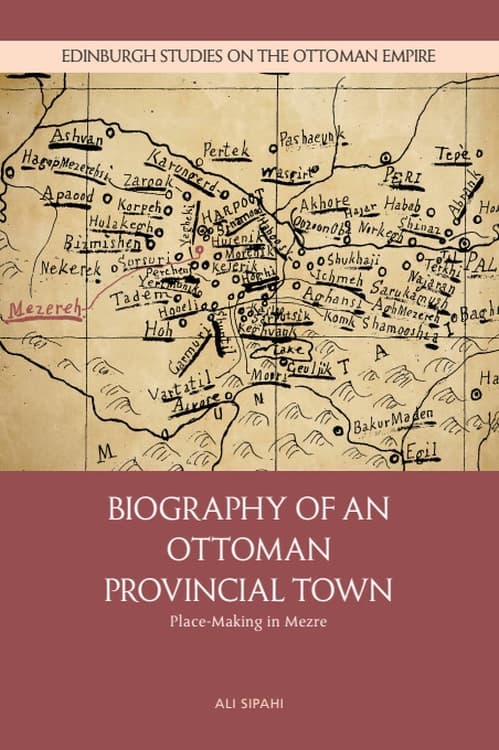
- Biography of an Ottoman Provincial Town, Ebook (EPUB), £85.00
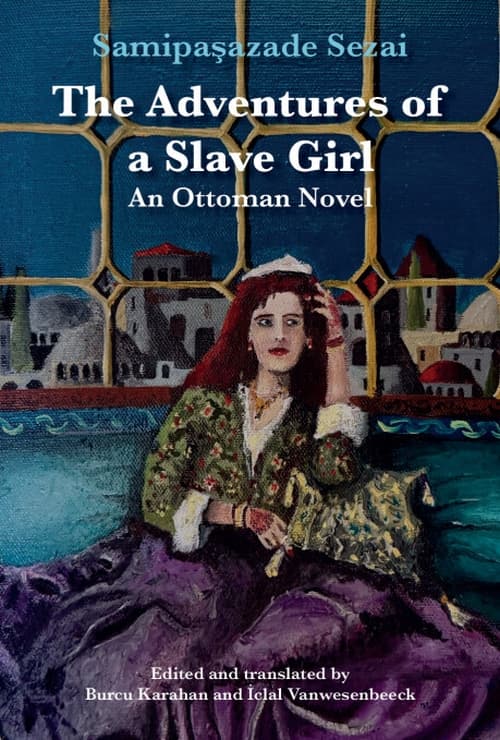
- The Adventures of a Slave Girl, Ebook (EPUB), £14.99
From the same series
More in Edinburgh Studies on the Ottoman Empire
Ebook (EPUB)£14.99
Ebook (EPUB)£95.00
Ebook (EPUB)£105.00
Ebook (EPUB)£95.00
Paperback£24.99
Ebook (EPUB)£19.99
Ebook (EPUB)£19.99
Ebook (EPUB)£24.99
Ebook (EPUB)£24.99
Ebook (EPUB)£24.99
Ebook (EPUB)£21.99
More in IMES
View all
Ebook (EPUB)£90.00
Ebook (EPUB)£100.00
Ebook (EPUB)£95.00
Ebook (EPUB)£175.00
Ebook (EPUB)£95.00