Ebook (EPUB)£85.00
IMESEdinburgh Studies on the Ottoman Empire
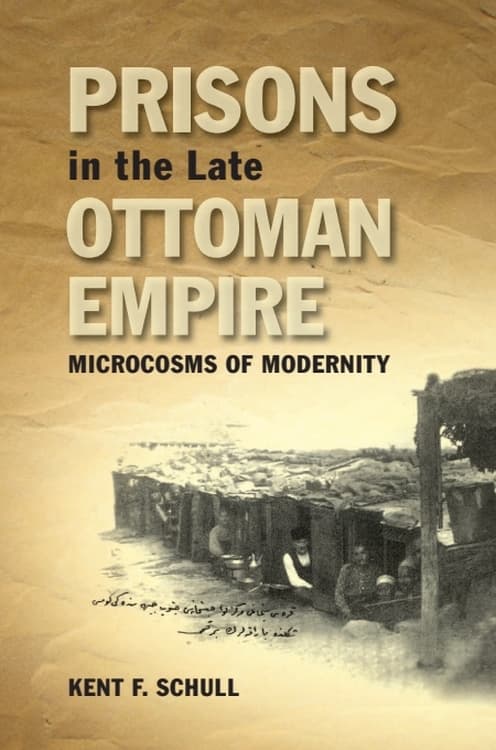
Prisons in the Late Ottoman Empire
Microcosms of Modernity
Open access
Open access under CC-BY-NC 4.0
Description
Revises Western images of Ottoman prisons as sites of Oriental brutality
Read an interview with Kent F. Schull about the book (pdf)
Listen to Kent Schull explore the lives of Ottoman prisoners on The Ottoman History Podcast
The Western world stereotypically associates Ottoman or 'Turkish' prisons with images of torture, narcotics and brutal sexual behaviour. Now, Kent F. Schull argues that these prisons were actually a site of immense reform and contestation during the 19th century.
Schull shows that prisons were key components for Ottoman nation-state construction and acted as 'microcosms of modernity' for broader imperial transformation. It was within the walls of these prisons that many of the pressing questions of Ottoman modernity were worked out.
By juxtaposing them with the reality of prison life, Schull investigates how state-mandated reforms affected the lives of local prison officials and inmates. He shows how these individuals actively conformed to, contested and manipulated new penal policies and practices for their own benefit.
Key Features- Shows how prisons were key to resolving questions of administrative centralisation, Islamic criminal law and punishment, gender and childhood, prisoner rehabilitation, bureaucratic professionalisation, identity and social engineering
- Heavily critiques Michel Foucault's approach to punishment, state power, and society by applying it to a non-Western context
- Presents penal institutions in this period as complex social institutions that act as windows to broader cultural, ideological and social issues
- Covers key issues including juvenile delinquents, corruption, prisoner abuse, female prisoners and Islamic criminal law reform
Contents
List of Illustrations; List of Abbreviations; Note on Transliteration and Pronunciation; Preface; Introduction; 1. Ottoman Criminal Justice & the Transformation of Islamic Criminal Law and Punishment in the Age of Modernity, 1839-1922; 2. Prison Reform in the Late Ottoman Empire: the State’s Perspectives; 3. Counting the Incarcerated: Knowledge, Power & the Prison Population; 4. The Spatialisation of Incarceration: Reforms, Response & the Reality of Prison Life; 5. Disciplining the Disciplinarians: Combating Corruption and Abuse through the Professionalisation of the Prison Cadre; 6. Creating Juvenile Delinquents: Redefining Childhood in the late Ottoman Empire; Conclusion; Bibliography; Index
Author
Reviews
In this theoretically and empirically rich account Kent Schull shows how prisons, prisoners, and prison reform fit in the transformation of the Ottoman state in the nineteenth century. By shedding light on a much neglected aspect of Ottoman state practice, this book significantly improves our understanding of one of the most crucial periods in Ottoman history.
A well-documented contribution to the budding historiography of Middle Eastern prisons but also to the study of late Ottoman reform. Schull cogently argues that Ottoman prison reform as well as Ottoman reform in general were not just imitations of Western examples, but rather distinctly Ottoman responses to internal crises and Western encroachments.
Goes well with this book
From the same series or subject.
From the same series
More in Edinburgh Studies on the Ottoman Empire
Ebook (EPUB)£14.99
Ebook (EPUB)£95.00
Ebook (EPUB)£105.00
Ebook (EPUB)£95.00
Paperback£24.99
Ebook (EPUB)£19.99
Ebook (EPUB)£19.99
Ebook (EPUB)£24.99
Ebook (EPUB)£24.99
Ebook (EPUB)£24.99
Ebook (EPUB)£21.99
More in IMES
View all
Ebook (EPUB)£90.00
Ebook (EPUB)£100.00

Ebook (EPUB)£95.00

Ebook (EPUB)£175.00
Ebook (EPUB)£95.00