Ebook (EPUB)£90.00
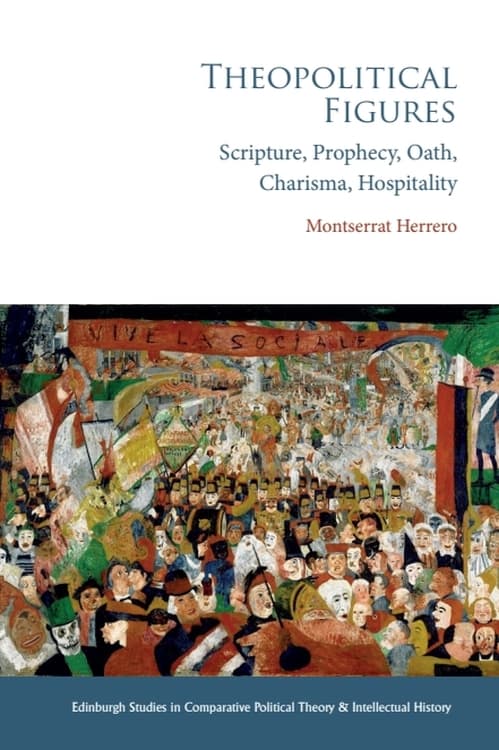
PoliticsEdinburgh Studies in Comparative Political Theory and Intellectual History
Theopolitical Figures
Scripture, Prophecy, Oath, Charisma, Hospitality

Our ebooks are read in the Academic Reader app. After you buy, we’ll email you how to open your ebook in it.
Description
Examines the meaning of five theopolitical figures – scripture, prophecy, oath, charisma and hospitality – in contemporary philosophical-political discourse
- Re-inscribes contemporary political concepts and experiences in the 'theological locus' from which they supposedly come and at the same time looks for new semantic derivations for the political arena
- Engages with various 20th century continental philosophers, including Walter Benjamin, Jacques Derrida, Jean-Louis Chrétien, Michel Foucault, Giorgio Agamben, Jean-Luc Nancy, John Caputo, Jean Luc Marion among others
- Brings into dialogue discussions of theological literature and history
- Combines philosophical reflection with case studies of the political interpretation of the Bible; the Lisbon earthquake of 1755; the transferences between oath and sacrament in early Christianity; and acclamations from the imperial cult to modern autocracies
- Considers different theological traditions of thought, mainly, Christian and Jewish
This book explores the extent to which theological discourse has been, and continues to be, relevant in shaping the meanings, symbols and realities of certain instituted political practices. This relevance has historically manifested itself in the hybridisation of theological and political concepts, images, gestures, and rituals.
Combining theological and political concepts, Herrero shows that some divine traces could be embedded in institutionalised political practices. She argues that these theopolitical figures – scripture, prophecy, oath, charisma and hospitality – should be read negatively as other names of God, in the sense of a negative theology, in the post-secular world. By analysing the symbolic meaning of these figures, Theopolitical Figures sheds new light on crucial questions for contemporary societies, such as the unconditional character of justice, the unfeasibility of historical expectation, the stability of the word, the idea of power as a gift, and openness to otherness as an ethical-political imperative.
Contents
AcknowledgementsIntroduction: The Theological Turn In Political PhilosophyChapter 1. Scripture Or The Un-Conditional Character Of JusticeChapter 2. Prophecy Or The De-Construction Of Historical ExpectationChapter 3. Oath Or The Given WordChapter 4. Charisma Or The Power As GiftChapter 5. Hospitality Or The Limits Of The Political CommunityEpilogueBibliography
Author
Reviews
An indispensable cartography for the overlap of three vital areas: the field of political theology, the state of the post-secular theological turn in philosophy, and the rethinking of community from the standpoint of the gift.
The relationship between the sacred and the civil defines the stakes of a postsecular era. Montserrat Herrero’s new book is a significant contribution to rethinking the political as a figure of the divine and the divine as the apophatic engine of the political. The booming literature on political theology is enriched with an indispensable volume.
Herrero has penned a magnificent book that enhances our comprehension of politics, not as an isolated sphere separated from theology, but rather as one where theology serves as a catalyst for political figurations.
Goes well with this book
From the same series or subject.
- Theopolitical Figures, Ebook (EPUB), £24.99
- Herodotus and the Birth of Freedom, Ebook (EPUB), £90.00
- Machiavelli and the Religion of the Ancients, Ebook (EPUB), £95.00

From the same series
More in Edinburgh Studies in Comparative Political Theory and Intellectual History
Ebook (EPUB)£95.00
Ebook (EPUB)£90.00
Ebook (EPUB)£24.99
Ebook (EPUB)£24.99
Ebook (EPUB)£24.99

Ebook (EPUB)£25.99
Ebook (EPUB)£20.99

Ebook (EPUB)£25.99
Ebook (EPUB)£20.99

Ebook (EPUB)£26.99
More in Politics
View all
Ebook (EPUB)£25.00

Ebook (EPUB)£25.00

Ebook (EPUB)£16.99

Ebook (EPUB)£24.99