Ebook (EPUB)£90.00
PoliticsEdinburgh Studies in Comparative Political Theory and Intellectual History
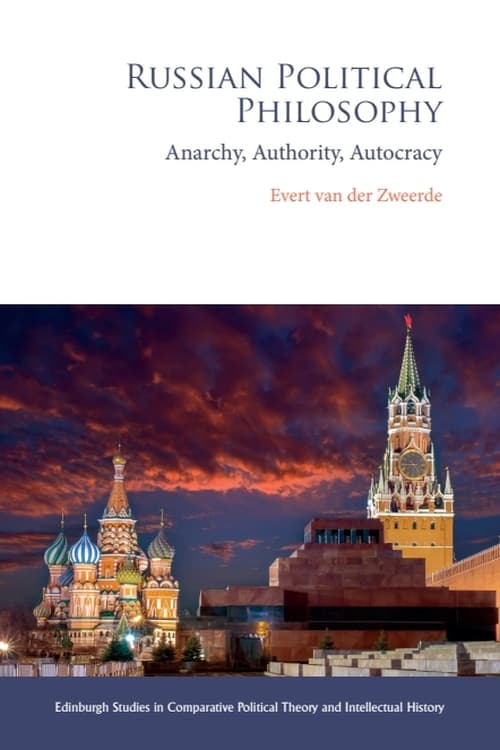
Russian Political Philosophy
Anarchy, Authority, Autocracy

Our ebooks are read in the Academic Reader app. After you buy, we’ll email you how to open your ebook in it.
Description
Opens a window on the ways in which Russian thinkers have historically considered the political
- Highlights the common traits that bind together Russian political philosophers, as well as their divergences, using a clear conception of political philosophy
- Juxtaposes pairs of authors who address a shared problem in contrasting ways to highlight conflicts and disputes
- Introduces less well-known thinkers (S.L. Frank, V.S. Nersesyants) and offers alternative perspectives on widely known ones (M.A. Bakunin, V.I. Lenin, N.A. Berdyayev, V.S. Solov’ëv, M.K. Mamardashvili)
- Demonstrates the specific character of the Russian tradition in political philosophy as distinctly European while also consciously different in many respects
- Utilises existing translations of primary sources, making a world of thought accessible to those who do not read Russian
Political philosophy in Russia has always sought, and sometimes found, a middle way between embracing anarchy and searching for authority. Political philosophy in Russia has never before been the subject of a scholarly monograph. While historical factors make this understandable, the topic deserves our attention more than ever, now that Russia, after a short Soviet century, has regained self-assurance as a world power. Its unique historical trajectory, and the specific role of philosophy in it, are of interest to many fields of research and, beyond that, broader audiences. A focus on political philosophy as it existed and exists in Russia despite periods of marginalisation and suppression, allows us to understand its specific character, importance and relevance, and to realise that, in trying to think philosophically, critically, and reflectively about the political reality that shapes them, Russian thinkers are not essentially different from philosophers elsewhere. Hence, many lessons that can be learned from this subject.
Contents
Introduction - The Origins of Political Philosophy in Russia
- First Debates in Russian Political Philosophy – ‘What Is to be Done?’
- Socialism and Marxism in Russia: The Peasant Commune is Dead - Long Live the Peasant Commune!
- Christian Political Philosophy in a Modernising World - Preparing for God’s Kingdom
- Russian Liberalism Revisited - Between a Rock and a Hard Place
- The Long Russian Revolution - Signposts for a Roller Coaster
- Soviet Marxism-Leninism and Political Philosophy - Never Mind the Gaps!
- Christian Political Philosophy in Exile: Between Sobornost’ and Theocracy
- Counter-Soviet Political Philosophy in Emigration - Beyond the Pale
- Late and Early Post-Soviet Political Philosophy - Licking the Wounds
- Political Philosophy for a New Russia - New Wine in Old Bottles?
Conclusion: Mediation Beyond Duality and Immediacy
Author
Reviews
In this new book, Zweerde traces Russian political philosophy from the Tsarist era to the present. The author asserts that understanding Russian political philosophy requires a knowledge of the context and history of Russian geography and politics. The study begins by underscoring the importance of three factors shaping Russia’s political thought: the early Republican veche and zemstvo traditions, the legacy of the Byzantine era, and the centralized state during the Mongol invasions. From there, the book provides a detailed, thorough analysis of Russia’s political philosophy. Indeed, the breadth and depth of the study is impressive. With Russia once again in the world’s spotlight, Zweerde’s study provides excellent insight into the long and varied history of Russia’s political thought. Summing Up: Highly recommended. Graduate students, faculty, and researchers.
In this new book, Zweerde traces Russian political philosophy from the Tsarist era to the present. The author asserts that understanding Russian political philosophy requires a knowledge of the context and history of Russian geography and politics. The study begins by underscoring the importance of three factors shaping Russia’s political thought: the early Republican veche and zemstvo traditions, the legacy of the Byzantine era, and the centralized state during the Mongol invasions. From there, the book provides a detailed, thorough analysis of Russia’s political philosophy. Indeed, the breadth and depth of the study is impressive. With Russia once again in the world’s spotlight, Zweerde’s study provides excellent insight into the long and varied history of Russia’s political thought. Summing Up: Highly recommended. Graduate students, faculty, and researchers.
A masterful, substantial, unique study of political thought in Russia to the present, doubling de facto as political history. Van der Zweerde presents salient personalities and themes keeping a close eye on the sucessive social contexts framing them and informs the account by his philosophical conception of 'the political’. Essential reading!
Goes well with this book
From the same series or subject.
- Russian Political Philosophy, Ebook (EPUB), £25.99
- Herodotus and the Birth of Freedom, Ebook (EPUB), £90.00
- Machiavelli and the Religion of the Ancients, Ebook (EPUB), £95.00
From the same series
More in Edinburgh Studies in Comparative Political Theory and Intellectual History
Ebook (EPUB)£95.00
Ebook (EPUB)£90.00
Ebook (EPUB)£24.99
Ebook (EPUB)£24.99
Ebook (EPUB)£24.99
Ebook (EPUB)£24.99
Ebook (EPUB)£25.99
Ebook (EPUB)£20.99
Ebook (EPUB)£20.99
Ebook (EPUB)£26.99
More in Politics
View all
Ebook (EPUB)£25.00
Ebook (EPUB)£25.00
Ebook (EPUB)£16.99
Ebook (EPUB)£24.99