Ebook (EPUB)£90.00
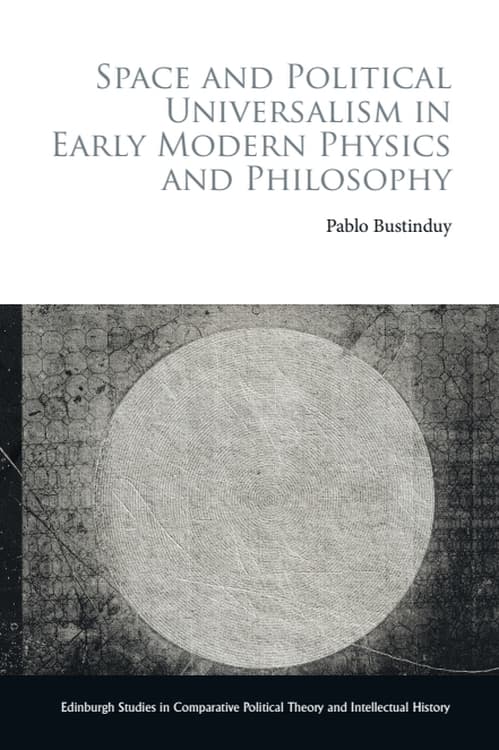
PoliticsEdinburgh Studies in Comparative Political Theory and Intellectual History
Space and Political Universalism in Early Modern Physics and Philosophy

Our ebooks are read in the Academic Reader app. After you buy, we’ll email you how to open your ebook in it.
Description
Examines how the imagination of space in the early modern period influenced the development of the modern concept of political universalism
- Offers a history and genealogy of the concept of space in the European philosophical tradition
- Presents the political effects of the modern cosmological transition
- Provides a systematic critique of the Westphalian logic of the State as absolute, universal, autonomous and unique
- Gives an account of the developments and contradictions of abstract universalism, and its philosophical entanglement with the European colonial project and the nascent logic of capitalism
- Discusses the emancipatory content of universalism and the philosophical causes and effects of its contemporary crisis
How did early modern philosophy of space shape the modern concept of political universalism? In this book, Pablo Bustinduy persuasively argues that political universalism emerged from both the developments of Newtonian science and the formulation of the modern philosophy of the State. In the metaphysics of an open, empty, abstract and absolute space, Bustinduy suggests, the universalist project of modern politics found its logical model and foundation. There, the anxiety of a dislocated world was overcome, and the ontology of modern physics found a specific political expression that, despite being besieged by multiple crises, still animates our political imagination.
By offering a political reading of early modern philosophy of space, Space and Political Universalism in Early Modern Physics and Philosophy reveals the connections between the logical development of early modern science, the contemporary elaborations of the philosophy of the State, and the historical articulations of the Westphalian system, early capitalist social formations, and the European colonial project. In doing so, it offers a powerful reflection on how we might detach democracy from the 'perilous metaphysics' of infinite space that has engendered political violence and domination, positing space as an emptiness that prevents the closure of the political itself.
Contents
Introduction: Political Cosmologies The return of spaceTo be in placeBroken spheresThe logic of spaceThe empty space of modern politicsSpatial crisis
PART 1. Principles of space in classical physics and cosmology
Chapter 1. Unbounded. The limits of place1.1 The limitless as principle1.2 Place is the first of things1.3 Is there something beyond the heavens?1.4 The last of the spheres: Aristotle’s cosmology of place
Chapter 2. Void. Nothingness as a cosmological principle2.1 Against the void. Infinity and limitation2.2 Thing is no more than nothing: the early atomists2.3 Void and infinite: empty space in Epicurus and Lucretius2.4 A sphere surrounded by nothing: Stoic cosmologies
Chapter 3. Incorporeality. Dimension distinct from body3.1 The cosmological origin of incorporeal space: John Philoponus3.2 The problem of motion in immaterial space3.3 Being, space and the materiality of things. The legacy of Plato’s Timaeus3.4 Order and dimension: the determination of space in Neoplatonism
Chapter 4. Immensity. Space as a theological problem4.1 The spatial paradox of ubiquity4.2 To speak from afar. Augustine’s theology of space4.3 Imaginary space and divine immensity4.4 The world as an infinite sphere
PART 2. The metaphysical assertion of space in early modern natural philosophy
Chapter 5. Infinity. The universe as one5.1 Actual infinities. The identity of metaphysics and cosmology5.2 The loss of cosmic centers5.3 Kepler’s nightmare: the breaking of spheres5.4 From inertia to gravitation. One law for all
Chapter 6. Emptiness. Space as void and equal to itself6.1 Space as a real and independent entity6.2 Space as emptiness: the return of void space6.3 Not fully void: subtle matter and the problem of ether6.4 The spatial contradiction of early modern science
Chapter 7. Abstraction. Rational mechanics7.1 Mathematics as the logic of nature7.2 The geometrization of space7.3 Relative space and the problem of motion7.4 The abstraction of space in Newtonian mechanics
Chapter 8. Absoluteness. The logic of space8.1 Space as absolute: on metaphysical necessity in the Principia8.2 Two infinities. Theology of space in More and Newton8.3 The theological reduction of absolute space8.4 Emancipation of absolute space: abstract universalism
PART 3. The physico-political logic of modern space
Chapter 9. Freedom in an infinite universe 9.1 The logic of place: order, position and limit 9.2 Beautiful wholes. Place in Christian metaphysics 9.3 Infinite space and the metaphysics of openness 9.4 Disproportion of man: Pascal’s problem
Chapter 10. Metaphysics of equality 10.1 Political places: a topology of the polis 10.2 To follow nature. Politics as the order of things 10.3 Broken chains. The political emptying of nature 10.4 The empty space of modern politics
Chapter 11. Political universals 11.1 Closure of the void. Space in the state of nature 11.2 The logic of projection. Space and universality 11.3 Colonial geometries 11.4 Political mechanicism. The physics of power
Chapter 12. The autonomy of politics12.1 Space and political theology12.2 Absolute and relative: an ontology of limits12.3 Modern spheres. Space as a political transcendental12.4 Critique of the political void
CONCLUSION. Democracy and the critique of space
The forgetfulness of spacePolitical nowheresThe spatial contradictions of modern universalismA space with no outsideOn what is emptyThe striated polisDemocracy at the limit
BIBLIOGRAPHY AND WORKS CITED
Author
Reviews
Full of original insights and crisp aphoristic formulations, Pablo Bustinduy’s book examines the emergence of the concept of infinite, empty, and absolute space. This highly innovative study connects modern political power in its tensions, contradictions, and ambiguities to a new understanding of spatiality.
Goes well with this book
From the same series or subject.
- Space and Political Universalism in Early Modern Physics and Philosophy, Ebook (EPUB), £24.99
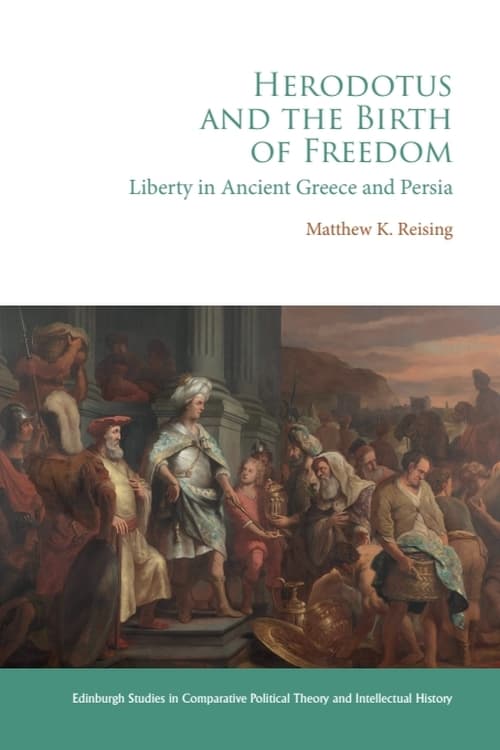
- Herodotus and the Birth of Freedom, Ebook (EPUB), £90.00
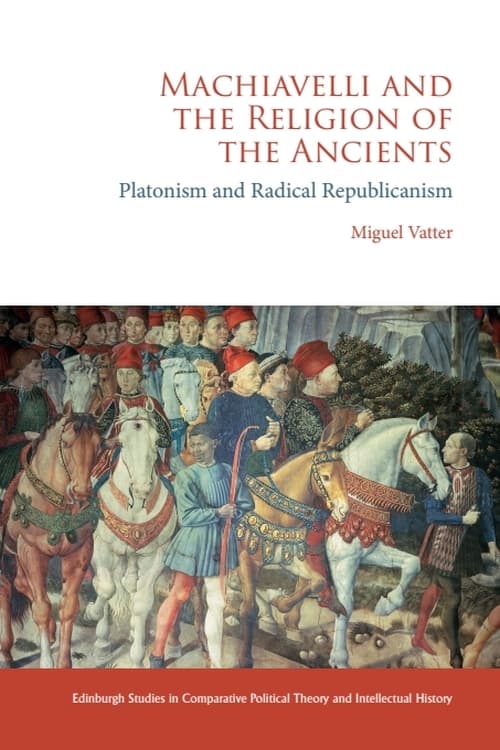
- Machiavelli and the Religion of the Ancients, Ebook (EPUB), £95.00
From the same series
More in Edinburgh Studies in Comparative Political Theory and Intellectual History
Ebook (EPUB)£95.00
Ebook (EPUB)£90.00
Ebook (EPUB)£24.99
Ebook (EPUB)£24.99
Ebook (EPUB)£24.99
Ebook (EPUB)£25.99
Ebook (EPUB)£20.99
Ebook (EPUB)£25.99
Ebook (EPUB)£20.99
Ebook (EPUB)£26.99
More in Politics
View all
Ebook (EPUB)£25.00
Ebook (EPUB)£25.00

Ebook (EPUB)£16.99

Ebook (EPUB)£24.99