Ebook (EPUB)£90.00
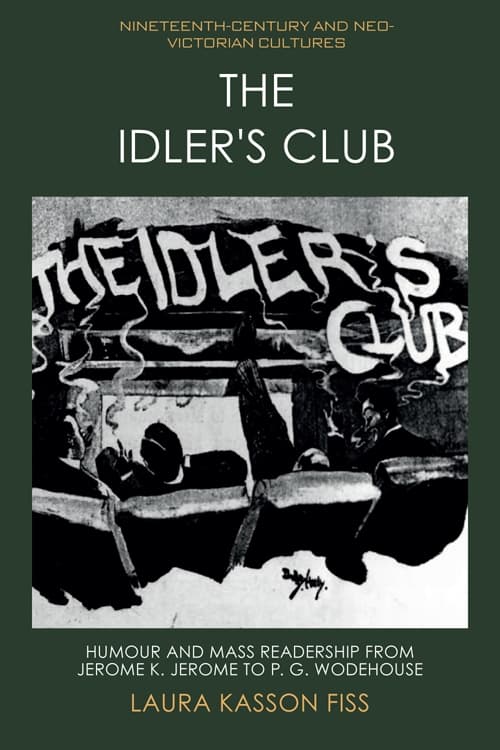
Literary StudiesNineteenth-Century and Neo-Victorian Cultures
The Idler's Club
Humour and Mass Readership from Jerome K. Jerome to P. G. Wodehouse

Our ebooks are read in the Academic Reader app. After you buy, we’ll email you how to open your ebook in it.
Description
Investigates whether a popular magazine can promote social mobility by joking about clubs
- Focuses on Victorian humour, a subject that is undergoing a renaissance
- Primary sources are mainly published literary works, both periodicals and books
- Connects, biographically and stylistically, figures that have developed disparate reputations
- Treats well-known, yet under-studied, popular authors: Jerome K. Jerome and P. G. Wodehouse especially
- Treats lesser-known or lesser-studied works by authors who attract more critical attention: J. M. Barrie, G. K. Chesterton, Robert Louis Stevenson and Israel Zangwill
- Introduces humour into the discussion of feelings about reading
Poking fun at Victorian social clubs became a way of asserting and redefining social belonging. At the turn of the century, amid intense social change, the club became the subject of sustained humour in the Idler magazine and its circle, from editors Jerome K. Jerome and Robert Barr to J. M. Barrie, Arthur Conan Doyle, Barry Pain, Israel Zangwill, and even P. G. Wodehouse. Rather than doing away with the club itself, these authors embraced the paradoxes of the club and re-defined it as a space of possibility. Their humorous, fictional clubs aided the social mobility of the authors who created them, who in turn served as models for the readers who might never cross the literal thresholds of Clubland.
Contents
Introduction: Imagining Clubland Clubs and Print Culture The Idler’s Club Forms Humour and Sociability Chapter Descriptions
Chapter 1. Club Chatter, Gossip, and Smoking: The Idler’s Club Column as a Reader’s Space Smoking as a Metaphor for Reading The Establishment of the ‘Idler’s Club’: A Close Environment Widening the Club The Reader in The Idler’s Club
Chapter 2. The Pressroom and the Clubroom: Working Women and Idling Men in Jerome K. Jerome’s Tommy and Co. A Man’s View of Newspaperwomen ‘A New Species’ Androgyny and Good Humour Miss Ramsbotham The Subeditor’s Happy Endings ‘Why should not the paper as a whole appeal to her?’
Chapter 3. The Club Story and Social Mobility: Rules for Readers in Israel Zangwill and Barry Pain Misogyny or Misogamy? Rules for Bachelors (and Readers) No One Draws the Old Maid The Proposal Club In Which There are Surprisingly Few Actual Problems Gender Problems Failing at Failure The Pathos of Social Mobility
Chapter 4. The Mysteries of Male Friendship: Uncovering the Club in Stevenson, Doyle, Chesterton, and Sayers From Cream Tarts to Suicide Baker Street vs. the Clubs Queer Trades, Queer City A Joke Made Horribly Real Conclusion
Chapter 5. Through a Club Window Wistfully: J. M. Barrie and the Politics of Social Awkwardness The Scotch Humourist A Comedy of Anonymity A Highly Anti-Social Society Sociable Unsociability ‘The Pleasantest Club in London’ Unclubbability as Class Privilege
Chapter 6. Idlers and Drones: P. G. Wodehouse and Twentieth-Century Class Confusion ‘Slip a Ferret into Any Good Club’ Calling Clubs’ Bluff Joking about Socialism The Butler and the Earl Clubs for Readers Conclusion: Mass Readership, Then and Now Appendix: The Numbers on Women in "The Idler’s Club" Methodology Discussion
Conclusion Figures Bibliography Notes
Author
Reviews
Laura Fiss introduces us to the imagined community of a virtual club in "The Idler’s Club," a column in The Idler, and clubland novels by its key contributors: Arthur Conan Doyle, Jerome K. Jerome, Israel Zangwill, James Barrie, and the transitional figure P. G. Wodehouse. This deeply-researched study, like the understudied works it recovers, is spiced with humor and repays sustained attention.
Goes well with this book
From the same series or subject.
- The Idler's Club, Ebook (EPUB), £25.99
- Victorian Literature, Queer Longing and the Shore, 1840–1920, Ebook (EPUB), £90.00
- The British Public and the British Museum, Ebook (EPUB), £95.00
From the same series
More in Nineteenth-Century and Neo-Victorian Cultures
Ebook (EPUB)£95.00
Paperback£24.99
Paperback£24.99
Ebook (EPUB)£19.99
Ebook (EPUB)£19.99
Ebook (EPUB)£19.99
Ebook (EPUB)£24.99
Ebook (EPUB)£24.99
Ebook (EPUB)£24.99
Ebook (EPUB)£24.99
Ebook (EPUB)£19.99
More in Literary Studies
View all
Ebook (EPUB)£125.00
Ebook (EPUB)£110.00
Ebook (EPUB)£90.00
Ebook (EPUB)£90.00
Ebook (EPUB)£90.00