Ebook (EPUB)£90.00
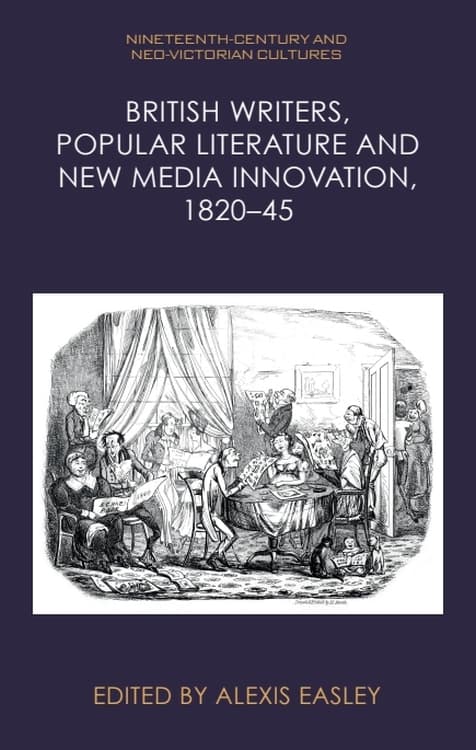
Literary StudiesNineteenth-Century and Neo-Victorian Cultures
British Writers, Popular Literature and New Media Innovation, 1820–45

Our ebooks are read in the Academic Reader app. After you buy, we’ll email you how to open your ebook in it.
Description
The first edited essay collection of its kind to focus on innovators and innovations in the mass-market press from 1820–45
- Explores 1820–45 as a crucial era in the development of the modern press
- Promotes greater understanding of the period between 1820 and 1845 as an era of innovation in nineteenth-century print culture
- Each chapter is designed as a case study that models ways of entering into a vast field of study, drawing attention to the interactivity of readers, editors, publishers and print forms in a period of unprecedented change
- Draws attention to the ways in which our access to this history is enabled by twenty-first-century technologies – digitization, keyword searches and distant reading – that provide access to the periodicals, newspapers and rare books that fuel and shape our research
- Explores intersections between periodicals, books and newspapers within the media system of the period, demonstrating how change affected not only individual titles but also a broader media ecology in which old media were adapted to new contexts and the launch of new publications produced and harnessed new readerships
The emergence of a mass reading public during the early decades of the nineteenth century sparked a period of creative innovation in the popular press. This collection focuses on the early decades of the nineteenth century as a key period of innovation in the popular press. Steam printing, popular education campaigns, and new technologies of illustration led to new trends in book and periodical production.
Contents
List of Illustrations
Acknowledgements
Series Preface
Notes on Contributors
Introduction, Alexis Easley
1. ‘Collect and Simplify': Serial Miscellaneity and Extraction in the Early Nineteenth Century, Mark Turner
2. William Hazlitt and Celebrity Culture: Periodical Portraits in an Age of Public Intimacy, Chris Haffenden
3. Periodical as Memorial: Remembering Felicia Hemans in The New Monthly Magazine, 1835, Elizabeth Howard
4. ‘Mirth' and 'Fun': The Comic Annual and the New Graphic Humour of the 1830s, Brian Maidment
5. Fauna, Flora and Illustrated Verse in Mary Howitt’s Environmental Children’s Poetry, Linda K. Hughes
6. Literature, Media and the 'Advertising System’, Richard Salmon
7. Keeping 'pace with the growing spirit of the times': The Women’s Magazine in Transition, Jennie Batchelor
8. Beyond the Literary Annuals: Felicia Hemans, Letitia Elizabeth Landon and Periodical Poetry, Caley Ehnes
9. A Familiar Transition: Dinah Mulock Craik’s Early Career in Periodicals, 1841–5, Helena Goodwyn
10. Paratextual Navigation: Positions of Witnessing in The Anti-Slavery Reporter, Sofia Huggins
11. The Media System of Charitable Visiting, Sara L. Maurer
12. Invincible Brothers: The Pen and the Press in The Compositors’ Chronicle, 1840–43, Françoise Baillet
Bibliography
Index
Author
Reviews
Few edited volumes support a central idea as clearly as this one does. Read together, the twelve chapters flesh out the surprising modernity of the Age of Reform. Any SHARP members interested in the history of publishing, the development of the modern digital age, or the problems inherent in periodicity as a scholarly organizing function must read this volume.
This book explores innovations in the mass-market press—periodicals, newspapers, books—in the late Regency and early Victorian periods. Chapters focus on such topics as serial miscellanies, periodical portraits, memorials, comic annuals, environmental children’s poetry, advertising, and periodical poetry. The author of each chapter presents a case study as a guide to possibilities of employing the vast fields of study. This work, with its high-quality illustrations and careful documentation, will be of interest to students of history and literature. The reader will gain valuable insights into the innovations sparked by the rapid increase in literacy and technological advances, such as the adaptation of steam power in printing. The comprehensive bibliography can serve as a guide to further research.
Summing Up: Highly recommended.
From penny bloods and religious tracts to weekly periodicals and humorous annuals filled with woodcut illustrations, these essays tell a compelling tale about how popular media forms grew and thrived. Offering an enlightening analysis of popular publishing, the contributors resituate the period as one that is essential to understanding not only nineteenth-century publishing, but also our own digital media environment.
Goes well with this book
From the same series or subject.
- British Writers, Popular Literature and New Media Innovation, 1820–45, Ebook (EPUB), £24.99
- Victorian Literature, Queer Longing and the Shore, 1840–1920, Ebook (EPUB), £90.00
- The British Public and the British Museum, Ebook (EPUB), £95.00
From the same series
More in Nineteenth-Century and Neo-Victorian Cultures
Ebook (EPUB)£95.00
Paperback£24.99
Paperback£24.99
Ebook (EPUB)£19.99
Ebook (EPUB)£19.99
Ebook (EPUB)£19.99
Ebook (EPUB)£24.99
Ebook (EPUB)£24.99
Ebook (EPUB)£24.99
Ebook (EPUB)£19.99
Ebook (EPUB)£19.99
More in Literary Studies
View all
Ebook (EPUB)£125.00
Ebook (EPUB)£110.00
Ebook (EPUB)£90.00
Ebook (EPUB)£90.00
Ebook (EPUB)£90.00