Ebook (EPUB)£19.99
Language & LinguisticsStudies in Social Interaction
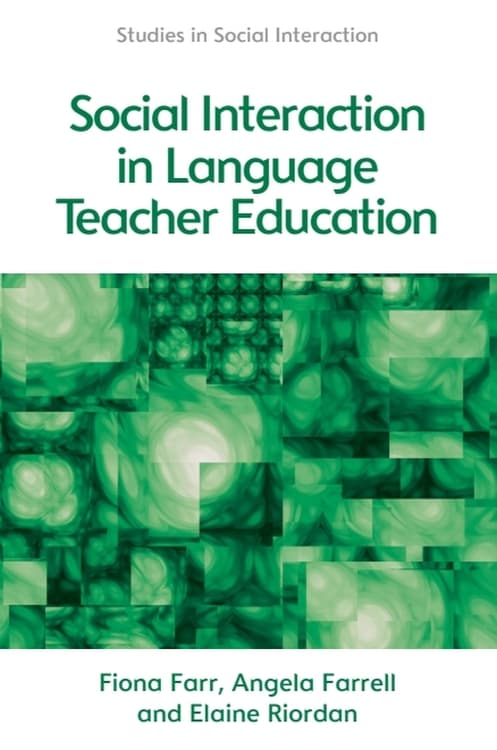
Social Interaction in Language Teacher Education
A Corpus and Discourse Perspective

Our ebooks are read in the Academic Reader app. After you buy, we’ll email you how to open your ebook in it.
Description
A data-led examination of interaction in language teacher education
- Studies of the socialisation of trainee teachers
- Adopts empirical, corpus-based approaches to data analysis bringing quantitative and qualitative dimensions to the data descriptions
- Includes interactional tasks at the end of each chapter to consolidate understanding and encourage reflection
- Draws on a number of modes of interaction including face-to-face lectures, tutorials, practice, feedback and online modes of computer-mediated communication including blogs, discussion forums, and chat
Combining corpus linguistics and discourse analysis, this book draws on a range of spoken and written data collected from a variety of contexts. It explores interaction in pre- and in-service education programs and analyses the spoken and written interactions of teachers with varying levels of experience who are adopting a range of modes of interaction. Both face-to-face and online modes of computer-mediated communication are explored. In doing so the book provides examples of how data can be approached and used to uncover social-interactional themes and issues, in relation to language teacher education and as a micro-context of social interaction in general.
With coverage of both theory and practice, this book is a key resource for educators and postgraduate students in areas such as second language teacher education, TESOL, cross-cultural communication, sociology, philology, as well as discourse analysts.
Contents
Chapter 1 - Introducing the Contexts1.1 Introduction1.2 Institutional Discourse1.3 Classroom Discourse1.4 On-line Academic Discourse1.5 Language Teacher Education Discourse1.6 Outline of the BookChapter 2 - Language Teacher Education (LTE) and Analysing Social Interaction2.1 Introduction2.2 LTE and its Development over Time2.2.1 Theoretical Influences: the why and how of LTE?; 2.2.2 Sociocultural Theory and Education; 2.2.3 Freeman’s Design Theory for Second Language Teachers2.3 Curriculum and Content: the what of LTE2.4 Participants: the who of LTE2.4.1 Teacher Educators/Mentors; 2.4.2 The Student/Novice Teacher and Teacher Cognition2.5 TasksChapter 3 - Reflective Practice (RP) in Language Teacher Education (LTE)3.1 Introduction3.2 RP in LTE3.2.1 RP: Concept and Principles; 3.2.2 RP: Approaches and Models; 3.2.3 RP: The Benefits; 3.2.4 RP: Collaborative Approaches and Modes3.3 Communities of Practice3.3.1 Concept and Principles; 3.3.1 The Benefits of RP in CoPs; 3.3.2 Multimodal RP in CoPs 3.4 TasksChapter 4 - A Data-Led Approach to Exploring Social Interactions in an English Language Teacher Education (ELTE) Community4.1 Introduction4.2 Research Approach4.3 Research Aims4.4 Teacher Education Corpus (TEC) 4.5 TEC Modes and Data Collection Methods4.5.1 Mode 1: Face-to-Face Teaching Practice Feedback Interactions; 4.5.2 Mode 2: Face-to-Face Lecturer Guided Group Discussions; 4.5.3 Mode 3: Face-to-Face Peer Tutor Guided Group Discussions; 4.5.4 Mode 4: On-Line Portfolios; 4.5.5 Mode 5: On-Line Blogs; 4.5.6 Mode 6: On-Line Chat; 4.5.7 Mode 7: On-Line Discussion Fora4.6 Student Teacher Participation4.7 Identifying Main Analytical Themes4.8 SummaryChapter 5 – Socialisation into the English Language Teacher Education (ELTE) Community of Practice5.1 Introduction5.2 Shared Repertoire5.2.1 Metalanguage; 5.2.2 Topic5.3 Metalanguage in TEC5.3.1 Distribution of Metalanguage in TEC; 5.3.3 Distribution of Metalanguage in Face-to-Face Modes in TEC; 5.3.4 Distribution of Metalanguage in On-line Modes in TEC5.4 Discussion: Metalanguage5.5 Topic in TEC5.6 Discussion: Topic5.7 Summary5.8 TasksChapter 6 – Language Teacher Identity6.1 Introduction6.2 What is language teacher identity?6.3 Competences of Language Teacher Identity6.4 Researching Language Teacher Identity6.5 Pronoun Usage in the TEC Corpus6.6 Pronoun Usage among Novice and Experienced Student Teachers6.6.1 I; 6.6.2 I am; 6.6.3 We; 6.6.4 We are6.7 Pronoun Usage in Face to Face and On-line Modes: I and We6.8 Pronoun Usage in Individual and Scaffolded Modes: I and We6.9 Summary6.10 TasksChapter 7 - Developing and Reflecting Teachers7.1 Introduction7.2 The Language of Reflection7.2.1 Overall; 7.2.2 Personal; 7.2.3 Reflective7.3 The Language of Reflection among Novice and Experienced Student Teachers 7.3.1 Know7.4 The Language of Reflection in Face-to-face and On-line Reflections7.4.1 Feel7.5 The Language of Reflection in Individual and Scaffolded Modes7.5.1 Think7.6 Summary7.7 TasksChapter 8 - Conclusions8.1 Introduction8.2 Key Findings8.2.1 Metalanguage and Topic; 8.2.2 Language Teacher Identity; 8.3.3 Reflective Practice8.3 ImplicationsReferences
Authors
Reviews
All in all, the study is highly stimulating and offers considerable food for thought in the arena of language teacher education and professional learning.
Although largely theoretical in its early chapters, close reading of the remainder of this title provides much food for thought for those interacting with trainee teachers on a daily basis.
Social Interaction in Language Teacher Education is a wonderful addition to the literature on English language teacher education (ELTE). This holistic approach to ELTE outlines the role of social discourses (a combined corpus linguistic/discourse analytic approach) in the socialization, identity formation and reflections of learner TESOL teachers.
Goes well with this book
From the same series or subject.
- Social Interaction in Language Teacher Education, Ebook (EPUB), £33.99
- Social Interaction and Professional Identity in Allied Healthcare Education, Ebook (EPUB), £19.99
- Human Spoken Interaction as a Complex Adaptive System, Ebook (EPUB), £19.99

From the same series
More in Studies in Social Interaction
Ebook (EPUB)£19.99
Ebook (EPUB)£22.99
Ebook (EPUB)£33.99
Ebook (EPUB)£33.99

Ebook (EPUB)£33.99
Ebook (EPUB)£33.99
Ebook (EPUB)£33.99
More in Language & Linguistics
View all
Ebook (EPUB)£19.99

Ebook (EPUB)£125.00
Ebook (EPUB)£105.00

Ebook (EPUB)£95.00
Ebook (EPUB)£90.00