Ebook (PDF)£19.99
Scottish StudiesEdinburgh Studies in Scottish Philosophy
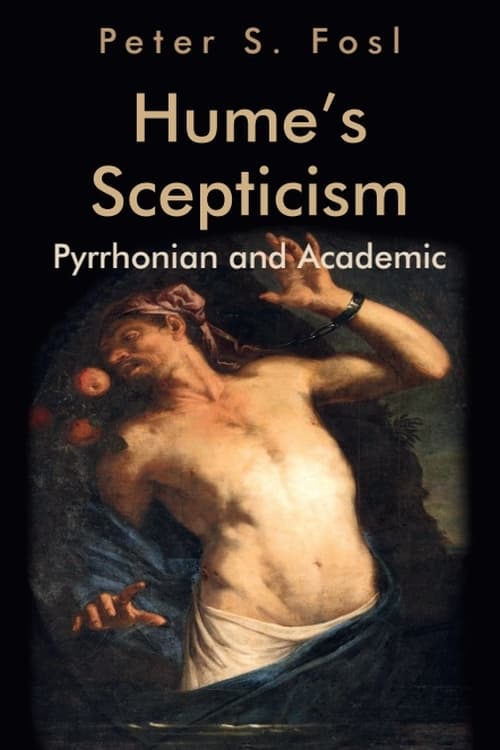
Hume's Scepticism
Pyrrhonian and Academic

Our ebooks are read in the Academic Reader app. After you buy, we’ll email you how to open your ebook in it.
Description
Argues that David Hume was a thoroughgoing sceptic on epistemological, metaphysical and doxastic grounds
- Advances both historical and logical reasons for the conclusion that Hume is a radical sceptic
- Exhibits extraordinary historical depth and breadth, with a sweep covering the history of Western philosophy
- Covers Hume's A Treatise of Human Nature; An Enquiry Concerning Human Understanding and An Enquiry Concerning the Principles of Morals; Essays, Moral, Political, and Literary; The History of England; Dialogues Concerning Natural Religion; and letters
Making a sharp break with dominant contemporary readings of David Hume’s scepticism, Peter S. Fosl offers an original and radical interpretation of Hume as a thoroughgoing sceptic. He does this by first situating Hume’s thought historically in the sceptical tradition and goes on to interpret the conceptual apparatus of Hume's work.
Contents
Series Editor’s Introduction
Introduction: Into Those Immense Depths
Part I: Academic and Pyrrhonian Scepticism, Ancient and Modern
1. Hume and Ancient Academic Scepticism
1.1. Doubt in the Old Academy
1.2. Probabilism, Fallibilism, and Belief in the Middle and New Academies
1.2.1. A Short History of the Sceptical Academy
1.2.1.1. The Academy Turns Sceptical
1.2.1.2. A Dogmatic Revival
1.2.1.3. Another Sceptical Stream
1.2.1.4. Scepticism’s Stoic Opposition
1.2.1.5. Defining Academic Scepticism against Stoicism
1.2.2. Were the Academic Sceptics Dogmatists?
1.2.2.1. Non-dogmatic Carneades and Philonian Scepticism
1.2.2.2. Dogmatic Carneades and Philonian Scepticism
1.3. The Theoretical Sceptics: Clitomachian and Metrodorian Scepticism
1.3.1. Non-realism vs. Moderate Realism
1.3.2. Criteria and Academic Doxastic Technai
1.3.3. Non-epistemic vs. Epistemic Clitomachian Scepticism
1.4. Conclusion
2. Hume and the Legacy of Academic Scepticism
2.1. The Career of Academic Scepticism
2.1.1. Augustine, Cicero, and the Persistence of Academic Scepticism
2.1.2. Historical-Textual Evidence of the Academics in Hume
2.1.3. The Early Modern Recovery: From Theology to Natural Philosophy
2.1.3.1. Academicism and the Reformation
2.1.3.2. Emergent Pyrrhonism and Resurgent Academicism
2.1.3.3. Scepticism at La Flèche
2.1.3.4. Mersenne: Academic Science
2.1.3.5. Foucher: The Academic Critique of Cartesianism
2.1.3.6. Locke: Academic Sceptical Empiricism
2.1.3.7. Huet: The Continuity of Scepticisms
2.1.3.8. Bayle: The Sceptical Arsenal of Enlightenment
2.2. Hume’s Academic Scepticism
2.2.1. Hume’s Self-Described Academic Scepticism
2.2.2. Hume and a General Academic Framework
2.3. Conclusion
3. Hume and Ancient Pyrrhonian Scepticism
3.1. Origins: From Pyrrho to Sextus Empiricus
3.1.1. Pyrrho and Timon
3.1.2. Aenesidemus
3.2. The Agogê of Appearances
3.2.1. The Fourfold
3.2.2. The Teresic Practice of Common Life
3.3. Negative Pyrrhonism: Subversion, Suspension, and Silence
3.3.1. Tropoi
3.3.1.1. Aenesidemus’ Ten Tropes
3.3.1.2. Agrippa’s Five Tropes
3.3.1.3. Two Tropes
3.3.2. Epochê and Isosthenia
3.3.3. Aphasia about ta Adêla
3.3.4. Critique of Causality: Aenesidemus’ Eight Tropes
3.4. Positive Pyrrhonism: Constructive Philosophical Theory
3.4.1. Apelletic Method and Philosophy as Painting
3.4.2. Sceptical and Platonic Recollection
3.4.2.1. The Irony of Recollection
3.4.2.2. Theory as Qualified Description
3.4.3. Zetetic Philosophy
3.4.3.1. Ongoing-Inquiry Zêtesis and Pyrrhonian Hope
3.4.3.2. Ongoing-Critique Zêtesis
3.4.4. Ataraxia
3.5. A General Framework for Pyrrhonian Scepticism
3.6. Conclusion
4. Hume and the Legacy of Pyrrhonian Scepticism
4.1. The Career of Pyrrhonism
4.1.1. The Surviving Texts
4.1.2. Medieval Quasi-Sceptics
4.1.3. Humanism and Fideism in the Fifteenth and Sixteenth Centuries
4.1.4. Montaigne: The Pyrrhonian Womb of Modern Thought
4.1.4.1. Montaigne: Fideism and Finitude
4.1.4.2. Montaigne: Epochê and the Tropoi
4.1.4.3. Montaigne: Rhetoric and Form
4.1.4.4. Montaigne: The Ordinary and the Human
4.1.4.5. In the Wake of Montaigne
4.1.5. Scepticism and the New Sciences
4.1.5.1. Renegotiating Pyrrhonism
4.1.5.2. La Mothe le Vayer: Extending Scepticism
4.1.5.3. Gassendi: The Bridge
4.1.5.4. Bayle and Crousaz: Post-Cartesian Pyrrhonism
4.1.5.5. Huet: Socratic Coherence
4.1.5.6. Sceptical Minor Notes: Glanvill, Newton, Dryden, Shaftesbury, Bosc
4.2. Pyrrhonism in Hume
4.2.1. First Plank: Hume’s Access and Exposure to the Outlines
4.2.1.1. Five Misleading Citations
4.2.1.2. Vernacular Translations and other Sceptical Texts
4.2.2. Second Plank: Radicalism, Religion, and a Hermeneutic of Suspicion
4.2.3. Third Plank: Hume’s Pyrrhonism and a Complete Sceptical Framework
4.2.4. Pyrrhonism as a Path to Academic Scepticism and as Prophylaxis
4.3. Conclusion
Part II: Hume’s True Sceptical Philosophy
5. Phûsis, The Fatalities of Appearance
5.1. The Fluvial and the Necessary: The ‘Current of Nature’
5.1.1. Sceptical Necessity: ‘A Wonderful and Unintelligible Instinct’
5.1.1.1. Undermining Categorical Human Superiority
5.1.1.2. Animality and Causal Necessity
5.1.1.3. Sceptical and Kantian Necessity
5.1.2. Sceptical Contingency: The ‘Loose and Unconnected’
5.2. Apelletic Empiricism and the Priority of Hume’s Sceptical Naturalism
5.2.1. Nature as Press
5.2.2. Moving Nature
5.2.3. Stability as Press
5.3. The Fatalities of Nature and Human Empereia
5.4. Conclusion
6. Ethos, The Great Sceptical Guide
6.1. Inhabiting the World
6.1.1. Custom, Recollection, and Têrêsis
6.1.2. Habitual Selves
6.1.3. Habitual Reasoning
6.1.4. Habitual Feeling
6.1.5. Passive and Active Habits
6.1.6. The Nature and Contingency of Habit
6.1.6.1. The Variability and Uniformity of Morals
6.1.6.2. The Contingencies of Science
6.1.7. Collective Habits: Custom and Convention
6.2. Sceptical Politics
6.2.1. The Politics of Doxa
6.2.2. Political Isosthenia, Ataraxia, and Moderatio
6.3. Scepticism and Religion
6.3.1. The Immediate ‘Flow’ of Theism
6.3.2. Religion that Humanises and Civilises
6.3.3. Natural Propensities but Unnatural Beliefs
6.3.4. False Religion’s Pathological Habits: Superstition and Enthusiasm
6.3.5. Religion’s Corruption of Common Life
6.3.6. Tolerance, Philia, and Mitigated Religion
6.4. Conclusion
7. Technai, Dogmatism and Hume’s Technologies of Doubt
7.1. A Caveat and a Reminder
7.1.1. Dogmatic Forgetfulness and Sceptical Hope
7.1.2. True Philosophy’s Three-Step Dialectic
7.2. Epistemological Dogmatism
7.2.1. The Criterion: Evidence, Certainty, Undeniability
7.2.2. ‘Above the Winds and Clouds’: The Abstruse, Difficult, and Ephemeral
7.2.3. The Technai of Doubt
7.2.3.1. Reason: Regresses, Contradictions, Self-Cancellations
7.2.3.1.1. Reason in the Treatise: The ‘Total Extinction’ of Evidence
7.2.3.1.2. Reason in the First Enquiry: Hume’s ‘Chief Objection’
7.2.3.1.3. Inductive Reason: Begging the Question of Nature
7.2.3.1.4. Self-Reflexive Purgatives: Sheltering ‘Samson’ under the ‘Throne’
7.2.3.2. The Senses: Perceptions as Appearances
7.2.3.2.1. The Awful Gap and the Limits of Representation
7.2.3.2.2. Relative Ideas of the ‘Specifically Different’
7.2.3.2.3. Radicalising the Way of Ideas
7.3. Metaphysical Dogmatism
7.3.1. External Metaphysics
7.3.1.1. Ancient Dogmatic Philosophy
7.3.1.2. Modern Dogmatic Philosophy
7.3.2. Internal Metaphysics
7.3.2.1. The Immateriality of the Soul
7.3.2.2. Personal Identity
7.4. Conclusion
8. Pathê, Hume’s Non-Dogmatic Philosophy
8.1. Hume’s Doxastic Scepticism and Non-Dogmatic Philosophy
8.1.1. Belief and Reality’s ‘Title’
8.1.1.1. Belief is Sensitive not Cogitative
8.1.1.2. Belief in Existence
8.2. Three Kinds of Assent
8.2.1. Hume’s Gentlemanly Scepticism
8.2.2. Academic Belief
8.2.3. Probability as Pithanon: Hume the Clitomachian
8.2.3.1. Locke’s Twilight Probabilities
8.2.3.2. Hume’s Departure from Metrodorian Probabilism
8.3. Sceptical Science and Dogmatic Hidden Standards
8.4. Conclusion: An End to the Voyage
BibliographyIndex
Author
Reviews
Peter Fosl’s Hume’s Scepticism is the culmination and most successful accomplishment of a research program in Hume’s scholarship started by Richard Popkin 80 years ago.
Peter Fosl presents an engaging and historically rich account of Hume’s skepticism. For those readers interested in deepening their knowledge and understanding of Pyrrhonian and Academic skepticism, both in regard to their origins and their legacy, I highly recommend it.
A remarkably comprehensive study about the impact of Pyrrhonian and Academic scepticism on David Hume’s philosophy … Using the most recent scholarship to discuss both textual influences and philosophical nuances among different sceptical views, Fosl provides a thorough history of scepticism on which scholars could build on the future … Fosl’s book is novel, provocative and opens up paths for various possible lines of research in the history of scepticism … Fosl has made a wonderful job of indicating some of the most relevant modern Academic sceptics’ affinities. In addition to the very substantial questions his work raises, Fosl deftly shows in his book that, as a sceptic through and through, Hume examined probabilities concerning issues of science, metaphysics and religion, and remained non-dogmatic in all of his philosophical conclusions.
No one else has gone as wide and as deep as Peter Fosl, who has taken a decisive stand on Hume as a radical sceptic. Nothing in philosophy is definitive, but this book will surely be a point of departure for studies of Hume's philosophy for a long time to come.
Goes well with this book
From the same series or subject.
- Hume's Scepticism, Ebook (EPUB), £33.99
- David Hume and the Aberdeen Philosophers, Ebook (PDF), £19.99
- The Sociological Heritage of the Scottish Enlightenment, Ebook (EPUB), £34.99
From the same series
More in Edinburgh Studies in Scottish Philosophy
Ebook (EPUB)£34.99

Ebook (EPUB)£19.99
Ebook (EPUB)£24.99
Ebook (EPUB)£25.99
Ebook (EPUB)£23.99
Ebook (EPUB)£33.99
Ebook (EPUB)£31.00
Ebook (EPUB)£31.00
Ebook (EPUB)£25.99
Ebook (EPUB)£31.00
Hardback£90.00
More in Scottish Studies
View all
Ebook (EPUB)£95.00
Ebook (EPUB)£95.00


Ebook (EPUB)£95.00

Ebook (EPUB)£95.00