Ebook (EPUB)£24.99
Ancient History & Classical StudiesIntersectionality in Classical Antiquity
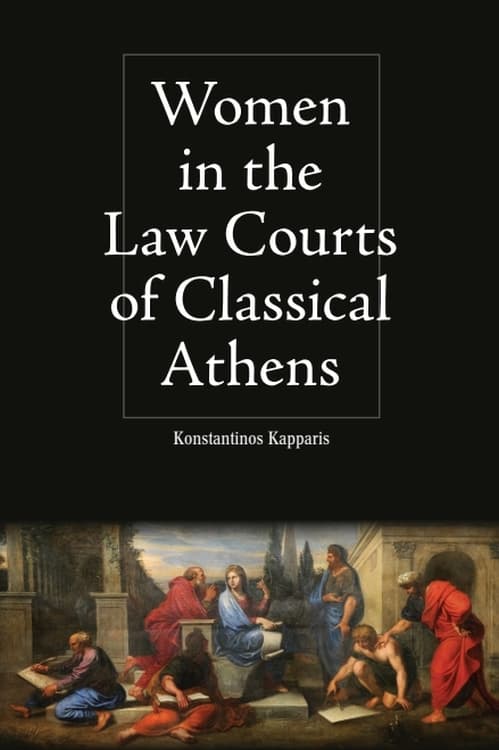
Women in the Law Courts of Classical Athens

Our ebooks are read in the Academic Reader app. After you buy, we’ll email you how to open your ebook in it.
Description
Explores the intersection of gender with important aspects of Athenian society such as citizen status, social values and beliefs, class, economic capacity and legal standing
- Explores the intersection of gender with important aspects of Athenian society such as citizen status, social values and beliefs, class, economic capacity and legal standing
- Discusses how different groups of women, such as citizens, metics, alien and native sex workers, and slaves interacted with law enforcement and the extent to which these groups had access to key institutions in the Athenian Democracy
- For the first time throws some light upon several fascinating fragments, like the two speeches Against Aristagora, or the case against Timandra
- Discusses the recent suggestion of a "witch-hunt" in 4th century Athens
Konstantinos Kapparis challenges the traditional view that free women, citizen and metic, were excluded from the Athenian legal system. Looking at existing fragmentary evidence largely from speeches, Kapparis reveals that it unambiguously suggests that free women were far from invisible in the legal system and the life of the polis.
In the first part of the book Kapparis discusses the actual cases which included women as litigants, and the second part interprets these cases against the legal, social, economic and cultural background of classical Athens. In doing so he explores how factors such as gender, religion, women’s empowerment and the rise of the Attic hetaira as a cultural icon intersected with these cases and ultimately influenced the construction of the speeches.
Contents
Introduction
i. Women and the Legal System of the Athenian Democracy: Why is it important?ii. The intersection of the law with the lives of women.iii. Sourcesiv. Modern literature
PART 1
Cases involving women litigants- Lysias, To Antigenes, On the Abortion
- Lysias, On the daughter of Antiphon
- Hypereides, Against Aristagora aprostasiou, (two speeches)
- Deinarchos, That the daughters of Aristophon are not heiresses; or, Diamartyria that the daughter of Aristophon is not an heiress
- Pericles, In Defense of Aspasia, for Impiety
- [Demosthenes] 40, To Boiotos on his mother’s dowry
- Hypereides, Against Demetria, apostasiou
- Lysias, Against Diogeiton: A mother’s compelling speech
- Deinarchos, Synegoria to Hegelochos, for the Epikleros, or Against Hegelohos, Synegoria on behalf of the Epikleros
- Deinarchos, Against Hedyle, apostasiou
- Lysias, To Lais
- [Deinarchos], Dispute between the priestess of Demeter and the Hierophant
- Lycurgus, On the Priestess
- Deinarchos, For an Epikleros: For the Daughter of Iophon
- Euboulides, Against the sister of Lakedaimonios, for Impiety
- Hypereides, In Defense of Mika
- Apollodoros, Against Neaira
- Lysias, For Nikomache
- Menekles, Against Ninos the Priestess, for Impiety.
- Lysias, On the daughter of Onomakles
- Isaios 3, On the Estate of Pyrrhos
- Lysias, Against Philonides for Rape
- Hypereides, In Defense of Phryne
- Lysias, On the daughter of Phrynichos
- Isaios , To Satyros, on behalf of the epikleros.
- Antiphon 1, Against the Stepmother
- Demosthenes, Against Theoris, for Impiety
- Hypereides, To Timandra
PART 2
Chapter 1. Women’s participation in the Athenian justice system1.1. Women’s access to the various layers of the justice system1.2 Representation versus exclusion1.3. Not all women are the same1.4. ConclusionsChapter 2. Judicial processes involving women.
2.1 An overview of processes and procedures in the Athenian Justice System2.2. Women and politics2.3. Citizenship and immigration violations2.4. Prosecutions for religious offenses2.5. Economic disputes.2.6. Violent crime2.7. Personal responsibility before the lawChapter 3. Gender as a factor in the construction of the argument
3.1. Gender stereotypes as a factor in trials involving both men and women: An introduction3.2 The dutiful wife and mother3.3. The indecent women of Athens3.4. The poisoner and the witch3.5. Images of the body and sexuality3.6. A woman with a past3.7. ConclusionsChapter 4. Women’s Empowerment, Social Groups and the Justice System
4.1. Introduction4.2. The Citizen woman in the Athenian polis 4.3. The Metic woman in the Athenian polis 4.4. The working women of Athens: legal implications.4.5. ConclusionsChapter 5. Conclusions
Appendix: The main laws affecting the lives of Athenian women.
Select Bibliography
Author
Reviews
This is an illuminating book, one that challenges the assumptions we make about the ancient world. By widening the perspective of women’s experience with the Athenian legal system beyond the formal law courts, Kapparis has challenged the traditional narrative of Athenian women’s complete lack of legal agency.
This is an illuminating book, one that challenges the assumptions we make about the ancient world. By widening the perspective of women’s experience with the Athenian legal system beyond the formal law courts, Kapparis has challenged the traditional narrative of Athenian women’s complete lack of legal agency.
This is the first study of legal cases brought before Athenian courts where one of the litigants was a woman, and stands out for its comprehensiveness and accessibility, shedding new light on the lives of ancient Greek women and on our (oft-mistaken) perception of them.
Goes well with this book
From the same series or subject.
- Women in the Law Courts of Classical Athens, Ebook (EPUB), £27.99
- Believing Ancient Women, Ebook (EPUB), £24.99

- Age, Gender and Status in Macedonian Society, 550-300 BCE, Ebook (EPUB), £24.99

From the same series
More in Intersectionality in Classical Antiquity
Ebook (EPUB)£24.99

Ebook (EPUB)£24.99

Ebook (EPUB)£25.99

Ebook (EPUB)£27.99
More in Ancient History & Classical Studies
View all
Ebook (EPUB)£85.00

Ebook (EPUB)£100.00
Ebook (EPUB)£95.00

Ebook (EPUB)£95.00

Ebook (EPUB)£135.00