Ebook (EPUB)£24.99
Ancient History & Classical StudiesIntersectionality in Classical Antiquity
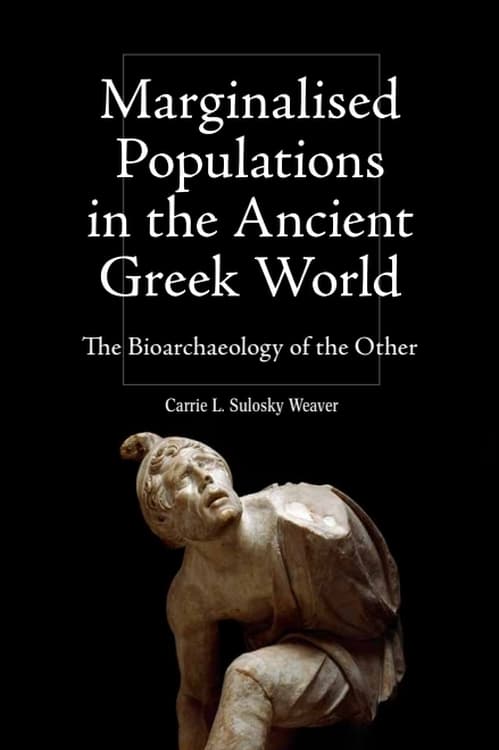
Marginalised Populations in the Ancient Greek World
The Bioarchaeology of the Other

Our ebooks are read in the Academic Reader app. After you buy, we’ll email you how to open your ebook in it.
Description
Explores literary, visual, material and biological evidence of marginality in the ancient Greek world
- Provides the first comprehensive and contextual treatment of the biological evidence for marginality in the ancient Greek world
- Argues that intersectionality was the driving factor behind social marginalisation in the Late Archaic/Classical Greek world
- Considers social marginalisation from the vantage point of mortuary evidence
Studies of the ancient Greek world have typically focused on the life histories of elite males as the group that has made the most distinct mark on ancient Greek literature, art and material culture. As a result, the voices of foreigners, the physically impaired, the impoverished and the generally disenfranchised have been silent, which has substantially complicated the creation of a historical narrative of these marginalised groups.
To address this lacuna, previous research has turned to the limited evidence found in literature and material culture to reconstruct societal attitudes toward disenfranchised peoples. This book departs from that approach by primarily considering the skeletal remains and burial contexts of the individuals themselves. Drawing upon literary, artistic, material and biological evidence, it sheds new light on groups of individuals who were typically relegated to the periphery of Greek society in the Late Archaic and Classical periods.
Offering the first comprehensive treatment of the biological evidence for marginality in the ancient Greek world, this book argues that intersectionality was the driving factor behind social marginalisation in the Late Archaic and Classical Greek world.
Contents
List of Figures Abbreviations and SpellingsAcknowledgements
Introduction: Hidden Lives
1. Definitions and Reception of the Marginalised in Art and Literature
2. Disability
3. Socioeconomic Status
4. Ancestry and Ethnicity
Conclusion: Marginality at the Intersections
ReferencesIndex
Author
Reviews
The book does an excellent job in terms of its primary aim: to familiarize in a comprehensible way non-specialist readers with the nature of osteo-archaeological evidence and the techniques employed by specialists, the interpretations that can be deduced from the evidence and the methodological pitfalls, and the existing osteo-archaeological corpora that have been analysed so far. The author makes evident how much ancient historians can learn from this body of evidence; at the same time, it also illustrates the extent to which interpretations will need to develop further: how exactly should we interpret the surprising evidence that skeletons from the Laurion mines seem to share the same diet with those of Athens? Clearly, there is much to be learnt, and co-operation between historians and bioarchaeologists will enhance the value of the evidence.
Sulosky Weaver presents a compelling and lively interpretation of the marginalized people in ancient Greece—their young, old, sick, rich, poor, and infirm—based on her extraordinary context-based investigation of their skeletal remains. The book is a must read for anyone interested in this remarkable setting and its people.
Goes well with this book
From the same series or subject.
- Marginalised Populations in the Ancient Greek World, Ebook (EPUB), £25.99
- Believing Ancient Women, Ebook (EPUB), £24.99
- Age, Gender and Status in Macedonian Society, 550-300 BCE, Ebook (EPUB), £24.99
From the same series
More in Intersectionality in Classical Antiquity
Ebook (EPUB)£24.99
Ebook (EPUB)£24.99
Ebook (EPUB)£27.99
Ebook (EPUB)£27.99
More in Ancient History & Classical Studies
View all
Ebook (EPUB)£85.00
Ebook (EPUB)£100.00
Ebook (EPUB)£95.00
Ebook (EPUB)£95.00
Ebook (EPUB)£135.00