Ebook (EPUB)£175.00
IMESEdinburgh Studies in Islamic Art
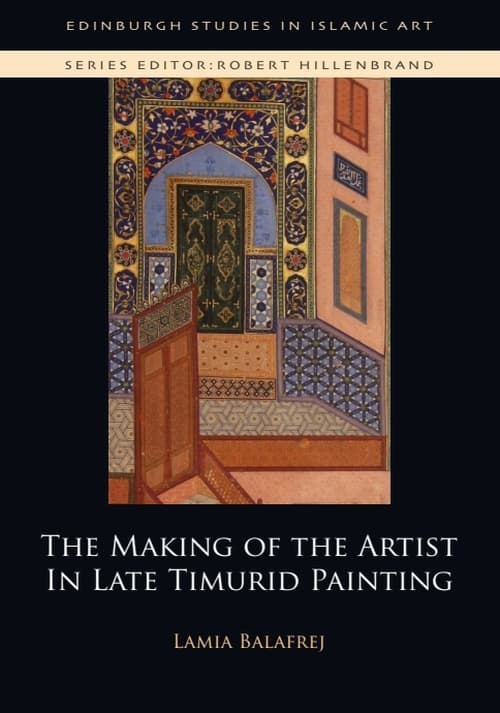
The Making of the Artist in Late Timurid Painting

Our ebooks are read in the Academic Reader app. After you buy, we’ll email you how to open your ebook in it.
Description
In the absence of a tradition of self-portraiture, how could artists signal their presence within a painting? Centred on late Timurid manuscript painting (ca. 1470-1500), this book reveals that pictures could function as the painter’s delegate, charged with the task of centring and defining artistic work, even as they did not represent the artist’s likeness. Influenced by the culture of the majlis, an institutional gathering devoted to intricate literary performances and debates, late Timurid painters used a number of strategies to shift manuscript painting from an illustrative device to a self-reflective object, designed to highlight the artist’s imagination and manual dexterity. These strategies include visual abundance, linear precision, the incorporation of inscriptions addressing aspects of the painting and the artist’s signature. Focusing on one of the most iconic manuscripts of the Persianate tradition, the Cairo Bustan made in late Timurid Herat and bearing the signatures of the painter Bihzad, this book explores Persian manuscript painting as a medium for artistic performance and self-representation, a process by which artistic authority was shaped and discussed.
Contents
Introduction: Painting about Painting
1. Pictorial Preface
2. Writing on the Image
3. Potential World
4. Calligraphic Line
5. Wondrous Signature
Epilogue: Manuscripts in Motion
Bibliography
Author
Reviews
Balafrej’s well-constructed work offers both a thorough analysis of a specific pictorial cycle ascribed to an individual painter, as well as a number of reflections that apply more broadly to cultural production in the medieval and early modern Persianate societies.
Balafrej’s well-constructed work offers both a thorough analysis of a specific pictorial cycle ascribed to an individual painter, as well as a number of reflections that apply more broadly to cultural production in the medieval and early modern Persianate societies.
This stimulating and original study draws on both the antecedents and the legacies of Behzad’s art from the 14th to the 16th century in Iran and Transoxiana and will prompt a fresh look at our appreciation of Persian miniature painting.
The study places the Bustan manuscript in a sort of shifting continuum of tradition, response and innovation that both exalted and obscured the individuality of the artist.
An impressive and compelling work of scholarship that promotes a radical reorientation for the study of illustrated Persian manuscripts. At the same time it offers a detailed investigation, through original perspectives, of the paintings in a celebrated, and hitherto inadequately studied volume produced at the court of the last Timurid ruler Sultan Husayn Bayqara in Herat… This book will be of enormous interest to art historians and Islamic studies scholars in general and specialists in Persian painting in particular, who will appreciate the author’s sophisticated approach and multi-faceted readings of the Bustan paintings – so long-admired and yet so cursorily-studied.
Goes well with this book
From the same series or subject.
- The Making of the Artist in Late Timurid Painting, Ebook (EPUB), £37.00
- Lajvardina Wares, Ebook (EPUB), £175.00
- The Forgotten Qur'ans of the Eastern Islamic World, Ebook (EPUB), £175.00
From the same series
More in Edinburgh Studies in Islamic Art
Ebook (EPUB)£175.00
Ebook (EPUB)£175.00
Ebook (EPUB)£175.00
Ebook (EPUB)£175.00
Ebook (EPUB)£150.00
Ebook (EPUB)£135.00
Ebook (EPUB)£130.00
Ebook (EPUB)£130.00
Ebook (EPUB)£135.00
Ebook (EPUB)£125.00
Ebook (EPUB)£110.00
More in IMES
View all
Ebook (EPUB)£85.00
Ebook (EPUB)£90.00
Ebook (EPUB)£14.99
Ebook (EPUB)£100.00
Ebook (EPUB)£95.00