Ebook (EPUB)£175.00
IMESEdinburgh Studies in Islamic Art
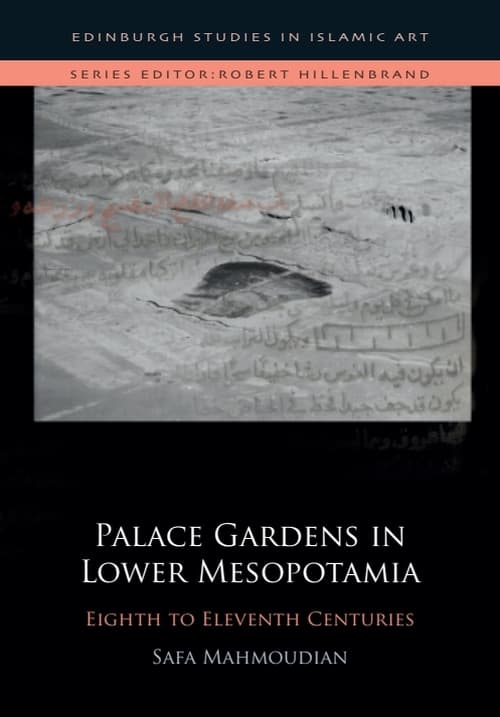
Palace Gardens in Lower Mesopotamia
8th to 11th Centuries

Our ebooks are read in the Academic Reader app. After you buy, we’ll email you how to open your ebook in it.
Description
Provides the first in-depth examination of palace gardens in the Abbasid caliphate’s Lower Mesopotamian heartland
- Draws on a wide range of textual sources, including lexicons, geographies, histories, poetry, and science written by authors who lived primarily in Mesopotamia or visited there during the 8th to 11th centuries
- Takes an interdisciplinary approach by also considering archaeological reports, aerial photographs, and archival sources like archaeologists’ letters and diaries
- Revisits certain prevailing notions concerning the spatial arrangement and function of the adjoining covered spaces
- Challenges the prevalent, essentialist view of an ‘Islamic garden’ typology, which presupposes a continuity in garden traditions, and leads to a more nuanced understanding of their forms and functions.
Gardens were both a setting and showcase for nearly every aspect of social and daily life at the royal court during the early Islamic period in Western Asia. Safa Mahmoudian uses a wide range of primary source materials including contemporary Arabic manuscripts, together with archaeological reports, aerial photographs, and archaeologists’ letters and diaries. Through close readings of this evidence, Mahmoudian creates a picture of these gardens in their historical, architectural and environmental contexts and examines various factors that influenced their design and placement. In doing so, Mahmoudian adds to our understanding of these gardens and palaces and, ultimately, early Islamic-period court culture as a whole.
Contents
List of Figures
List of Plates
Acknowledgements
Note on Transliterations, Translations, Dates and Measures
Introduction
1. Garden and River in the Land between Two Rivers
2. Flora and Fauna
3. Water Features
4. Relationship between Throne Hall and Garden: A Discussion Based on Bahw and Sidillī
5. Gardens with Physical Remains
Bibliography
Index
Author
Reviews
With this systematic interdisciplinary study, Safa Mahmoudian opens a new window on the magnificent gardens of a little-studied period of Islamic history. Her thorough insights contribute remarkably to our knowledge of these once lively gardens and our understanding of palace architecture of the Abbasid nobility and their court culture.
Safa Mahmoudian has unearthed considerable evidence of the gardens of Sawād during the first Islamic centuries to paint a comprehensive picture of these long-overlooked historical landscapes. Through precise analyses, she unravels the layers of architectural, sociocultural, geographical and horticultural significance embedded in these once flourishing royal gardens now largely lost to the desert sands.
This book skilfully and vividly brings the early Islamic gardens of Lower Mesopotamia to life. Safa Mahmoudian’s coverage of the subject is meticulously organised and researched, clear and persuasive in its presentation, and deeply consequential to students, researchers, and enthusiasts of garden history alike. All aspects of case-study gardens are presented: their hardscape, their plantings, and their physical and socio-political contexts. This is a wonderful book, and it will be an invaluable resource.
Mahmoudian’s interdisciplinary approach provides a compelling re-evaluation of Abbasid palace gardens as more than ornamental additions to royal complexes. By integrating landscape studies, architectural analysis, and textual historiography, she demonstrates how these gardens functioned as essential components of Abbasid court culture—sites of power, leisure, artistic refinement, and environmental mastery. Her critique of conventional garden narratives encourages scholars to reassess Islamic landscape traditions through regionally focused studies rather than generalised frameworks.
Mahmoudian has written an outstanding book that dives deep into the historiography, archaeology, and environmental history of the Samarra palace gardens. With its focus on Iraq, the book offers a welcome change from surveys that attempt to sweep across the entire terrain of Islamic gardens, from the seventh century to the present. The depth of scholarship is extraordinary, and the book is a major contribution to Islamic garden history, a much-needed analysis of one of the most important phases in garden making in the early Islamic world.
Goes well with this book
From the same series or subject.
- Palace Gardens in Lower Mesopotamia, Ebook (EPUB), £135.00
- Lajvardina Wares, Ebook (EPUB), £175.00
- The Forgotten Qur'ans of the Eastern Islamic World, Ebook (EPUB), £175.00
From the same series
More in Edinburgh Studies in Islamic Art
Ebook (EPUB)£175.00
Ebook (EPUB)£175.00
Ebook (EPUB)£175.00
Ebook (EPUB)£175.00
Ebook (EPUB)£150.00
Ebook (EPUB)£130.00
Ebook (EPUB)£130.00
Ebook (EPUB)£135.00
Ebook (EPUB)£125.00
Ebook (EPUB)£110.00
Ebook (EPUB)£115.00
More in IMES
View all
Ebook (EPUB)£85.00

Ebook (EPUB)£90.00

Ebook (EPUB)£14.99
Ebook (EPUB)£100.00
Ebook (EPUB)£95.00