£19.99
IMESEdinburgh Studies in Classical Islamic History and Culture
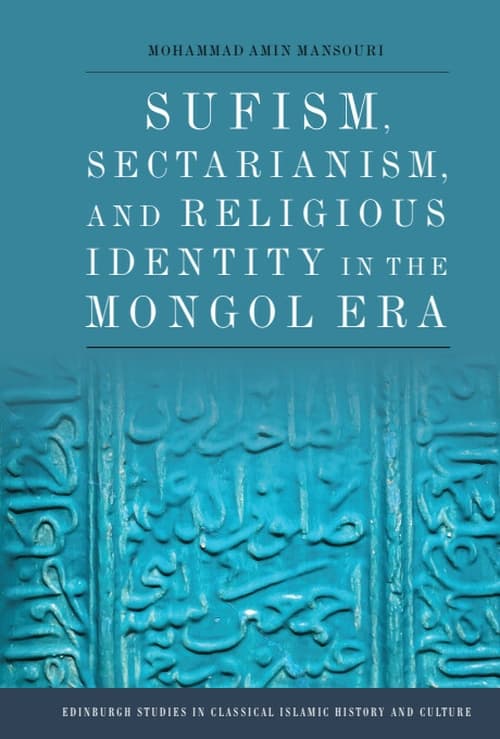
Sufism, Sectarianism, and Religious Identity in the Mongol Era
Pre-order

Our ebooks are read in the Academic Reader app. After you buy, we’ll email you how to open your ebook in it.
Description
Focusing on the Persianate Mongol world (thirteenth to fourteenth centuries), this book challenges common assumptions that Sunni–Shiʿi relations have been defined by timeless sectarian conflict. Instead of treating sectarian identities as fixed, it introduces new conceptual frameworks to explain how medieval Muslim thinkers actively negotiated religious identity across sectarian boundaries through shared intellectual traditions, theological exchange and historical circumstance.
Across five chapters, this book develops five new analytical models for studying sectarian identity, including confessional pragmatism, theological ambiguity, cosmological kinship, de-sectarianisation and re-sectarianisation, through different case studies. Drawing on a wide range of Arabic and Persian primary sources spanning Sunni and Shi'i traditions, it offers a new interdisciplinary account of the intersections of Mongol history, Sufism and Shiʿi studies, as well as rethinking the relationship between intellectual history, patronage and religious change.
Contents
List of Tables
Introduction: Reframing the Mongol Impact on the Islamic World
- Confessional Pragmatism and Ibn Maytham al-Baḥrānī
- Theological Ambiguity: Ṣadr al-Dīn Ḥamūya’s Hermeneutics in Ilkhanid Iran
- Nasafī and Monism between Sufism and Shiʿism
- Chivalrous Monotheism: The Ethics and Esotericism of ʿAbd al-Razzāq Kāshānī
- Monist Cosmology and Doctrinal Dynamics in Late Medieval Shiʿism
Conclusion: Reassessing the Mongol Era in Islamic History
Bibliography
Index
Author
Goes well with this book
From the same series or subject.
- Sufism, Sectarianism, and Religious Identity in the Mongol Era, Ebook (EPUB), £90.00
- Cultural Brokerage in Premodern Islamic Societies, Ebook (EPUB), £125.00
- Preaching Pious Rulership in Medieval Islam, Ebook (EPUB), £95.00
From the same series
More in Edinburgh Studies in Classical Islamic History and Culture
Ebook (EPUB)£125.00
Ebook (EPUB)£95.00
Paperback£34.99
Ebook (EPUB)£24.99
Ebook (EPUB)£24.99
Ebook (EPUB)£29.99
Ebook (EPUB)£20.99
Ebook (EPUB)£20.99
More in IMES
View all
Ebook (EPUB)£85.00
Ebook (EPUB)£90.00
Ebook (EPUB)£14.99
Ebook (EPUB)£100.00

Ebook (EPUB)£95.00