Ebook (EPUB)£95.00
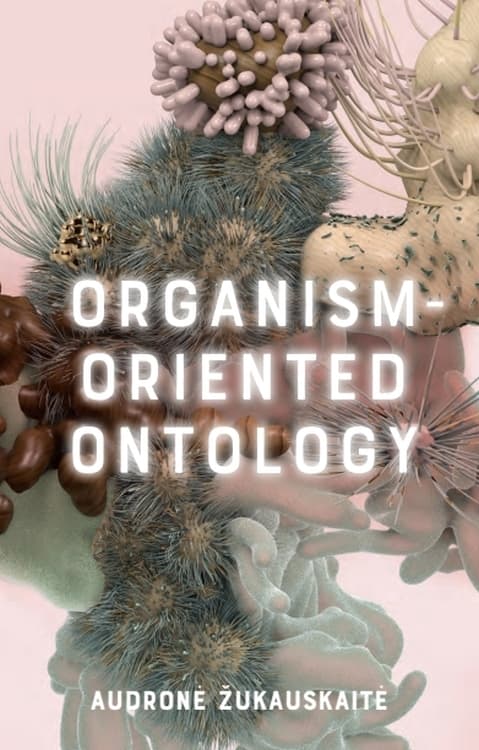
Organism-Oriented Ontology

Our ebooks are read in the Academic Reader app. After you buy, we’ll email you how to open your ebook in it.
Description
Reconsiders the notion of organism as central to contemporary philosophy
- Extends and develops the thinking of the organic in terms of organism-oriented ontology
- Discusses the notion of organism in terms of an autopoietic system and examines the tension between its closure and openness, teleology and contingency
- Assesses interactions between different species and also between living and non-living systems
- Argues that specific biological features, such as self-organization, potentiality, and plasticity, might be seen as a form of resistance to biopolitical power
Discussing different aspects of the philosophy of Gilbert Simondon, Raymond Ruyer, Gilles Deleuze and Felix Guattari, and including some contemporary thinkers, such as Catherine Malabou, Bernard Stiegler, Bruno Latour, and Donna J. Haraway, Audronė Žukauskaitė argues that all these threads can be seen as precursors to organism-oriented ontology.
Rather than concentrating on individuals and identities, contemporary philosophy is increasingly interested in processes, multiplicities and potential for change, that is, in those features that define living beings. Žukauskaitė argues that the capacity of living beings for self-organisation, creativity and contingency can act as an antidote to biopolitical power and control in the times of the Anthropocene.
Contents
Introduction: Towards an Organism-Oriented OntologyThe Thinking of the OrganicAutopoietic SystemsOrganism-Oriented OntologyOutline of Chapters
- Gilbert Simondon: From Ontology to Ontogenesis Physical Individuation: Transduction Biological Individuation: The Membrane Psychical Individuation: The Transindividual Conclusion
- Raymond Ruyer: Organic Consciousness Morphogenesis: Between Preformationism and Finalism Equipotentiality Types of Forms, Types of Consciousnesses Self-Survey without a SelfConclusion
- Gilles Deleuze and Félix Guattari’s Philosophy of Life Individuation as Differentiation The Deconstruction of an Organism The Brain: Between the Mental and the Cerebral Conclusion
- Catherine Malabou: Plasticity of Reason Plasticity and Potentiality Damasio: From the Neuronal to the Mental Malabou: Between the Neuronal and the Mental Epigenesis and Reason Conclusion
- General Organology: Between Organism and Machine Simondon on Technical Objects Stiegler’s General Organology Hui’s Cosmotechnics Conclusion
- Planetary Organism The Gaia Hypothesis Gaia and the Theory of Autopoiesis Gaia and Actor-Network Theory Gaia and the Theory of Sympoiesis Conclusion
- Hybrid Organism Sympoiesis as ‘Making-With’ Immunity and Contagion Hybrids and Chimeras Conclusion
Conclusion: Organism-Oriented Ontology
Bibliography
IndexAuthor
Reviews
This is an extraordinary book. Žukauskaitė has marshaled the resources of a wide range of contemporary thinkers— Simondon, Ruyer, Canguilhem, Deleuze and Guattari, Malabou, Stiegler, Latour and Haraway—to develop an organism-oriented ontology that is focused not only on the body but, more profoundly, on the multiple processes of individuation that constitute the body. Žukauskaitė is charting a path to the philosophy of the future that the rest of us can only follow.
This is an original and groundbreaking development in contemporary philosophy of life and biology. By defining a new branch of ontology of life as organism-oriented ontology, Audronė Žukauskaitė makes important new steps in respondingto the now classical problem of what form biopolitics should take.
Goes well with this book
From the same series or subject.
- Organism-Oriented Ontology, Ebook (EPUB), £19.99
- Spinoza and Art, Ebook (EPUB), £95.00

- Deleuze and Transcendental Empiricism, Ebook (EPUB), £110.00
More in Philosophy
View allEbook (EPUB)£110.00

Ebook (EPUB)£95.00

Ebook (EPUB)£150.00

Ebook (EPUB)£24.99