£24.99
PhilosophyPlateaus - New Directions in Deleuze Studies
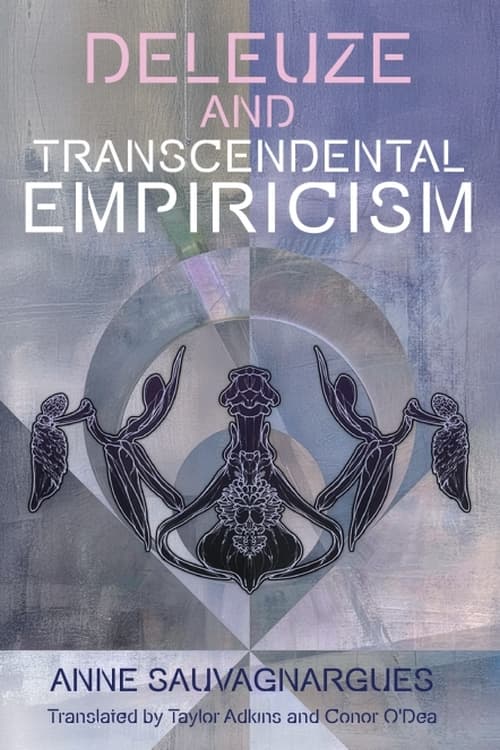
Deleuze and Transcendental Empiricism

Our ebooks are read in the Academic Reader app. After you buy, we’ll email you how to open your ebook in it.
Description
The work of Deleuze immerses Kantian transcendental criticism into the dissolving bath of a renewed form of empiricism. Anne Sauvagnargues sets out to reconstruct this undertaking, and to analyse the astonishing creation of the concept of transcendental empiricism, which Deleuze pursues from his first monographs in 1953 to Différence et Répétition (1968), engaging in fertile debate and dialogue with the history of philosophy.
How does Deleuze use distortion and collage to combine Hume's empiricism, Nietzsche's theory of the sign as force, Bergson's virtuality and multiplicities, Spinoza's modes and Simondon's impersonal individuation to renew Kantian theory of the transcendental? This is the overarching purpose of Sauvagnargues’ investigation, which takes us into the thinker's laboratory in order to grasp philosophy in the making and helps to explain the insistence of the transcendental in all of Deleuze’s work.
Contents
Translator’s Foreword
List of Abbreviations
Introduction: Creation of Concepts
I Transcendental Empiricism
- The History of Philosophy as a Becoming of Systems
- The Fractured I and the Dissolved Self
- Preindividual Singularities and Impersonal Individuations
- Transcendental and Empirical
II The Image of Thought
- The Critique of Representative Reason
- Building a New Image of Thought
- The Transcendental Aesthetic and the Reform of the Categories
III Proust and Transcendental Critique
- The Novel, a Search after Truth
- The Structure of the Search
- Anatomy of a Writing Method
IV The Typology of Signs and the Theory of the Faculties
- A Kantian Reading of Proust
- The Transcendent Use of the Faculties
- Transcendental Empiricism and the Involuntary
- From the Kantian Sublime to Cinema’s Time-Image
V ‘A Little Time in Its Pure State’: Bergson and the Virtual
- Essence and the Time Crystal
- The Two Multiplicities
- The Actual and the Virtual
- The Bergsonian Critique of Kant: From the Logical Possible to the Real Virtual
- Intuition as Transcendental Method
VI The Apprenticeship of Signs
- Allegory and the Search after Truth
- Apprenticeship as Empirical Encounter
- The Exteriority of Thought
VII Spinoza and Structuralism
- Morality of Equivocity, Physics of Univocity
- The Ethics of Sad Passions and the Clinic of Allegory
- Symptomatology and the Clinic
- Haecceity and Symptomatology
VIII Series, Surface Effect, Differenciator
- Structure’s Immanence and Sense as Surface
- Structure’s Diagram and the Symbolic’s Six Criteria
- The Differenciator
- Structure as Multiplicity and Its Internal Temporality
- The New Distribution of the Empirical and the Transcendental
IX The Dramatisation of the Idea
- The Question Who? and the Nietzschean Reevaluation of the Kantian Schematism
- Physics of Thought, Logic of Relations: Definition of Empiricism
- The Idea: Maimon contra Nietzsche
- From Conditioning to Genesis
X Individuation, Modulation, Disparation
- Simondon’s Crucial Contribution: Individuation, Disparation, Modulation
- Moulding and Modulation
- The Problematic Disparation of the Sign
- Problematics and Dialectics
XI Singularities and the Impersonal Transcendental Field: Crystals, Lightning, Membranes
- The Crystal and Individuation
- Lightning Flashes and the Asymmetrical Genesis of the Sensible
- The Membrane: Life in the Folds
- Transcendental Field, Singularities, Temporalities
XII Difference and Intensity
- Modulation: Simondon, Critic of Kant
- Intensity
- Simulacrum and Dispars
- Insensible Difference
- The Limit and the Illusion of the Negative
XIII Of the Problematic
- The Problematic Idea
- Problem, Singularity, Event
- Virtual and Actual, Aiôn and Chronos
- From Difference to Ethology
XIV Transversality and the Critique of Interpretation
- Fragments and Fragmentation
- Pragmatic Transversality
- Foucault’s Diagonal
- The Transcendental and Empirical Statement
XV Sign, Machine, and Orchid
- The Theory-Practice of Multiplicities
- Machine and Functionalism
- The Capture of the Wasp and the Orchid
Conclusion: Becoming and History
- History and Image of Thought
- The Analytic and the Diagnostic
- The Crises of Thought
Bibliography
Index
Authors
Reviews
Wherever a reader wishes to go in approaching Deleuze, these micro-readings by Anne Sauvagnargues are there with new paths for grasping Deleuze’s unforeseen encounter with the transcendental and empiricism. Studying the emergence of a ‘new image of thought’ with an engaged and canny translation by Taylor Adkins and Conor O’Dea, Sauvagnargues pursues the ‘kinetic bundle of problems’ raised by Deleuze work by work throughout his career.
Adkins and O’Dea provide a first-rate translation of one of the most important books on Deleuze, in which Anne Sauvagnargues explicates a bedrock Deleuzian concept, transcendental empiricism, with reference to the many important thinkers - from Kant, Bergson, and Spinoza to Proust, Simondon and more - on which he drew.
Goes well with this book
From the same series or subject.
- Deleuze and Transcendental Empiricism, Ebook (EPUB), £110.00
- Continuity and Event in Leibniz and Deleuze, Ebook (EPUB), £29.99

- Spinoza and Art, Ebook (EPUB), £95.00

From the same series
More in Plateaus - New Directions in Deleuze Studies
£24.99
Ebook (EPUB)£29.99
Ebook (EPUB)£24.99
Ebook (EPUB)£24.99
Ebook (EPUB)£110.00
Ebook (EPUB)£24.99
Ebook (EPUB)£24.99
Ebook (EPUB)£24.99

Ebook (EPUB)£20.99
Ebook (EPUB)£20.99
Ebook (EPUB)£22.99
More in Philosophy
View allEbook (EPUB)£95.00
Ebook (EPUB)£95.00

Ebook (EPUB)£150.00

Ebook (EPUB)£24.99
Ebook (EPUB)£90.00