Ebook (EPUB)£95.00
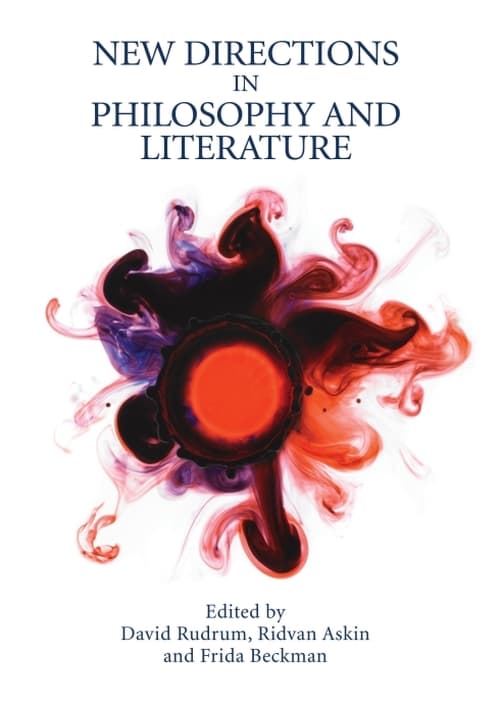
New Directions in Philosophy and Literature

Our ebooks are read in the Academic Reader app. After you buy, we’ll email you how to open your ebook in it.
Description
Maps out how new developments in 21st-century philosophy intersect with the study of literature
- Includes an orientational introduction by Claire Colebrook, one of the world's foremost authorities in the field
- Engages dynamic debates about what it means to be human in face of recent developments in science and technology, the repercussions of anthropogenic climate change, and the overall nature of our contemporary moment
- Draws on new developments in philosophy including speculative realism, object-oriented ontology, the new materialisms, posthumanism, analytic philosophy of language and metaphysics, and ecophilosophy
- Offers close readings of a range of texts from 19th- and 20th-century classics such as Walden, Uncle Tom’s Cabin and Nineteen Eighty-Four to contemporary novels such as A Visit from the Goon Squad, Oryx and Crake and The Stone Gods
This forward-thinking, non-traditional reference work uniquely maps out how new developments in 21st century philosophy are entering into dialogue with the study of literature. Going beyond the familiar methods of analytic philosophy, and with a breadth greater than traditional literary theory, this collection looks at the profound consequences of the interaction between philosophy and literature for questions of ethics, politics, subjectivity, materiality, reality and the nature of the contemporary itself.
Literary Case StudiesOryx and Crake and Year of the Flood by Margaret Atwood
So Close by Hélène Cixous,
10:04 by Ben Lerner
Kapow! by Adam Thirlwell
A Visit from the Goon Squad by Jennifer Egan
Ralph Waldo Emerson’s essays
‘Mississippi’ by William Faulkner
The Flood by Maggie Gee
The Ship by Antonia Honeywell
The Map and the Territory by Michel Houellebecq
Solar by Ian McEwan
When the Floods Came by Clare Morrall
Nineteen Eighty-Four by George Orwell
Percy Bysshe Shelley’s poetry
Super Sad True Love Story by Gary Shteyngart
Walden by Henry David Thoreau
Kapitoil by Teddy Wayne
The Intuitionist by Colson Whitehead
The Stone Gods by Jeanette Winterson
William Wordsworth’s poetry
ContributorsRidvan Askin, University of Basel, Switzerland
R. Scott Bakker, critically acclaimed novelist and independent scholar
Frida Beckman, Stockholm University, Sweden
R. M. Berry, Florida State University (Emeritus), USA
Charlie Blake, University of West London, UK
Astrid Bracke, HAN University of Applied Sciences, Nijmegen, Netherlands
Rey Chow, Duke University, NC, USA
Claire Colebrook, Penn State University, USA
Arne De Boever, California Institute of the Arts, USA
Nicky Gardiner, University of Huddersfield, UK
Alison Gibbons, Sheffield Hallam University, UK
Evan Gottlieb, Oregon State University, USA
Graham Harman, Southern California Institute of Architecture, USA
Birgit Mara Kaiser, Utrecht University, Netherlands
Ingeborg Löfgren, Uppsala University, Sweden
Robert P. Marzec, Purdue University, IN, USA
Helen Palmer, Kingston University London, UK
Adrian Parr, University of Texas Arlington, USA
Graham Priest, City University of New York, USA and University of Melbourne (Emeritus), Australia
David Rudrum. University of Huddersfield, UK
Babette B. Tischleder, University of Göttingen, Germany
Josh Toth, MacEwan University, Canada
Robin van den Akker, Erasmus University College Rotterdam, Netherlands
Timotheus Vermeulen, University of Oslo, Norway
Bryan Vescio, High Point University, NC, USA
David Watson, Uppsala University, Sweden
Contents
Acknowledgements
Editors’ Preface
General Introduction: Opposition of the Faculties, Philosophy’s Literary ImpossibilityClaire Colebrook
Part I: Beyond the Postmodern: Literature, Philosophy, and the Question of the Contemporary
Editor’s Introduction David Rudrum
1. The Polymodern Condition: A Report on Cluelessness David Rudrum
2. Metamodernism: Period, Structure of Feeling, and Cultural Logic – A Case Study into Contemporary Autofiction Robin van den Akker, Alison Gibbons and Timotheus Vermeulen
3. The Ends of Metafiction, or, The Romantic Time of Egan’s Goon Squad Josh Toth
4. Virtually Human: Posthumanism and (Post-)postmodern Cyberspace in Gary Shteyngart’s Super Sad True Love Story Nicky Gardiner
Part II: Beyond the Subject: Posthuman and Nonhuman Literary Criticism
Editor’s Introduction Ridvan Askin
5. Hélène Cixous’s So Close; or, Moving Matters on the Subject Birgit Mara Kaiser
6. Meillassoux, the Critique of Correlationism, and British Romanticism Evan Gottlieb
7. Fictional Objects Fictional Subjects Graham Priest
8. On the Death of Meaning R. Scott Bakker
Part III: Beyond the Object: Reading Literature through Actor-Network Theory, Object-Oriented Philosophy, and the New Materialisms
Editor’s Introduction Ridvan Askin
9. Neither Billiard Ball nor Planet B: Latour’s Gaia, Literary Agency, and the Challenge of Writing Geohistory in the Anthropocene Moment Babette B. Tischleder
10. Three Problems of Formalism: An Object-Oriented View Graham Harman
11. A Field of Heteronyms and Homonyms: New Materialism, Speculative Fabulation, and Wor(l)ding Helen Palmer
12. Emerson’s Speculative Pragmatism Ridvan Askin
Part IV: Ordinary Language Criticism: Reading Literature through Anglo-American Philosophy
Editor’s Introduction David Rudrum
13. Two Examples of Ordinary Language Criticism: Reading Conant Reading Rorty Reading Orwell – Interpretation at the Intersection of Philosophy and Literature Ingeborg Löfgren [Available on Open Access, see Resources]
14. Stanley Cavell and the Politics of Modernism R.M. Berry
15. Inferentialist Semantics, Intimationist Aesthetics, and Walden Bryan Vescio
Part V: Embodiment as Ethics: Literature and Life in the Anthropocene
Editor’s Introduction Frida Beckman
16. Living to Tell the Story: Characterisation, Narrative Perspective, and Ethics in Climate Crisis Flood Novels Astrid Bracke
17. Contemporary Anthropocene Novels: Ian McEwan’s Solar, Jeanette Winterson’s The Stone Gods, Margaret Atwood’s Oryx and Crake and Year of the FloodRobert P. Marzec
18. The Day of the Dark Precursor: Philosophy, Fiction, and Fabulation at the End of the World – A Ficto-Critical Guide Charlie Blake
19. So to Speak Adrian Parr
Part VI: Politics after Discipline: Literature, Life, Control
Editor’s Introduction Frida Beckman
20. Literature’s Biopolitics Rey Chow
21. We Have Been Paranoid Too Long to Stop Now Frida Beckman and Charlie Blake
22. Securing Neoliberalism: The Contingencies of Contemporary US FictionDavid Watson
23. Automatic Art, Automated Trading: Finance, Fiction, and PhilosophyArne De Boever
Notes on ContributorsIndex
Authors
Reviews
This collection definitively demonstrates, from a wide range of philosophical traditions and international perspectives, that the so-called 'death of theory' has been greatly exaggerated. New Directions in Philosophy and Literature offers us just that – bold new ways to think about the ancient quarrel between the poets and the philosophers. Highly recommended.
New Directions in Philosophy and Literature is a book that explores intensively the turns and tensions that have constituted the crossroads between literature and philosophy. The book is an exhaustive work in which the reader can discover new perspectives and debates that are significant for literary studies, the theories of post-humanism and new materialisms.
The relationship between philosophy and literature has always been tempestuous – ranging from ‘ancient quarrel’ to love-in – and much has happened recently. The outstanding international contributors to this ground-breaking volume provide a superb and original introduction to ‘where we are now’ for philosophers, literary theorists, critics and scholars of contemporary fiction.
Goes well with this book
From the same series or subject.
- New Directions in Philosophy and Literature, Ebook (EPUB), £29.99
- Spinoza and Art, Ebook (EPUB), £95.00
- Deleuze and Transcendental Empiricism, Ebook (EPUB), £110.00
More in Philosophy
View allEbook (EPUB)£110.00
Ebook (EPUB)£95.00
Ebook (EPUB)£150.00
Ebook (EPUB)£24.99