

Ebook (EPUB)£95.00
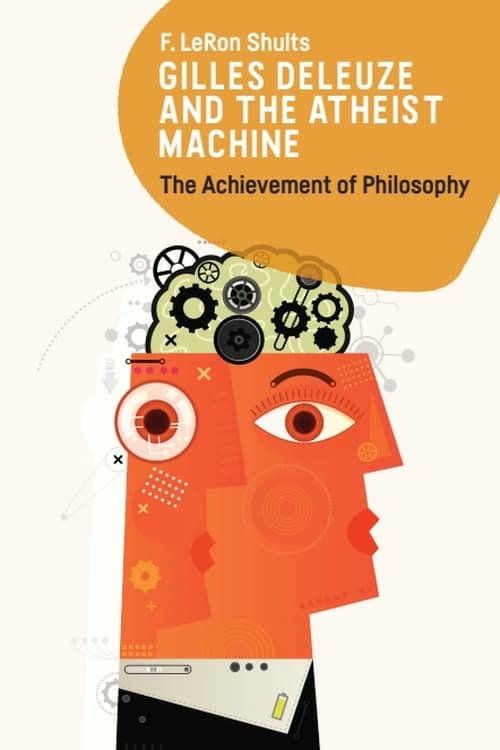
Gilles Deleuze and the Atheist Machine
The Achievement of Philosophy
Open access
Open access under CC-BY-NC-ND 4.0
Description
Addresses societal challenges associated with the Anthropocene
- Explains and illustrates the function of "the atheist machine" in Deleuze’s philosophy
- Brings Deleuzian philosophy into dialogue with developments in computational modeling and social simulation that complement and support his arguments for a metaphysics of immanence
- Shows the relevance of empirical findings in the bio-cultural sciences of religion for Deleuze’s understanding and use of the concept of atheism
In What is Philosophy? Deleuze argued that atheism is not a drama but “the philosopher’s serenity and philosophy’s achievement.” One of Shults’ main goals in this book is to illustrate the uses and effects of an “atheist machine” throughout Deleuze’s work, demonstrating its central role in his philosophical achievements in metaphysics, epistemology, and ethics.
Shults also brings Deleuze’s philosophy into dialogue with recent advances in computational social simulation, especially multi-agent artificial intelligence modelling. The successful development and deployment of such methodologies lend plausibility to Deleuze’s radical philosophy of immanence, which in turn provides the former with more adequate metaphysical moorings. All of this is framed in the context of empirical findings and theoretical developments in the scientific study of religion, which point toward the potentially creative role of atheist assemblages in addressing societal challenges associated with the Anthropocene.
Contents
Preface
1. Atheism as Philosophy’s Achievementi.Achieving atheismii.The speculative and practical purposes of philosophyiii.Given philosophy, what machine can produce it?iv.Given an atheist machine, what can it be used for?v. Philosophy and computational simulation machines
2. Assembling the Atheist Machinei.Alliance and fighters and bias – oh my!ii.The assemblage of (a)theismiii.Deleuzian social machines and the bio-cultural sciences of religioniv.Becoming-atheist: naturalism and secularismv.10,000 years of nonlinear, social-machinic history
3. The Reversal of Platonism and the Rise of Simulationi.The reversal of Platonismii.The rise of simulationiii.DeLanda on multiplicities and mechanism-independenceiv.Virtual phase space and actual simulationsv.The achievement of Deleuze’s metaphysics
4. Assemblage Theory and Multi-Agent Artificial Intelligence Modelingi.Theorizing assemblages in human geographyii.A thousand abstract machinesiii.DeLanda’s assemblage theory and the simulation of emergenceiv.Emergent social assemblages in multi-agent artificial intelligence modelingv.Simulating sustainable social assemblages
5. Simulating (Non)Religioni.The modeling religion project(s)ii.The causes and consequences of "religion"iii.Micro, meso, and macro level mechanisms in religious radicalizationiv.Computational models that predict (and prevent) theismv.The achievement of Deleuze’s metaepistemology
6. Strategies for Promoting Safe SectsiThe (mal)adaptiveness of theismii.Talking about safe sectsiii.Experimenting with safe sectsiv.Prebunking theismv.Sustainable altruism in the Anthropocene
7. A Germ of Tranquil Atheismi.How Christ was born(e)ii.How Christianity will dieiii.Theist credulity and conformity biases in "philosophy of religion"iv.Computer modeling and philosophy of religionv.The achievement of Deleuze’s metaethics
8. How Do You Make Yourself an Atheist Body without Organs?i.To be done with the Judgment of Godii.A joy immanent to desireiii.Becoming-sorcereriv.The brain-subjectv.The philosopher’s serenity
ReferencesIndex
Author
Reviews
Not since DeLanda’s Philosophy and Simulation has there been so penetrating an analysis of the philosophic consequences of systems thinking. Shults has found the atheist machine and wants us all to know that there’s no turning it off.
Goes well with this book
From the same series or subject.
More in Philosophy
View allEbook (EPUB)£110.00

Ebook (EPUB)£95.00

Ebook (EPUB)£150.00

Ebook (EPUB)£24.99