Ebook (EPUB)£95.00
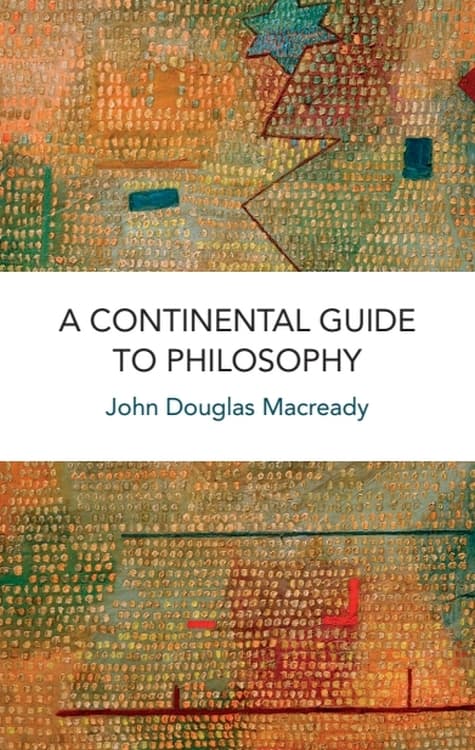
A Continental Guide to Philosophy

Our ebooks are read in the Academic Reader app. After you buy, we’ll email you how to open your ebook in it.
Description
Helps you understand the central debates in the three main branches of Continental philosophy: metaphysics, epistemology, and ethics
- Defines key terms like forms (Plato), substance (Descartes), impressions (Hume), transcendental (Kant), culture (Nietzsche), and action (Arendt) at the beginning of each chapter
- Teaches you how to read philosophical texts by introducing you to 5 elements that can be analysed in every text: question, concept, claims, evidence, and implications
- Includes chapter summaries, questions for further discussion to help you consolidate your own ideas, and a historical timeline to contextualize each philosopher’s life and work
What is real? How can we know what is real? How might we live authentically? These are the three fundamental questions about metaphysics, epistemology, and ethics. John Macready guides you through these questions by reading three pairs of philosophers and texts:
- Metaphysics: Plato's Sophist and Descartes's Meditations on First Philosophy
- Epistemology: Hume's An Enquiry Concerning Human Understanding and Kant's Prolegomena to Any Future Metaphysics
- Ethics: Nietzsche's ‘Schopenhauer as Educator’ and Arendt's ‘Labor, Work, and Action’
Each chapter introduces you to basic philosophical problems, concepts, and methods of philosophical inquiry. You'll learn how to read and understand these key texts so that you can answer these three questions for yourself.
Contents
GlossaryTimeline
Introduction
- Three Basic Questions
- A Continental Tour of Philosophy
- How to Use this Book
- How to Read Philosophical Texts
Part I: Metaphysics. What is real? Plato and Descartes
1. Plato: The Hunt for the Real
- The Aim of Philosophy
- Being and Appearance and the Problem of Difference
- The Vermeer Forgeries
- The Problem of Identity and Difference
- How to Give an Account of the Real
- Only Forms are Real
- The Hunt for a Slippery Beast
2. Plato: The Net of Language
- The Problem of Being
- The Problem of Language
- Imitation and Knowledge
- The Hunt for Being: Four Views
- The Five Kinds
3. Descartes: Mind and Reality
- The Meditations are Spiritual Exercises
- The Substance of Reality
- Meditation 1: Doubting Reality
- Meditation 2: The Reality of Me
- Meditation 3: The Reality of God
4. Descartes: Truth and World
- Meditation 4: Judgment and Truth
- Meditation 5: God, Things, and Ideas
- Meditation 6: The Reality of the World
Part II: Epistemology. How can we know what is real? Hume and Kant
5. Hume: The Mind is an Assemblage of Ideas
- A Conceptual Revolution
- Hume’s Clash with Rationalism
- A New Kind of Philosophy
- Hume’s Atomism and Associationism
- The Cartesian Ego vs the Assemblage of the Self
- Innate Ideas vs Copies of Impressions
- Knowledge vs Belief
- The Fragile Connection between Cause and Effect
6. Hume: Skepticism and Truth
- Probability and Belief
- The Illusion of Connection
- Are We Free or Determined?
- Should We Believe in God or Miracles?
- Skepticism as Philosophical Therapy
- Hume and the Idea of Race
7. Kant: The Architecture of the Mind
- Hume’s Problem and Kant’s Awakening
- Critical Philosophy
- Knowledge and Judgments
- Mathematical Judgments are Synthetic A Priori Judgments
- Natural Science Judgments are Synthetic A Priori Judgments
8. Kant: Virtual Reality and the Limits of Reason
- The Problem of Reality and Appearances
- The Threefold Synthesis
- Reason and the Three Dialectical Illusions
- Metaphysical Judgments are Synthetic A Priori
Part III: Ethics. How might we live Authentically? Nietzsche and Arendt
9. Nietzsche: Become Who You Are!
- How to Know Yourself
- Three Exemplary Qualities of an Authentic Life
- The Dangers of an Authentic Life
10. Nietzsche: The Creative Life
- Modern Culture is Dehumanizing
- How to Become a Child
- Modern Culture is Egotistic and Tyrannical
- Three Images of Creative Spirits
- The Meaning of Life is to Contribute to Culture
- The Two Sacraments of Culture
- Beware of the Four Enemies of Culture
11. Arendt: Think What We Are Doing!
- The Prejudice of Philosophy and Worldlessness
- The Recovery of the Public World
- The Two Ways of Life
- The Pre-Philosophic View of the Active Life
- The Philosophical View: Political Action as Work
- The Modern View: Political Action as Labor
12. Arendt: The Political Life
- Labor is Natural and Necessary
- Labor is Not Work
- Work Makes the World
- Action Reveals Who We Are
- Behavior vs. Action
Conclusion: Philosophy for Life
Suggestions for Further ReadingBibliographyIndex
Author
Reviews
A lively, reliable survey of classical philosophical problems from the specific perspective of continental philosophy. Macready's approach is both historical and systematic. Besides examining familiar puzzles about sticks that look bent in water and unpredictable billiard balls, he raises fascinating questions about forged Vermeers, the location of the Statue of Liberty, and milkshakes made of mashed potatoes.
John Macready’s A Continental Guide to Philosophy provides a great service to both teachers and students of philosophy. It is invariably clear, and its format makes it ideal for lecturers teaching intro to philosophy. Most importantly, students will appreciate the way concrete illustrations and concepts are woven together.
John Macready has written an incredibly accessible guide to Continental Philosophy that will enrich anyone's journey through the western canon. Offering an historically grounded introduction to the three fundamental branches of philosophy—metaphysics, epistemology, and ethics—Macready gives readers something to hold onto as they work their way from Plato to Hannah Arendt. Serving as syllabus and companion, this updated version of a textbook will be indispensable to students and professors alike.
This is a true, and truly useful, beginner’s guide. It genuinely guides the reader and assumes no background in philosophy. It is evident that Macready is writing from firsthand teaching experience and that he understands what it takes to initiate students into the practice of philosophical thinking.
Goes well with this book
From the same series or subject.
- A Continental Guide to Philosophy, Ebook (EPUB), £17.99
- Spinoza and Art, Ebook (EPUB), £95.00

- Deleuze and Transcendental Empiricism, Ebook (EPUB), £110.00
More in Philosophy
View allEbook (EPUB)£110.00
Ebook (EPUB)£95.00

Ebook (EPUB)£150.00

Ebook (EPUB)£24.99