Ebook (EPUB)£95.00
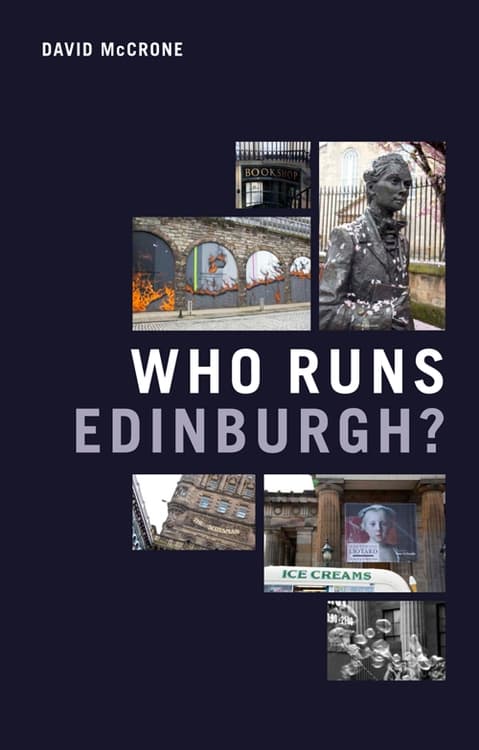
Who Runs Edinburgh?

Our ebooks are read in the Academic Reader app. After you buy, we’ll email you how to open your ebook in it.
Description
Explores where power and status lie in Edinburgh
- Looks behind the Edinburgh façade of tourism and festivals
- Focuses on power and status in the city
- Examines the social, ethnic and gender dynamics of Edinburgh
- Examines how Edinburgh became Festival City
- Explores schools and cultural power
- Analyses planning controversies, including The Trams
This book, written by a leading sociologist, tells Edinburgh's modern story and unveils its power structure. It examines its politics, formal and informal; its changing political economy; and the rise of its status as Festival city. Behind all this lies a complex system of money and culture, of presumed social status tied into a hierarchy of schools and institutions, universities, banks and finance houses. The book explores arguments about what sort of city Edinburgh should be and what it should look like. It examines planning controversies, from post-war developments through various ‘holes in the ground’ up to and including The Trams controversy. Studying Edinburgh lets us draw lessons about cities in general, and their roles in the modern world.
Contents
Preface
Chapter 1: Who Runs Edinburgh?
- Studying Power
- From City to State and beyond
- The Ecology of Games
- Who governs this place?
- Getting at Who Governs
- Edinburgh Games
- A Tale of Two Cities
- Tackling the question
- Conclusion
Chapter 2: Politics in Edinburgh
- The rise and fall of political parochialism
- Early 20th Century municipal politics
- Inter-War Municipal Politics
- Post-war politics
- The political economy of Edinburgh
- People of property
- Segregation in Edinburgh
- Conclusion
Chapter 3: Winners and Losers: The Political Economy of Edinburgh
- Edinburgh Castes
- Edinburgh Today
- The Transformation of Edinburgh
- Abercrombie’s Edinburgh
- Twenty Years On
- Edinburgh: City of Money
- Conclusion
Chapter 4: Treading Angels: Edinburgh and its Festivals
- Branding Place
- Festival Dreaming
- The Fringe on Top
- Whose Festival is it anyway?
- Keeping the show on the road
- He who pays the piper
- Regime change
- Supporting Casts and Noises Off
- 'Up a winding staircase’
- Conclusion
Chapter 5: Are You One of Us? Status in the City
- The social worlds of Edinburgh
- The world of clubs
- Elites in Edinburgh
- In the Company of Merchants
- A Club of One’s Own
- Does the New Club matter?
- What are clubs for?
- Changing Members
- Anecdotage
- The politics of the New Club
- Conclusion: knowing who your friends are
Chapter 6: What school did you go to? Education and Status in Edinburgh
- Paying the fees
- Eton of the North
- Day Schools
- Educating ladies
- Attacking Fees: the end of grant-aid
- Going Independent
- Documenting schools
- What’s the Pay-Off?
- An Edinburgh ruling caste?
- Conclusion
Chapter 7: Enlightened City: Cultural Power and University Life
- Understanding the Tounis College
- The making of a university
- The university versus the city
- Whose university is it anyway?
- The Englishing of Scotland?
- City of Enlightenment
- Professional Edinburgh
- Conclusion
Chapter 8: Developing Edinburgh: Pies in the Sky, Holes in the Ground
- City as Growth Machine
- Out on the Edge
- Edinburgh Park
- The BioQuarter
- Shawfair
- Downtown Developments: There Shall be a Scottish Parliament
- What’s in a Name? from St James Centre to Edinburgh St James
- Caltongate (No More)
- Back to the Periphery: The Waterfront
- What’s in it, and for whom?
- Conclusion: Whose city is it anyway?
Chapter 9: Lost in Leith: Accounting for Edinburgh’s Trams
- Trams: ancient and modern
- Reinventing Trams
- 'Not our project’: governing trams
- The Council and the Trams
- The Blame Game
- Trams and agencement
- Trams as mega-project
- State outsourcing
- The Calculable City
- Infrastructural Redemption: On to Newhaven
- Conclusion: ticket to ride
Chapter 10: Does Anyone Really Run Edinburgh?
- Ecology of Games
- Presenting Edinburgh
- Imaginary city
- A Governing They?
- Power and politics
- Schooling and Status
- Performing Edinburgh
- Eroding Power
- The Decline of Money
- Space and Place
- Spreading Power
- Reading the Papers
- Education and status
- Edinburgh Others
- Female Edinburgh
- Working class city
- City of Incomers
- So does anyone run Edinburgh?
- Open for business
- Conclusion: smoke and mirrors
Bibliography
Author
Reviews
David McCrone is a clear-eyed observer of Edinburgh and its peculiarities. He has here constructed a multifaceted analysis of power in the city, firmly grounded in urban sociology, contemporary public administration, and a keen understanding of Edinburgh’s history. Its style is approachable and engaged. This is an essential addition to the literature of Edinburgh.
The author of The New Sociology of Scotland (2017) adds to his scholarly production another masterful work, revealing his profound attachment to Edinburgh, but also the unique width and depth of his sociological sophistication. It discusses also non-conventional aspects of the town's landscape, for instance the diverse (and contrasting) private vs public makings of various sections of it, and the economic interests each embodies - or sacrifices. But McCrone also contributes most convincingly to the challenging question "who runs Edinburgh?"
David McCrone, the greatest of all analysts of Scotland, turns his attention here to the changing character of Edinburgh, the city in which he lives. The book is luminous, original, amusing and brilliant—the best book on the city and a major contribution to understanding the nature of cities in the contemporary world.
Goes well with this book
From the same series or subject.
- Who Runs Edinburgh?, Ebook (EPUB), £14.99
- Presbyterian Strathspey in the Jacobite Era, Ebook (EPUB), £95.00
- The Estate and the Country House in Scotland, circa 1700, Ebook (EPUB), £95.00
More in Scottish Studies
View allEbook (EPUB)£95.00
Ebook (EPUB)£95.00
Ebook (EPUB)£95.00