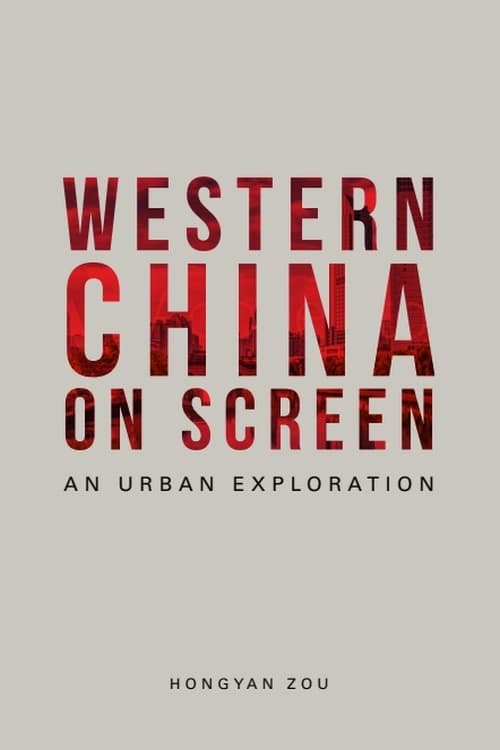
Western China on Screen
An Urban Exploration

Our ebooks are read in the Academic Reader app. After you buy, we’ll email you how to open your ebook in it.
Description
- Bridges the gap where the cinematic landscape in China has long been dominated by developed metropolises
- Breaks the cinematic stereotypes of the region characterised by rural and ethnographic images in films such as Yellow Earth (dir. Chen Kaige, 1984) and Old Well (dir. Wu Tianming, 1987) by adding the urban facets of western China
- Explores four Han-dominated urban centres of western China (Chongqing, Chengdu, Xi’an and Lanzhou) represented in films investigating material spaces
- Discusses class, gender, post-colonialism and the history of post-socialism
Exploring the stories, memories and experiences attached to places, Western China on Screen is the first monograph to explore the affinity between the cinema and cities of western China through a spatial perspective. Investigating how cinematic cities in western China appear as both spaces of national power and enclosed spaces of traditional cultural values, the book diversifies the glamourised image of the post-socialist, technocratic metropolises of Beijing and Shanghai, breaking the long-existing rural and ethnographical images of western China established by Chinese Fifth Generation directors. Through case studies of films such as Rainclouds Over Wushan (1996), Buddha Mountain (2010) and Weaving Girl (2010), the book establishes a new way of looking at western urban China on screen: from a space of production to a space of increasing consumption.
Contents
Chapter One: Introduction: Cinematic western China: the under-represented cinematic cities
Chinese Western cinema
Chinese cities and cinema: an imbalanced representation
Organisation of the book
Chapter Two: Cinematic Chongqing: History, Cityscape and Spatial Stratification
Chongqing in films: a brief account
The stratification of high and low spaces
Chapter Three: National Projects and Disappearing Spaces: the Mundane Daily
Practices MatterRainclouds over Wushan—lived space matters
Still Life—expectation becomes stillness from Wushan to Fengjie
Chapter Four: Cinematic Chengdu: Erasing Socialist Utopia through Political
ReorientationChengdu in films
24 City: making way for a modern space
Chapter Five: Natural disaster and trauma: dysfunctional families in urban space
Buddha Mountain: nature, a railway station and religious redemption
Chapter Six: Cinematic Xi’an: from an enclosed traditional space to a sprawling
urban spaceXi’an and adjacent area on screen
Back to Back, Face to Face: the flâneur walking in an enclosed space
Chapter Seven: Female space and bodies as the medium of social representations
The Story of Ermei: female’s social status in rural and urban spaces
Weaving Girl: state-owned enterprise and the female worker
Chapter Eight: Cinematic Lanzhou: the rural victim of urban manipulative domination
The cinematic city as an absent presence
A Fool, the rural victim of urban manipulative domination
Chapter Nine: Conclusion
Bibliography
Filmography
Author
Reviews
Hongyan Zou’s skilful analysis rewrites the Chinese West and the Chinese Western genre we thought we knew as dry and dusty pioneer lands in 1980s films like Yellow Earth. Her lively writing reveals a regional cinema of many genres depicting historic cities with distinct identities and rich cultures undergoing explosive growth and ultra-rapid modernisation.
Goes well with this book
From the same series or subject.
- Western China on Screen, Ebook (EPUB), £22.99
- Adapting American Adulthood, Ebook (EPUB), £90.00
- Isabelle Adjani, Ebook (PDF), £19.99
More in Film Studies
View all
Ebook (EPUB)£90.00
Ebook (PDF)£19.99
Ebook (EPUB)£95.00
£24.99