Ebook (EPUB)£125.00
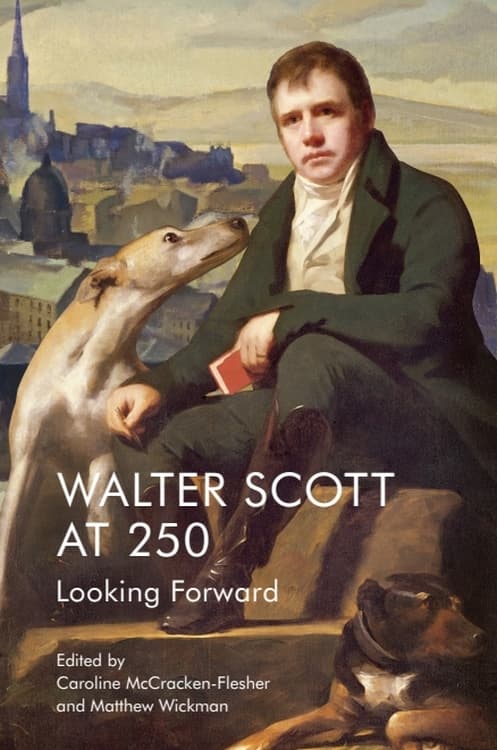
Walter Scott at 250
Looking Forward

Our ebooks are read in the Academic Reader app. After you buy, we’ll email you how to open your ebook in it.
Description
Walter Scott in the twenty-first century
- Ten essays that show Scott is a man for our times
- Major scholars introduce a new Walter Scott
- New ideas on the novel and temporality
- New ideas about Scott’s playful textuality
- Introducing the women of Abbotsford
At 250, Walter Scott points toward our possible futures. Scott, although we necessarily look on his times as past, of course experienced them as present. His times were times of crisis. Scott, then, has much to share in the experience, narration, anticipation and response to change as a condition of life – a condition our era, with its existential challenges to climate, to public health, to civilization knows only too well. In Scott at 250, major scholars foreground the author as theorist of tomorrow – as the surveyor of the complexities of the present who also gazes, as we do, toward an anxious and hopeful future.
Contents
AcknowledgementsAbbreviations and Shortened Forms of ReferenceIntroduction: Walter Scott at 250 – and Counting, Caroline McCracken-Flesher and Matthew Wickman
1. Temporality and Historical Fiction Reading in Scott, Ina Ferris2. ‘I bide my time’: History and the Future Anterior in The Bride of Lammermoor, Penny Fielding3. Scott’s Anachronisms, Ian Duncan4. Scott, the Novel, and Capital in the Nineteenth Century, Anthony Jarrells5. The General Undertaker: Scott’s Life of Napoleon Buonaparte and the Prehistory of Neoliberalism, Celeste Langan6. Scott and the Art of Surplusage: Excess in the Narrative Poems, Alison Lumsden7. Performing History: Theatricality, Gender, the Early Historical Novel and Scott, Fiona Price8. Where we Never Were: Women at Walter Scott’s Abbotsford, Caroline McCracken-Flesher9. Reading Walter Scott in the Anthropocene, Susan Oliver10. Redgauntlet: Speculation in History, Speculation in Nature, Matthew Wickman
BibliographyNotes on ContributorsIndex
Authors
Reviews
‘Correctly identifying Scott in 1825 as "undoubtedly the most popular writer of the age", William Hazlitt also lodged a complaint against him: "He is just half what the human intellect is capable of being: if you take the universe, and divide it into two parts, he knows all that it has been; all that it is to be is nothing to him." But then, rephrasing, Hazlitt produces a pithier and more apt formulation, calling Scott a "prophesier of things past". Without citing Hazlitt’s punchline, this commemorative anthology of essays teases out its implications. This book is a thoughtful and provocative exploration of how reading Scott might matter going forward – for futures past, and passing, and to come.’
Goes well with this book
From the same series or subject.
- Walter Scott at 250, Ebook (EPUB), £22.99
- Narrative of the Life of Sir Walter Scott, Bart., Volume II, Ebook (EPUB), £125.00
- Intermedial Authorship, Ebook (EPUB), £110.00
More in Literary Studies
View allEbook (EPUB)£110.00
Ebook (EPUB)£90.00
Ebook (EPUB)£90.00
Ebook (EPUB)£90.00