Ebook (EPUB)£125.00
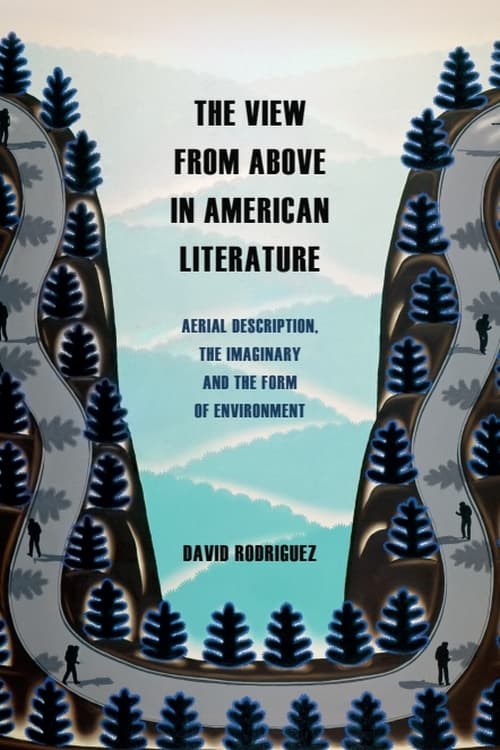
The View from Above in American Literature
Aerial Description, the Imaginary and the Form of Environment

Our ebooks are read in the Academic Reader app. After you buy, we’ll email you how to open your ebook in it.
Description
Develops a new theory of literary imagination for the Anthropocene by analysing descriptions of the environment from above
- Honorable Mention from the The Narrative Society 2026 Perkins Prize
- Engages with ecocriticism, narratology, and phenomenology to update concepts and critical inquiries for analysis that foregrounds nonanthropocentric reading strategies now relevant in humanistic study of climate change and the Anthropocene
- Develops a theory of literary reading that foregrounds descriptions through rereadings of Roman Ingarden and Wolfgang Iser in the context of New Formalism
- Presents major new analyses of Willa Cather, Paul Bowles, and Don DeLillo, with additional analysis of works by Nathaniel Hawthorne, Edgar Allen Poe, Sarah Orne Jewett, William Gibson, Karen Tei Yamashita, Harry Mathews, Teju Cole, Ben Lerner, Tao Lin, Andrew Durbin, and Lorrie Moore
- Creates a critical history of the view from above across culture and aesthetic representation from early aerial photography to satellite and drone imagery
- Develops new theoretical terms for use across disciplines: aerial description and the form of environment
- Argues that literary fiction presents a valuable counternarrative to governmental use and production of images of the environment from above for colonialization and globalization
Readers encounter the environment through literature in ways not available to everyday perception. This is especially clear when a text integrates the grand vistas of what is known as the bird’s-eye view. In this welcome contribution to the contemporary theoretical discussion about storied environments and non-human perceptions, David Rodriguez presents an original interpretation of the aesthetics of the view from above. Focusing on fiction by twentieth-century American writers including Willa Cather, Paul Bowles and Don DeLillo, Rodriguez skilfully combines ecocriticism, narrative theory and phenomenological approaches to literature to develop the term ‘form of environment’. This theory of literary fiction foregrounds the environment not as setting or historical context, but as an equal agent with the human figures and scales that are normally the focus of literary analysis.
Contents
List of Figures
Acknowledgements
Introduction: Flights Without Wings
1. Foundations for the View from Above in Literary Fiction: Description, Form and Indeterminacy
2. Extent, Built Form and Willa Cather’s Landscapes
3. Verticality and Empty Thematics in Paul Bowles's Novels
4. ‘Only Scenery’: Scale, Whole-Earth Images and Don DeLillo’s ‘Human Moments in World War III’
Conclusion: On Drone and Satellite Images
Bibliography
Index
Author
Reviews
David Rodriguez ably demonstrates how 'aerial description' at once establishes and transforms the spaces of American literature in the work of Willa Cather, Paul Bowles and Don DeLillo, among others. The result is a superb study of literary cartography, disclosing the power of the imagination to alter the ways we understand our environment and its conditions today.
Goes well with this book
From the same series or subject.
- The View from Above in American Literature, Ebook (EPUB), £24.99
- Narrative of the Life of Sir Walter Scott, Bart., Volume II, Ebook (EPUB), £125.00
- Intermedial Authorship, Ebook (EPUB), £110.00
More in Literary Studies
View allEbook (EPUB)£110.00
Ebook (EPUB)£90.00
Ebook (EPUB)£90.00
Ebook (EPUB)£90.00