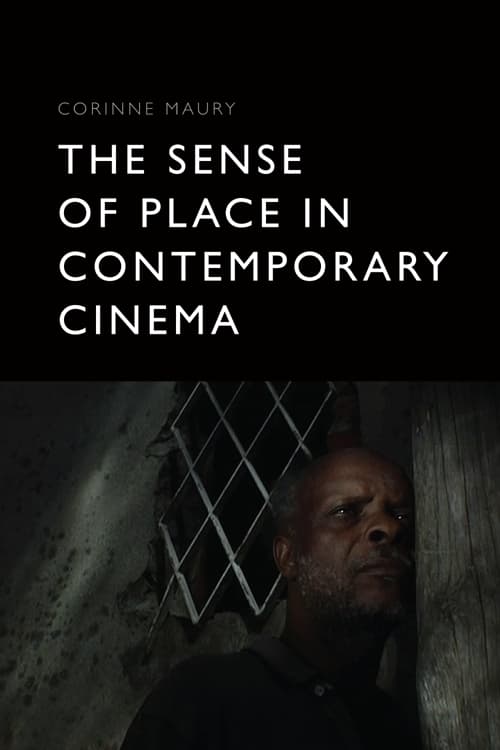
The Sense of Place in Contemporary Cinema

Our ebooks are read in the Academic Reader app. After you buy, we’ll email you how to open your ebook in it.
Description
- Analyzes the importance of the notion of place in contemporary cinema, using in particular theories of space that were developed in the fields of geography and anthropology (landscapes, territories, site)
- Employs the various theories of space in cinema that have been developed since the 1960's, most particularly from a phenomenological point of view
- Includes European, North and South American, Russian and Asian contemporary films
What purpose does place serve in films? When it is not just a background to actions, or indistinguishable from the landscape, or a simple space to walk through, a kind of neutral territory? Such filmmakers as Chantal Akerman, Lisandro Alonso, Pedro Costa, Bruno Dumont, Béla Tarr, Avi Mograbi, Tariq Teguia, Philippe Grandrieux, Danièle Huillet & Jean-Marie Straub and Sharunas Bartas, chose not to focus solely the cinematic narration on the fate of the characters. They showed telluric spatialities, inhabited territories, existential matrices where ways of doing and of living were mobilized, where forces of emancipation and existential weaknesses were carried out. Welcoming rooms, remarkable transitions, havens for individual and communal destinies: place in cinema sometimes implies the insecurity of an unfinished project, sometimes the solidity of fortifications. The Sense of Place in Cinema demonstrates the importance of place and its aesthetic potentialities in film.
Contents
Introduction
Part I: Chantal Akerman: Cloistered Nomadism
1. Blow Up My Town, everyday rowdiness
2. Jeanne Dielman: neurotic seclusion
3. From cities to walls, a local change of scenery
Part II: The House as a Place of Declarations and Meditations
4. Avi Mograbi, The Political Workshop
5. A Moving Inwardness: Alexander Sokurov’s A Humble Life
Part III: The Forest: From Sensory Environment to Economic Site
6. Philippe Grandrieux’s forest-matter: a multisensory place
7. Naomi Kawase’s The Mourning Forest: the March of Bodies, the Spiritual Journey
8. Danièle Huillet and Jean-Marie Straub: The "Sacred Sobriety" of the Undergrowth
9. Lisandro Alonso’s La Libertad and Los Muertos: the Dual Forest
Part IV: The Banlieue: Off-centred, Isolated10. Pasolini’s Vacant Lots
11. Pedro Costa’s Colossal Youth: From the Slums to the Sanitised Apartment
12. Tariq Teguia and the Algerian Banlieue: A Field of Ruins
Part V: The Strangeness of Places and the Solitude of Men
14. Bruno Dumont’s Hamlets: Cursed and Isolated Places
15. Béla Tarr, Waiting Behind Barricades
16. Sharunas Bartas’ Undergrounds
Epilogue Table of figuresBibliography
Author
Reviews
Corinne Maury renews film studies in depth, revealing the inseparable aesthetic and political perspective of a cinematographic creation in tune with our tormented history. The Sense of Place in Contemporary Cinema is a truly engaged book that makes space an operator of duration, where images of spaces promote the conquest of an emancipated time or in the process of being so.
Goes well with this book
From the same series or subject.
- The Sense of Place in Contemporary Cinema, Ebook (EPUB), £20.99
- Adapting American Adulthood, Ebook (EPUB), £90.00
- Isabelle Adjani, Ebook (PDF), £19.99

More in Film Studies
View all
Ebook (EPUB)£90.00
Ebook (PDF)£19.99
Ebook (EPUB)£95.00
£24.99