Ebook (EPUB)£125.00
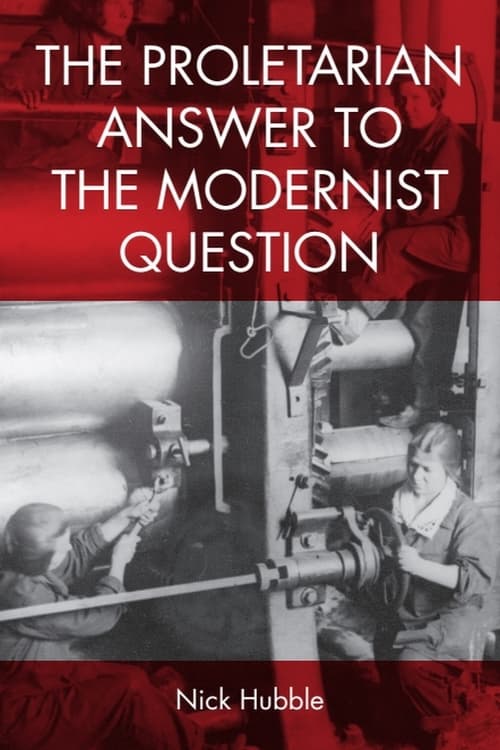
The Proletarian Answer to the Modernist Question

Our ebooks are read in the Academic Reader app. After you buy, we’ll email you how to open your ebook in it.
Description
Reformulates our understanding of the relationship between proletarian literature and modernism in Britain
This book argues that British proletarian literature was a politicised form of modernism which culturally transformed Britain. Critical analysis and close readings of key works such as D.H. Lawrence’s Lady Chatterley’s Lover, Naomi Mitchison’s We have Been Warned, Lewis Grassic Gibbon’s A Scots Quair and John Sommerfield’s May Day, are placed within a literary history stretching from early encounters between Ford Madox Ford and D.H. Lawrence, through Virginia Woolf’s association with the Women’s Co-operative Guild, and on to the activity of Mass Observation in the late 1930s and 1940s. The study analyses the way in which modernism and proletarian literature were related to an intersectional web of class and gender that took on a potent political shape following the 1926 General Strike and the Equal Franchise Act of 1928. The 1930s is revealed not as an atypical, isolated decade but as central to the literature of the twentieth century.
Key Features- Relates modernism to the intersubjective dimension of society
- Sets out a new perspective on proletarian literature in Britain, releasing it from limiting conceptions of working class authenticity or Soviet-imposed socialist realism
- Shows how modernism and proletarian literature were linked products of the (broadly) fin-de-siècle emergence of the unconscious that fractured nineteenth-century grand narratives
- Provides an historical framework for rethinking the 1930s as not an atypical isolated decade but as central to the literature of the twentieth century
Contents
Introduction
1. ‘Her Heritage was that Tragic Optimism’: Edwardian Pastoral
2. ‘The Common Life’: Women and Men after the General Strike
3. ‘She Had Finished with Men Forever’: Lewis Grassic Gibbon’s Grey Granite
4. ‘The Raw Material of History’: John Sommerfield’s May Day
5. ‘None of That "My Good Woman" Stuff’: Outsider Observations
Conclusion
Author
Reviews
...the ambitions of The Proletarian Answer to the Modernist Question stretch far beyond the specific texts that Hubble analyses. For he is one of our sharpest thinkers about the problems of contemporary “Modernist studies” in academia...
The Proletarian Answer to the Modernist Question is an important contribution to the necessary work of integrating it in literary history, a process that has the potential to alter the existing order in broad as well as narrow ways.
Nick Hubble is a subtle and adept theorist, an engaging and authoritative guide to the political meanings of diverse literary genres and a sensitive reader with an easy reference to a broad range of key primary and secondary texts. He is an expert whose feeling for the drama of everyday life and command of history turns his modernist readers into experts on proletarian literature, too.
Goes well with this book
From the same series or subject.
- The Proletarian Answer to the Modernist Question, Ebook (EPUB), £25.99
- Narrative of the Life of Sir Walter Scott, Bart., Volume II, Ebook (EPUB), £125.00
- Intermedial Authorship, Ebook (EPUB), £110.00
More in Literary Studies
View allEbook (EPUB)£110.00
Ebook (EPUB)£90.00
Ebook (EPUB)£90.00
Ebook (EPUB)£90.00