Ebook (EPUB)£85.00
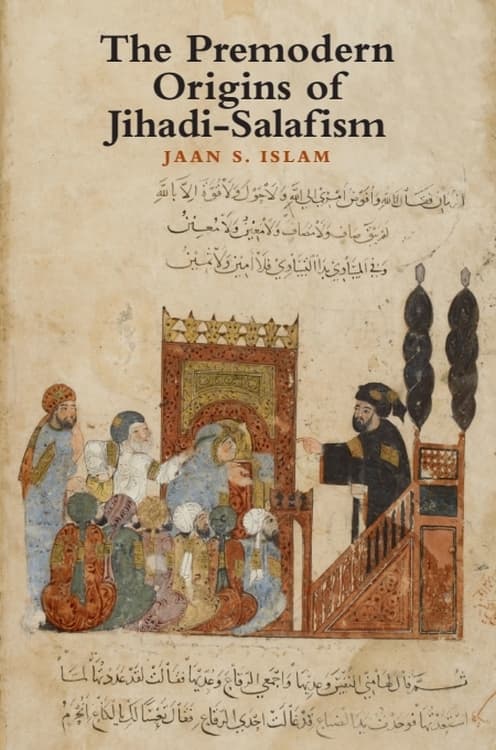
The Premodern Origins of Jihadi-Salafism

Our ebooks are read in the Academic Reader app. After you buy, we’ll email you how to open your ebook in it.
Description
What is Jihadi-Salafism and how does it relate to classical Islam? Scholars of Terrorism Studies argue that ‘Jihadism’ and Salafism are derivatives of Wahhābism and lie on the ideological margins of the Islamic tradition. This book challenges this narrative, demonstrating that concepts associated with the terms – including ‘divine sovereignty’, ‘jihad’ and ‘the caliphate’ – are utilised by Salafi Ulama in connection with the following disparate classical Islamic traditions: Shāfiʿite legal theory during the Mongol invasions; Ottoman and Indian anti-colonial Ḥanafite thought; Mālikite and Shāfiʿite ‘political jurisprudence’; and the literalism of the Yemeni luminary Muḥammad al-Shawkānī (d. 1834).
This is the first book to disaggregate linear histories of Jihadi-Salafism by shifting the focus from Wahhābism to Sunnism, including Māturīdite and Ashʿarite doctrinal schools and the ‘four schools’ of law. Based on archival research and interviews, it examines the thought of diverse Ulama, ranging from ʿAbdullah ʿAzzām to Abū Muḥammad al-Maqdisī. It highlights their profound commitment to the classical Islamic sciences, as well as their distinct interpretations of historical crises that befell the premodern Umma, ultimately articulating a vision for its future.
Contents
Dedication
Acknowledgements
List of Figures
Note on Translation and Transliteration
1. Proposing an Alternative History of Jihadi-Salafism
2. A Brief History of Global Jihad
3. Introducing Salafi Hermeneutics: Questioning the Myth of ‘Jihadi-Salafism’
4. ‘Political Jurisprudence’: Theorizing the Early Caliphate (Tenth to Thirteenth Century)
5. The Convergence of Legal Theory and Exegesis: Shāfiʿī-Ashʿarism and the Condemnation of Secular Rulers
6. The Sharīʿa and Secularism: From the Mamlūks to Modernity
7. Sultanate and Sharīʿa in Ottoman Political Thought: From Māturīdite Exegesis to post-Caliphate Nostalgia (17th-13th/14th-20th c.)
8. Indian Ḥanafite Origins of Ḥākimiyya as a Decolonial Alternative
9. Reinventing Legal Theory: The Salafi Revival of Literalism (18th c.) and Comparative Jurisprudence
Epilogue: Retheorizing Islamic Political Thought in the Twenty-First Century
Bibliography
Index
Author
Reviews
For scholars of Islamic law, political theology, Salafism, jihad studies and the history of Sunni thought, this is an indispensable book. Even readers who remain unconvinced by every aspect of its argument will come away with a far deeper appreciation of the complexity of the intellectual traditions that continue to shape contemporary debates. The hallmark of truly important scholarship is not that everyone agrees with it, but that nobody who has read it can continue thinking about the subject in quite the same way. By that standard, The Premodern Origins of Jihadi-Salafism is an outstanding achievement.
Few subjects in contemporary scholarship have generated as much confusion as the intellectual foundations of jihadist movements. The dominant tendency in terrorism studies has been to treat these movements either as products of modern political grievance or as doctrinal aberrations with shallow historical roots. The Premodern Origins of Jihadi-Salafism pushes back against both tendencies with considerable force, and the result is one of the more consequential contributions to the study of Islamic political thought in recent years. Unlike the security studies scholarship of Thomas Hegghammer, Joas Wagemakers, Shiraz Maher, and Daniel Lav, Islam takes a different path altogether, looking for shared jurisprudential ground across the premodern Sunni tradition. In doing so, he traces how concepts such as jihad and Divine Sovereignty are rooted in the intellectual traditions of Muslim jurisprudence, exegesis, and theology, across the Seljuq, Mamluk, Ottoman, and British Indian periods, reflecting a methodological commitment to Islamic intellectual history.
Perhaps the book’s most important intervention is its sustained critique of the liberal secular imagination through which Islam has frequently been interpreted in contemporary scholarship. Rather than reproducing familiar binaries between moderate and extremist Islam, rational and irrational religion, or traditional and radical Muslims, the author reveals the multilayered and internally contested character of Islamic intellectual traditions. This represents an important corrective to the tendency within terrorism studies to reduce the figure of the mujahid to one-dimensional representations of irrational violence.
This iconoclastic book mounts a multi-pronged challenge against the field of "jihad studies" - a field that all too often serves to provide scholarly cover for Western imperial adventurism abroad and Islamophobic securitisation at home. This is the rare kind of book that combines rigorous intellectual history with significant potential for positive social impact. As well as critique, it offers a careful historical genealogy for the doctrine of jihad in Islam, as well as its controversial deployment in the context of contemporary coloniality. While the argument may elicit opposition, it cannot and should not be ignored.
Goes well with this book
From the same series or subject.
- The Premodern Origins of Jihadi-Salafism, Ebook (EPUB), £95.00
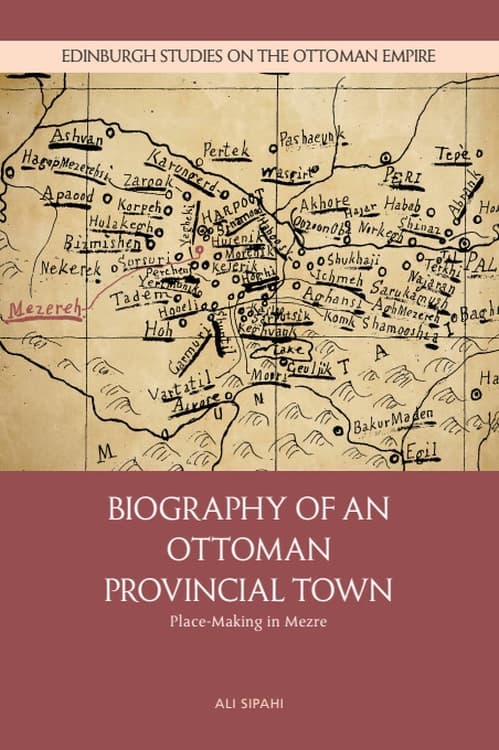
- Biography of an Ottoman Provincial Town, Ebook (EPUB), £85.00
- Demographic Anxiety in Turkey, Ebook (EPUB), £90.00
More in IMES
View allEbook (EPUB)£90.00
Ebook (EPUB)£14.99
Ebook (EPUB)£100.00

Ebook (EPUB)£95.00