Ebook (EPUB)£25.00
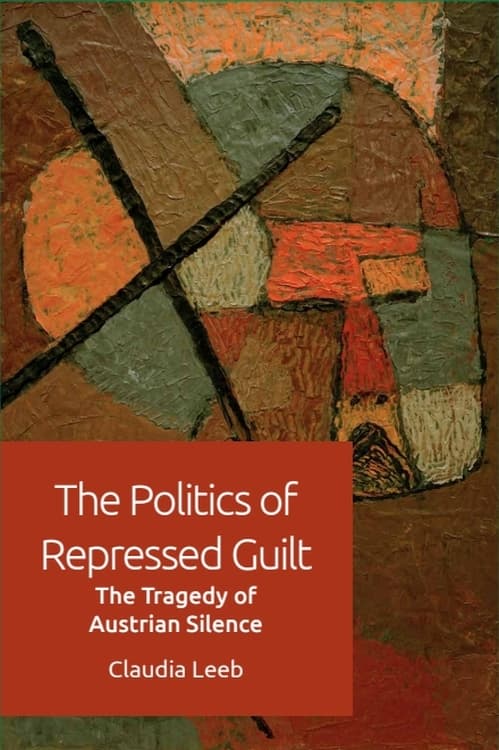
The Politics of Repressed Guilt
The Tragedy of Austrian Silence

Our ebooks are read in the Academic Reader app. After you buy, we’ll email you how to open your ebook in it.
Description
A philosophical investigation of dealing with guilt and its impact on democracy, in the case of Austrian Nazis
Drawing on the work of Hannah Arendt and Theodor W. Adorno, this book illustrates the relevance and applicability of a political discussion of guilt and democracy. It appropriates psychoanalytic theory to analyse court documents of Austrian Nazi perpetrators as well as recent public controversies surrounding Austria’s involvement in the Nazi atrocities and ponders how the former agents of Hitlerite crimes and contemporary Austrians have dealt with their guilt.
Exposing the defensive mechanisms that have been used to evade facing involvement in Nazi atrocities, Leeb considers the possibilities of breaking the cycle of negative consequences that result from the inability to deal with guilt. Leeb shows us that only by guilt can individuals and nations take responsibility for their past crimes, show solidarity with the victims of crimes, and prevent the emergence of new crimes.
Find out more
Contents
1. Introduction; 2. Rethinking Embodied Reflective Judgment with Adorno and Arendt; 3. “Ich fühle mich nicht schuldig (I do not feel guilty)”: From Doubts to Murder; 4. Roma and Sinti as Homo Sacer; 5. Defense of Repressed Guilt: The Staging of Thomas Bernhard’s Heldenplatz; 6. An Austrian Haus der Geschichte? The Drama Continues; 7. Conclusion: Towards a Politics of Guilt Feeling; 8. References.
Author
Reviews
Claudia Leeb’s The Politics of Repressed Guilt is an important and timely book, and even a courageous one.
The Politics of Repressed Guilt represents an amazing achievement and fills a critical void in the existing literature.
Through a critical appropriation of Hannah Arendt, and a more sympathetic engagement with Theodor Adorno and psychoanalysis, Claudia Leeb develops a new theoretical approach to understanding Austrians’ repression of their collaboration with National Socialist Germany. Drawing on original, extensive archival research, she astutely analyzes older and more recent examples of Austrians’ failure to work through their past, and she demonstrates the damaging psychological and political consequences this failure has had – and continues to have. The continuing electoral growth of the right-wing populist Freedom Party in Austria highlights the timeliness of her impressive study, but the theoretical concepts and practical suggestions she introduces to counteract the repression of individual and collective historical guilt are relevant far beyond the Austrian context.
Theodor Adorno and Hannah Arendt are the theoretical signposts for Claudia Leeb to take an analytical-critical look at Austria’s often failed working through its National Socialism. Courtroom, theater or museum are for Leeb the paradigmatic places of this failure. With her book, the author shows impressively how much a guilty past is a story that is suppressed with great emotional effort - constantly latent and continuously present.
Leeb’s thought-provoking book engages profoundly with the defense mechanisms vis-à-vis the Nazi past that have shaped Austrian society after the genocide of the European Jews. Leeb hereby effectively employs critical theories by Adorno and Arendt as well psychoanalytic models to shed light on the particular relationship between democracy and repressed guilt, both individual and national, in post-Holocaust Austria. Digging deep into case studies, from court documents on Nazi perpetrators to public controversies on theater plays and museums, Leeb exposes convincingly how the failure(s) to confront one’s past and critically process historical guilt have had lasting negative consequences for Austrian democracy. Combining theoretical insights with historical analysis and acute observations, The Politics of Repressed Guilt is an exceptional contribution and welcome addition to critical scholarship that explores the pathological implications of guilt denial for democratic political life.
Goes well with this book
From the same series or subject.
- The Politics of Repressed Guilt, Ebook (EPUB), £25.99
- China Cure, Ebook (EPUB), £25.00

- The Assetocracy, Ebook (EPUB), £25.00

More in Politics
View allEbook (EPUB)£25.00

Ebook (EPUB)£16.99

Ebook (EPUB)£24.99