Ebook (EPUB)£125.00
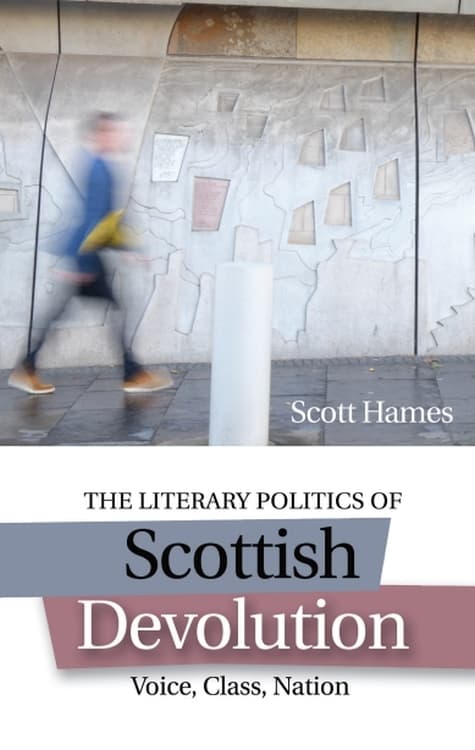
The Literary Politics of Scottish Devolution
Voice, Class, Nation

Our ebooks are read in the Academic Reader app. After you buy, we’ll email you how to open your ebook in it.
Description
Provides a cultural history and political critique of Scottish devolution
- Provides the first critical history of Scottish devolution
- Offers the first multidisciplinary study of (UK or Scottish) devolution: engaging extensively with the work of historians, sociologists, political scientists and cultural theorists
- Combines close attention to political and electoral factors with cultural issues and developments
- Draws on political theory which illuminates devolution from outside its terms
This book is about the role of writers and intellectuals in shaping constitutional change. Considering an unprecedented range of literary, political and archival materials, it explores how questions of ‘voice’, language and identity featured in debates leading to the new Scottish Parliament in 1999. Tracing both the ‘dream’ of cultural empowerment and the ‘grind’ of electoral strategy, it reconstructs the influence of magazines such as Scottish International, Radical Scotland, Cencrastus and Edinburgh Review, and sets the fiction of William McIlvanney, James Kelman, Irvine Welsh, A. L. Kennedy and James Robertson within a radically altered picture of devolved Scotland.
Contents
Preface Introduction: The Dream and the Grind
1. Chaps with Claymores to Grind: Literary and Political Nationalism 1967-79
2. Machine Politics of British Devolution 1967-79
3. The Scottish Dimension: Cultural and Constitutional Politics 1979-1987
4. Claims of Right: Self-Determination and Consensus 1987-1992
5. And the Land Lay Still: Curating Devolution with James Robertson
6. Language Nationalism and Vernacular Literary Space
7. Devolution and the Spectacle of Voice: Irvine Welsh, A.L. Kennedy, James Kelman
ConclusionBibliographyIndex
Author
Reviews
A major contribution to our understanding of Scottish cultural politics. In a rich and perceptive study, Scott Hames examines the disjunction between the literary Dream and the political Grind over the past half century.
A ground-breaking reassessment … approaching contemporary Scottish culture in radically new, irreverent terms. A necessary weapon for anyone hoping to escape, reinvent, or transform the cultural state of the nation. As such, it stands as one of the most significant Scottish academic outputs of the present century.
Brilliant, trenchant, at times disconcerting, Scott Hames’s critical history of devolution offers an exemplary analysis of the interplay between cultural nationalism and practical politics. It’s essential reading for anyone who cares about the current state of Scotland.
Hames’ study embodies a form of literary criticism that points the way forward for what might be termed "post-Indyref Scot Lit criticism.".
With this publication, Scott Hames establishes himself as one of the leaders, together with scholars like Alex Thomson (2007), of a bold academic expedition which seeks to shake the foundations of the linkage between Scottish culture and political nationalism and thus diversify and enrich Scottish Literary and Cultural Studies.
Hames amasses a formidable range of evidence in support of this contention, weaving together historical and literary sources to produce a brilliant book that both gives an original new account of the campaign for devolution and raises difficult but productive questions about demands for greater Scottish autonomy today.
This book is a ground-breaking contribution to the fields of both Scottish literary studies and cultural-political history, demonstrating how language and politics, The Dream and The Grind, both shaped devolution and built the Canongate Wall.
A compelling account of both the nationalist orientation of many Scottish writers from the 1960s to the 1990s and of the detailed negotiations necessary to make devolution possible in 1997.
The Literary Politics Of Scottish Devolution is one of the most original and arresting studies of our political culture written for 10 years. It is a powerful deconstruction of the political myths that made modern Scotland and a compelling reassessment of Holyrood’s — frequently miscast — institutional origins.
Hames’s remarkable feat of collecting, sifting, and critiquing the large and disparate body of devolutionary ideas of nationhood remains nonetheless an outstanding critical tour-de-force, and very timely too, as it captures and crystallises an important chapter in the history of Scottish nationalism at the eve of a new historical phase.
Goes well with this book
From the same series or subject.
- The Literary Politics of Scottish Devolution, Ebook (EPUB), £31.00
- Narrative of the Life of Sir Walter Scott, Bart., Volume II, Ebook (EPUB), £125.00
- Intermedial Authorship, Ebook (EPUB), £110.00
More in Literary Studies
View allEbook (EPUB)£110.00
Ebook (EPUB)£90.00
Ebook (EPUB)£90.00
Ebook (EPUB)£90.00