Ebook (EPUB)£85.00
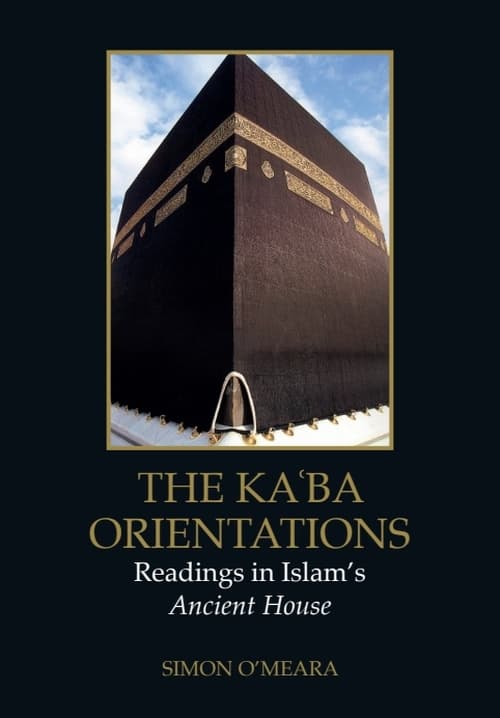
The Kaʿba Orientations
Readings in Islam’s Ancient House

Our ebooks are read in the Academic Reader app. After you buy, we’ll email you how to open your ebook in it.
Description
Explores the Kaʿba as it has been conceptualised, represented and used by Muslims from the earliest period of Islam onwards
Selected as a winner of the 29th Islamic Republic of Iran's World Book Award
- The first book-length exploration of the Kaʿba in a Western language
- Explains what the Kaʿba is by examining how it functions architecturally and is represented culturally
- Each chapter pursues a different aspect of the Kaʿba, presenting new findings and arguments
- Extensively illustrated, including a number of rarely reproduced images
What is the Kaʿba and why it is pivotal to the Islamic world? Why do pilgrims go about it, not in it? Is it empty? And why is a hollow building covered in black silk?
The most sacred site of Islam, the Kaʿba (the granite cuboid structure at the centre of the Great Mosque of Mecca) is here investigated by examining six of its predominantly spatial effects: as the qibla (the direction faced in prayer); as the axis and matrix mundi of the Islamic world; as an architectural principle in the bedrock of this world; as a circumambulated goal of pilgrimage and a site of spiritual union for mystics and Sufis; and as a dwelling that is imagined to shelter temporarily an animating force; but which otherwise, as a house, holds a void.
Contents
LIST OF FIGURES
ACKNOWLEDGEMENTS
Introduction
Chapter One: The Kaʿba as Qibla
Chapter Two: The Kaʿba as Navel
Chapter Three: The Kaʿba as Substructure
Chapter Four: The Kaʿba as Beloved
Chapter Five: The House as Holder
Chapter Six: The House as Dwelling
Conclusion
bibliography
ENDNOTES
Author
Reviews
This book is indispensable for anyone engaged in Islamic studies in general, and Islamic art history in particular. [...] Not only does the book legitimate the Kaʿba as an object of art historical study, but also, in deconstructing some entrenchments, it does a considerable service to a scholarship in need of modernisation. To finish on this epistemic note, it cannot be stressed enough that O’Meara’s rare interdisciplinary methodology and mode of reasoning ought to be heeded and emulated in any future research on Islamic art.
With deep erudition, yet sensitively and elegantly, The Kaʿba Orientations effects a subtle reorientation of the reader away from the diachronic, material-historical account that might have been expected, towards a more inward, psychological viewpoint that turns inside out the physical Kaʿba’s refusal of access to its interior to all but a select few.
Highly Recommended!
Brilliant, daring and challenging on every single page, O’Meara’s study of the Kaʿba’s manifold meanings is one of the most inspiring, and inspired, books on Islamic cultural history I’ve read in a long time.
In the absence of previous monographs on the subject, this book provides an excellent starting point, looking at six aspects of the Ka'ba based on comprehensive discussion and use of primary sources as well as artistic representations of the building.
This extraordinarily original book addresses the essential role of the Kaaba, the building in Mecca that is the central focus of Muslim devotion, in the orientation of Muslim life. O’Meara masterfully and sensitively deploys a vast range of sources – religious, historical, literary and visual – to explore and illuminate how this structure has functioned in the lives of Muslims over the past 1400 years.
Remarkably, this is the first book in English on Islam’s most sacred structure – the Ka’ba in Mecca, the physical focus of every Muslim’s daily prayers, the pivot of the world’s largest annual pilgrimage. This is not an architectural history; instead it reveals the different strata in the building’s many meanings, and the interactions between building and beholder, building and believer. O’Meara bravely straddles multiple disciplines to throw light on Muslim perspectives. While this book’s primary importance lies in its subject, O’Meara's approach is novel and his final conclusion assertive: 'the decolonisation of Islamic art history awaits completion'.
The first of its kind, O’Meara’s monograph is a highly original study which has paved the path for not only for future studies of the Kaʿba but also for all studies of Islamic art and architecture that are grounded in Islamic culture and tradition.
[This] is an overdue contribution to Islamic art scholarship and will prove a tour de force if also read by a more general readership, particularly amongst the Anglophone Muslim community.
Considering the Ka’ba as a cultural agent rather than as an architectural sign, this unprecedented study unites the centrality of the Ka’ba in Islamic faith with its importance in understanding the living and historic cultures of Islam. Through linguistic, archaeological, and historical analysis, it lays out the multiplicity of Islamic interpretation and practice across time and space as it converges on the very site that asserts its unity. Engaging with contemporary theories of religion, the work disturbs the epistemic premises that limit the interpretation of buildings through the rubric of architecture. Instead, it reframes the Ka’ba in terms of Islamic thought. Clear and engaging, this work will surely become indispensable for students and scholars of Islamic arts, Islamic Studies and Religious Studies.
Goes well with this book
From the same series or subject.
- The Kaʿba Orientations, Ebook (EPUB), £35.00
- Biography of an Ottoman Provincial Town, Ebook (EPUB), £85.00
- Demographic Anxiety in Turkey, Ebook (EPUB), £90.00
More in IMES
View allEbook (EPUB)£90.00
Ebook (EPUB)£14.99
Ebook (EPUB)£100.00
Ebook (EPUB)£95.00