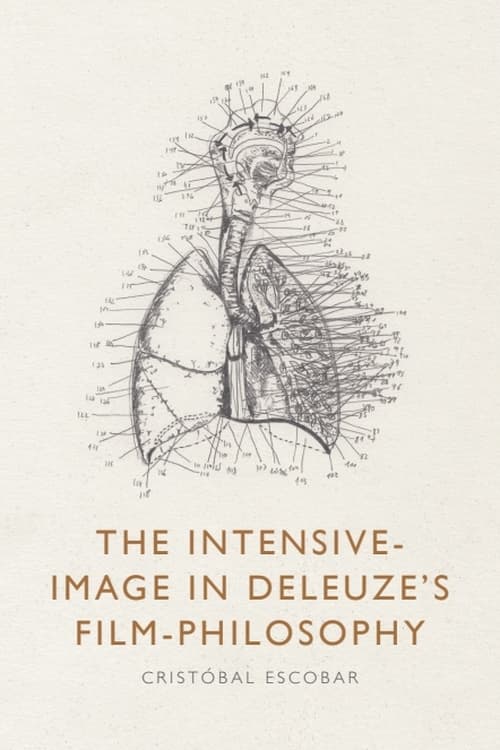
The Intensive-Image in Deleuze’s Film-Philosophy

Our ebooks are read in the Academic Reader app. After you buy, we’ll email you how to open your ebook in it.
Description
- The book develops the original concept of the intensive-image in order to open up a new and important understanding of the part played by intensity in the history of the cinematic image
- Escobar explore the significance of the notion of intensity in Deleuze’s philosophy and the ways it can be used to think about cinematic intensity as such
- The focus on the intensive-image inspires readers to reconsider Deleuze’s classification of cinema into two periods and two main types of images
- The general argument is that the intensive-image breaks up Deleuze’s divide between classical and modern periods as well as linking these two periods to contemporary cinema through its own unique properties
This book argues that the intensive-image constitutes an important cinematic category that prompts a rethinking of Deleuze’s taxonomy of images in his Cinema 1: The Movement-Image and Cinema 2: The Time-Image. Escobar explores the proposition that the notion of intensity has the potential to change the way in which we think about Deleuze’s classification of films as signifying two separate periods, the classical period of the movement-image and the modern period of the time-image, thereby bringing them together and overcoming the separation that the philosopher creates. This book also explores the ways in which the intensive-image varies and differentiates itself from other images and the role it plays in contemporary cinema.
Contents
Introduction
Section One: Re-thinking Deleuze’s Film-Philosophy
Chapter One.
Towards the Intensification of the CinemaChapter Two.
Luis Buñuel’s Nomadic Vision: Departures from an Originary WorldChapter Three.
Human Infancy and the Language of Beginnings: The Wild Child and The Enigma of Kaspar HauserChapter Four.
In Between Modernities and the ContemporaneousSection Two: The Politics and Poetics of the Intensive-Image in Contemporary Cinema
Chapter Five.
Resistance in The Lobster: Mapping an Intensive-Image in Contemporary Popular FilmChapter Six
. Zama and the Method of Dramatization: From Di Benedetto’s Novel to Martel’s FilmChapter Seven.
What do Animals Teach Us About Intensity? On Sweetgrass and SEL’s Bodily PraxisConclusion.
The Passion of IntensityPostscript
Bibliography
Author
Reviews
Gilles Deleuze’s monumental cinema books privileged properties of movement and time, differentiating the classical from the modern. Cristóbal Escobar respectfully re-opens Deleuze’s books in order to emphasize a term that cuts across and unifies all these categories: intensity. His contribution is brilliant and radical, leading us to experience films anew.
Many "movement-image" films that have been thrust off the Deleuzian map contain diffuse flows and asynchronous intensities that expand like activated yeast. Escobar recognizes the creative power of these moments, identifying, with clear argument and acute analysis, a line of intensity that traverses all cinema.
Goes well with this book
From the same series or subject.
- The Intensive-Image in Deleuze’s Film-Philosophy, Ebook (EPUB), £19.99
- Adapting American Adulthood, Ebook (EPUB), £90.00
- Isabelle Adjani, Ebook (PDF), £19.99
More in Film Studies
View all
Ebook (EPUB)£90.00
Ebook (PDF)£19.99
Ebook (EPUB)£95.00
£24.99