Ancient History & Classical StudiesNew Approaches to Ancient Greek Institutional History
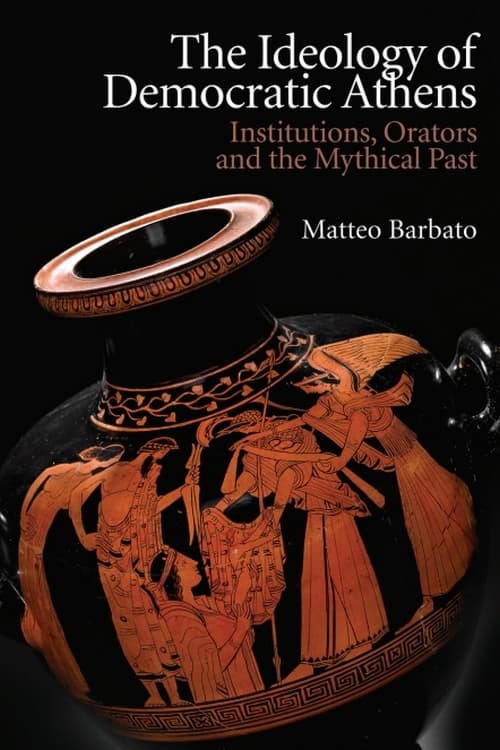
The Ideology of Democratic Athens
Institutions, Orators and the Mythical Past

Our ebooks are read in the Academic Reader app. After you buy, we’ll email you how to open your ebook in it.
Description
- Proposes a novel approach to Athenian democratic ideology that opens new frontiers of investigation in ancient history and the social sciences
- The introduction clearly sets out the aims and methodology of the book and its place within the scholarship in ancient history and the social sciences
- Four case studies illuminate the impact of Athenian democratic institutions on ideology, myth, and the use of social memory
- Offers a long-awaited new interpretation of the Athenian funeral oration for the war dead
- Offers clear overviews of Athenian democratic institutions (e.g., Assembly, Council, lawcourts) based on the most recent scholarship
- Provides up-to-date overviews of several values in Greek thought (e.g., charis, hybris, eugeneia)
The debate on Athenian democratic ideology has long been polarised around two extremes. A Marxist tradition views ideology as a cover-up for Athens’ internal divisions. Another tradition, sometimes referred to as culturalist, interprets it neutrally as the fixed set of ideas shared by the members of the Athenian community. Matteo Barbato addresses this dichotomy by providing a unitary approach to Athenian democratic ideology. Analysing four different myths from the perspective of the New Institutionalism, he demonstrates that Athenian democratic ideology was a fluid set of ideas, values and beliefs shared by the Athenians as a result of a constant ideological practice influenced by the institutions of the democracy. He shows that this process entailed the active participation of both the mass and the elite and enabled the Athenians to produce multiple and compatible ideas about their community and its mythical past.
Contents
PrefaceList of tablesList of illustrationsAbbreviations
1. Introduction
2. Myth and Athenian democracy
3. The discursive parameters of Athenian democratic institutions
4. Exclusiveness and eugeneia in the myth of autochthony
5. Between charis and philanthrōpia: the Heraclidae
6. Fading shades of hybris: the Attic Amazonomachy
7. Combining hybris and philanthrōpia: the myth of Adrastus
8. Conclusions
BibliographyIndex locorumGeneral index
Author
Reviews
This is a work of impressive and innovative scholarship providing a bridge between historians of ancient Greece and political scientists.[...] Highly recommended.
Matteo Barbato combines an analysis of political institutions with a diligent reading of funeral speeches and tragedies. He skilfully demonstrates the importance of myths in classical Athens and offers a fresh perspective on values and role models in the Athenian democracy.
Goes well with this book
From the same series or subject.
- The Ideology of Democratic Athens, Ebook (EPUB), £27.99
- Keeping to the Point in Athenian Forensic Oratory, Ebook (EPUB), £24.99
- Amnesty and Reconciliation in Late Fifth-Century Athens, Ebook (EPUB), £25.99
From the same series
More in New Approaches to Ancient Greek Institutional History
Ebook (EPUB)£24.99
Ebook (EPUB)£25.99
Ebook (EPUB)£22.99
More in Ancient History & Classical Studies
View all
Ebook (EPUB)£85.00
Ebook (EPUB)£100.00
Ebook (EPUB)£95.00
Ebook (EPUB)£95.00
Ebook (EPUB)£135.00