Ebook (EPUB)£85.00
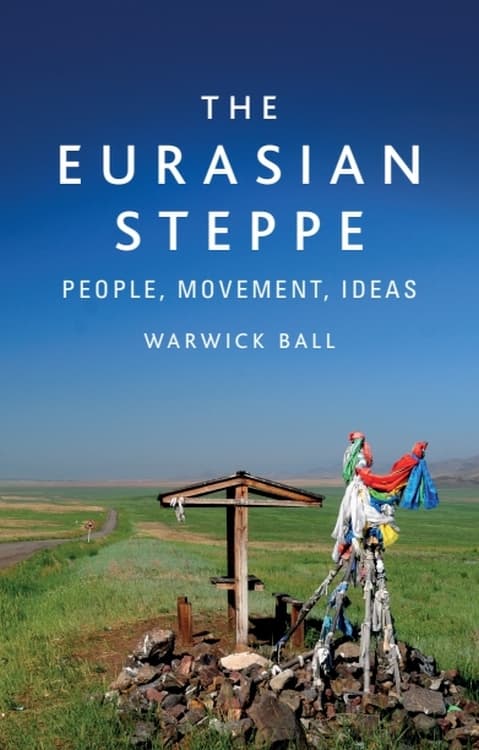
The Eurasian Steppe
People, Movement, Ideas

Our ebooks are read in the Academic Reader app. After you buy, we’ll email you how to open your ebook in it.
Description
Tells the story of the Eurasian steppe, from legends of Amazons and Gog and Magog to its effects on Europe in the 21st century
- Shows how the history, languages, ideas, art forms, peoples, nations and identities of the steppe have shaped almost every aspect of the life of Europe
- Explores the history of steppe peoples, from the Scythians to the Mongols, with discussion of both earlier and later movements
- Looks at the art of the steppe, from animal style to avant-garde, and explores how Scythian art influenced Chinese, Persian, Anatolian, Greek and Russian art
- Draws on historical, archaeological and art-historical sources to build a picture of life on the steppe from prehistory to the present
- Read an extract from chapter 6, Scythian Gold, on the Edinburgh University Press blog
A geographical area, not a political entity, the steppe connects the western and eastern parts of the Eurasian land mass. As such, it is always open, subject to constant movement between Asia and Europe. Steppe peoples such as Huns, Avars and Turks changed the course of European history, while others such as Finns, Magyars and Bulgars form European nations. The steppe saw the world’s only Jewish Empire, while the Mongols conquered an empire from the Pacific to the Mediterranean. Indeed, Europe’s largest nation, Russia, was formed from the fusion of Eurasian nomadic and European sedentary elements.
The peculiar nature of the steppe has resulted in peoples originating in parts of Asia now forming a permanent part of the European community, and that movement has affected European history and identity since earliest times. Warwick Ball tells the story of that movement from prehistory to the present. From nomadic peoples to conquering empires, from tales of Amazon women to art nouveau, and from golden grave goods to the formation of countries that still exist today, you'll discover how the steppe has continually shaped Europe’s destiny. Ultimately, Ball shows that the steppe and the movement of peoples across it are so crucial that they question the very idea of ‘Europe’ as a separate cultural and historical construct.
Contents
Introduction
1. The Nature of the Steppe. Some Geographical Observations
The steppeThe way of the nomad Waves, hordes and movementDominoes and boundariesNomads and conquestThe steppe and trade2. The Beginnings of Eurasia. Permanence, Movement and Prehistory
Permanence in a nomadic environmentThe Cucuteni-Tripolye ‘mega-sitesMaikop: treasures, wheels and burials of the north CaucasusAcross the Caucasus and beyond: the Kuro-Araxes expansionAn island sanctuary: the megaliths of Vera IslandYamnaya and Afanasievo Cultures: the first Indo-Europeans?Newcomers from the East? The mysterious Okunev of south SiberiaA country of towns and chariotsThe beginning of the nomad culturesAndronovo, Seimo-Turbino and forest-steppe symbiosisThe Oxus CivilisationThe dance of the steppe: movement over vast areas3. Indo-Europe. Prehistory and Language
Philosopher’s stone or can of worms: the search for the Indo-EuropeansHistories in prehistoryThe devil in the divine: is there a common Indo-European identity?The great Tokharian trekWestward-ho: hard-wired to win4. History and Myth. Cimmerians, Scythians and Sarmatians; Gog, Magog and Excalibur
The Scythian homelandKarasuk originsTagar monumental kurgansThe frozen tombsTo the western steppeFrom Kurdistan to India and China: the Scythian kingdoms in the EastKurdistanFrom Sakastan to Indo-ScythiaFrom China through the Karakoram PassesThe western steppeThe Gomer, the Ashkenaz, and Gog and MagogFirst Scythian settlements in the westContact and conflict: the Greek states of the Black SeaThe Black Sea Scythian kingdomsSarmatian warriorsThe Scythian and Sarmatian legacy5. Amazons. Women of the Steppe and the Idea of the Female Warrior?
Greeks bearing mythsMatriarchy ‘Old Europe’Evidence from archaeologyEvidence from ethnologyOttoman women: a case studyThe idea of the warrior womanA ‘lande of Amazony’?6. The Art of the Steppe. From Animal Style to Art Nouveau
GoldThe main elements of Scythian and Sarmatian artOrigins of the animal styleLater survivals of steppe art7. Twilight of the Gods. The Huns, Attila and the End of Antiquity
The end of civilisation?Origins in the eastXiongnu material remainsThe Huns in Central Asia, Persia and IndiaA Hun kingdom in EuropeThe kingdom of AttilaWalling off the BarbarianLegacy of the Huns8. Descendants of the She-wolf. The Emergence of Turkish-speaking Peoples
What is a ‘Turk’?Huns, wolves, caves and princessesTurks and Buddhism: the Northern Wei of ChinaThe first Eurasian empireRevival under the UighursSlaves, merchants and conquerorsProsperity, power and civilisation: the lure of Islam9. European Nations from the Steppe. Nomads and Early Medieval Europe
Finns, Karelians, Estonians and epic identitiesThe Avars and European knighthoodThe Bulgars and the beginning of statehood in RussiaThe formation of the Bulgarian EmpireFrom Siberia to Holy Roman Empire: the formation of HungaryPolovtsian dances10. The Atlantis of the Steppe. The Khazar Empire and its Legacy
Origin of the Khazars: Cossack or Caesar?Conversion to JudaismA route paved with silverThe cities of KhazariaCans of worms and the Khazar legacy11. The ‘Men from Hell’. Setting the West Ablaze: The Mongols in Europe
An ‘Age of Catastrophe’Dress rehearsal: the Western LiaoFrom ‘just and resolute butcher’ to ‘Buddhist holy man’The invasion of EuropePrester John and the CrusadesXanadu to the Volga12. Golden Hordes. The Tatar Khanates of Russia
Under the shadow of Genghis Khan: the house of TamerlaneA people of Europe?Poland-Lithuania and the Horde versus Muscovy and CrimeaEurope’s last Mongol stateThe last migration13. A Modern Steppe Empire. Russian Identity and the Steppe
Russia east or west?The Mongol legacyThe Mongols create a churchMuscovy becomes a steppe empireEurasia as politicsThe steppe, archaeology and identity in RussiaThe steppe, art and identity in RussiaBibliographyIndex
Author
Reviews
Written for a general audience, Ball’s book nevertheless synthesises the latest archaeological research and historical debate on the steppe’s ancient and modern peoples, archaeological research on the steppe’s history, delving back into the deepest mists of time. The burgeoning community of esoteric archaeology and anthropology posters on Twitter will surely appreciate his summarising of the latest research on the origins of the Indo-Europeans, the fate of the Khazars and the birth and decline of the great Scythian kingdoms.
Overall, The Eurasian Steppe: People, Movement, Ideas is a well-written and well-researched work on a vast topic. Its extended discussions on topics that have received less attention in other works in the field provide a unique and valuable contribution to our understanding of the history and impact of the Eurasian steppe.
Of the many books on the Eurasian steppe written recently by historians and archaeologists, this is one of the most accessible, while remaining vast in its scope and detail. [...] It goes without saying that the book is well researched and represents a broad synthetic history of a vast geographical region by a person who wears his immense scholarship and erudition lightly. This is a book that is suitable for a popular audience as well as specialists.
Ranging over territory from today’s Russia and Turkey to India and China, Ball charts the many waves of nomads who emerged from the Central Asian steppe. He explores such mysteries as the origins of the Indo-Europeans and the surprising role played by women … his answers may lead you to question what you thought you knew about past and present nationalist identities.
[A] much-needed holistic overview that gives credit to a vibrant cultural phenomenon.
This book is a major contribution to the rapidly emerging literature on the early origins of European culture against the wider backdrop of developments in the other empires and cultures that border the steppe.
In clear and lively prose, this grand synopsis draws together the archaeological discoveries of recent decades, and the debates they have prompted. Through astute attention to the politics of the past, it demonstrates why the Eurasian steppe was — and remains — a quintessentially world historical space.
Well-written with a clear understanding of how life on the steppe works.
The author’s distinct perspective comes through mainly in his choice of what material to include (in this case, that which is deemed relevant to Europe), but he does occasionally venture some thought-provoking opinions.
In a masterful journey through time and space, Warwick Ball combines the unique aspects of Eurasian steppe nomadic culture, history and economics over six and a half millennia to produce a rich and complex tapestry focusing on peoples that are too often overlooked despite their impact on world history.
The Eurasian Steppe, by archaeologist and historian Warwick Ball, is a tour de force—and a magnificently illustrated one too—that takes us through the last few thousand years in the steppe that stretches from Mongolia to the Black Sea. Some of his histories are of almost forgotten peoples—Scythians, Sarmatians, Khazars—but the book frequently jolts you with its contemporary relevance, when he writes about Russians’ Eurasian heritage or the importance of Ukrainian grain for world markets.
Goes well with this book
From the same series or subject.
- The Eurasian Steppe, Ebook (EPUB), £25.99
- Biography of an Ottoman Provincial Town, Ebook (EPUB), £85.00
- Demographic Anxiety in Turkey, Ebook (EPUB), £90.00
More in IMES
View allEbook (EPUB)£90.00
Ebook (EPUB)£14.99
Ebook (EPUB)£100.00
Ebook (EPUB)£95.00