Ebook (EPUB)£125.00
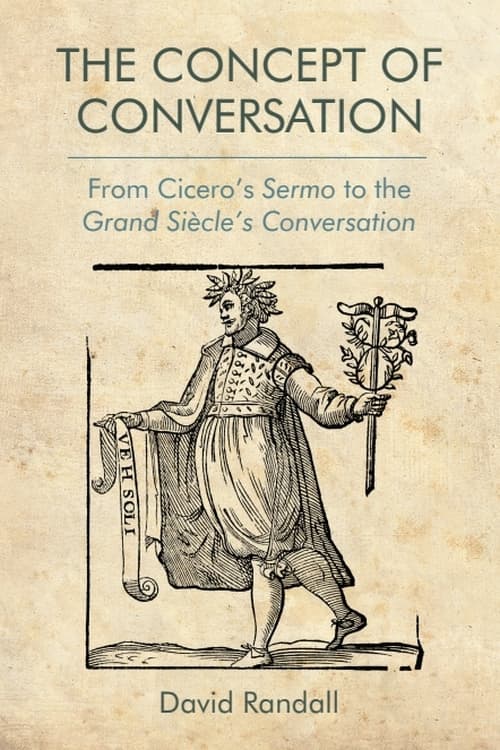
The Concept of Conversation
From Cicero's Sermo to the Grand Siècle's Conversation

Our ebooks are read in the Academic Reader app. After you buy, we’ll email you how to open your ebook in it.
Description
The first history of early modern conversation in English
In the classical period, conversation referred to real conversations, conducted in the leisure time of noble men, and concerned with indefinite philosophical topics. Christianity inflected conversation with universal aspirations during the medieval centuries and the ars dictaminis, the art of letter writing, increased the importance of this written analogue of conversation. The Renaissance humanists from Petrarch onward further transformed conversation, and its genre analogues of dialogue and letter, by transforming it into a metaphor of increasing scope. This expanded realm of humanist conversation bifurcated in Renaissance and early modern Europe. The Concept of Conversation traces the way the rise of conversation spread out from the history of rhetoric to include the histories of friendship, the court and the salon, the Republic of Letters, periodical press and women. It revises Jürgen Habermas’ history of the emergence of the rational speech of the public sphere as the history of the emergence of rational conversation and puts the emergence of women’s speech at the centre of the intellectual history of early modern Europe.
Key Features- The first book-length history of early modern conversation in English
- Synthesizes early modern intellectual history within the frameworks of rhetoric and conversation
- Places the history of women’s speech at the heart of the history of early modern rhetoric
- Fuses Habermas’ historical-theoretical framework to the history of rhetoric and revises both
Contents
Introduction; 1. The Classic Origins of Conversation; 2. The Medieval Reformulations of Conversation; 3. The Renaissance of Conversation; 4. Intimate Friendship; 5. Court, Salon, and Republic of Letters; 6. Letters; 7. Sociabilitas; Conclusion.
Author
Reviews
This ambitious, wide-ranging, thoughtful and highly readable book offers a fresh approach to a form of communication that is attracting increasing interest, focusing on the changing idea of conversation over the centuries.
The sheer amount of material [this book covers] is at least half the appeal. Randall weaves a thick, elaborate, and mostly seamless tapestry from sometimes disparate threads. He prefers to let the texts speak for themselves, drawing his conclusions following lengthy quotations in English, French, and Italian. The other half of the [book's] appeal, then, is in Randall’s nimble analyses. For instance, he finds persuasive geographical, temporal, and conceptual continuities to demonstrate the significance of natural law jurisprudence’s emphasis on self-preservation, an emphasis that runs from Hugo Grotius, Thomas Hobbes, and Samuel Pufendorf through to the link between sociability, on theone hand, and behavior and manners, on the other.
Goes well with this book
From the same series or subject.
- The Concept of Conversation, Ebook (EPUB), £31.00
- Narrative of the Life of Sir Walter Scott, Bart., Volume II, Ebook (EPUB), £125.00
- Intermedial Authorship, Ebook (EPUB), £110.00
More in Literary Studies
View allEbook (EPUB)£110.00
Ebook (EPUB)£90.00
Ebook (EPUB)£90.00
Ebook (EPUB)£90.00