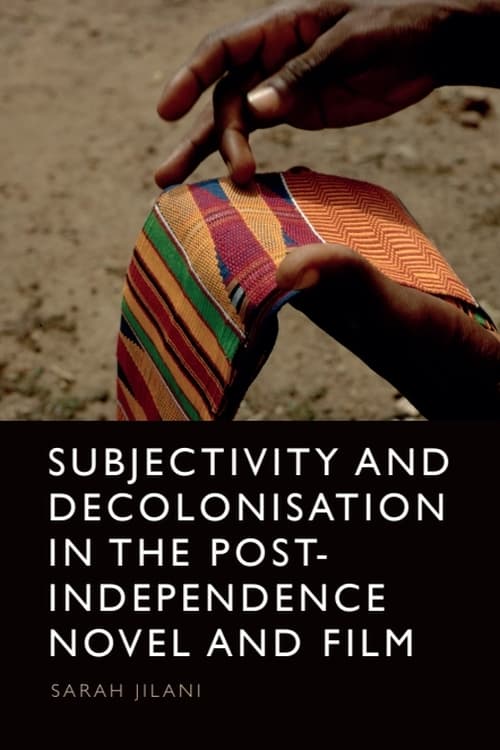
Subjectivity and Decolonisation in the Post-Independence Novel and Film

Our ebooks are read in the Academic Reader app. After you buy, we’ll email you how to open your ebook in it.
Description
- Examines Frantz Fanon’s materialist approach to the self
- Considers the representation of subjectivity in post-independence novels and films
- Offers interdisciplinary analyses that bridge postcolonial literary studies and film studies
The decades following the independences from colonialism saw a pioneering generation of realist novels and films emerge across Africa and South Asia. They told stories of people living through national circumstances fast diverging from the promises of decolonisation.
Subjectivity and Decolonisation in the Post-Independence Novel and Film explores how post-independence texts critique their own political conditions by choosing to narrate a different, but related, problem – that which Ngugi wa Thiong’o once called ‘decolonising the mind’. Guided by the psycho-political thought of Frantz Fanon, who maps a dialectical relationship between decolonisation and the self, this book considers how eight well known and less studied works from the 1950s–1980s. Together, they help us understand how the transformation of subjectivities is a materially consequential process that sits squarely within the broader, unfinished project that is decolonisation.
Contents
Introduction
Chapter 1. Reconciling Us To Ourselves: Decolonisation and the Question of Subjectivity
Chapter 2. Women and Anti-Colonial Nationalisms: Gendering Subjectivity in Satyajit Ray’s Home and the World and Ngũgĩ wa Thiong’o’s A Grain of Wheat
Chapter 3. Neocolonialism’s Subjects: Complicity and Resistance in Ousmane Sembène’s Xala and Ayi Kwei Armah’s The Beautyful Ones Are Not Yet Born
Chapter 4. History From Within: Violence and Subjective Experience in Ritwik Ghatak’s The Cloud-Capped Star and Buchi Emecheta’s Destination Biafra
Chapter 5. Emplacing the Self: Environment and Labour in Kamala Markandaya’s Nectar In A Sieve and Souleymane Cissé’s Work
Conclusion
Acknowledgments
Bibliography
Filmography
Index
Author
Reviews
"Sarah Jilani's ambitious first book, with its study of contestations of selfhood in the ferment of anti-colonial struggle, is timely and necessary. I commend it highly for two of its key achievements. First, it demonstrates a decolonial method by using not only the rich literary and cinematic productions of the global south but also the philosophy and thought emanating from an emergent postcolonial imaginary. Moreover, it builds bridges and solidarities between non-adjacent but comparable cultural moments in South Asia, West Africa, and East Africa through its critical explorations of poetics, cinematics, and narrative, and without flattening difference. Attentive, rigorous, and passionate in its engagement, Subjectivity and Decolonisation in the Post-Independence Novel and Film is a powerful reckoning of historic decolonisation in the mid-twentieth century and the ideas and idealisms which remain relevant in our own benighted time of neocolonial and neo-imperial ascendancies."
"In this remarkable study, Sarah Jilani argues for an understanding of postcolonial subject-formation that is inextricable from histories of collective struggle, and for the special contribution of literature and film to the unfinished project of decolonisation. Subjectivity and Decolonisation showcases what historically informed, materially grounded, and politically committed comparative criticism can do."
Perfect for that endeavor, for anyone building a course in Comparative Literature/Film, Postcolonial or Globalization Studies, Africana Studies, or World Film.
Goes well with this book
From the same series or subject.
- Subjectivity and Decolonisation in the Post-Independence Novel and Film, Ebook (EPUB), £19.99
- Adapting American Adulthood, Ebook (EPUB), £90.00

- Isabelle Adjani, Ebook (PDF), £19.99

More in Film Studies
View all
Ebook (EPUB)£90.00
Ebook (PDF)£19.99

Ebook (EPUB)£95.00
£24.99