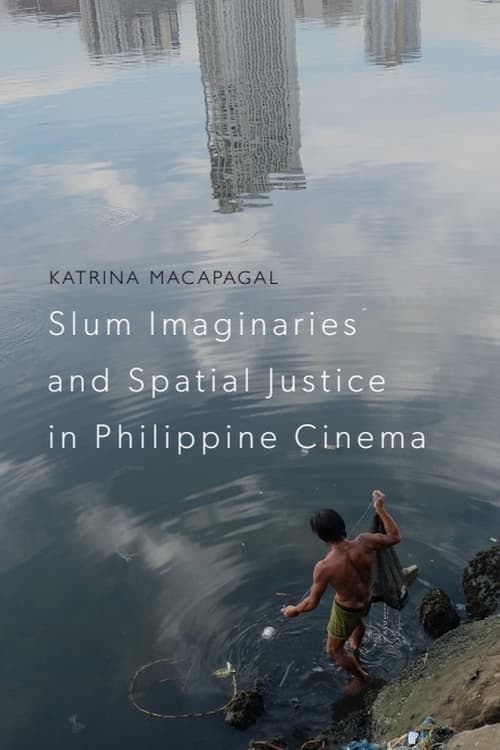
Slum Imaginaries and Spatial Justice in Philippine Cinema

Our ebooks are read in the Academic Reader app. After you buy, we’ll email you how to open your ebook in it.
Description
- Formulates the theory of the "slum chronotope" as a theoretical tool to analyse narrative and genre formation in films that dialogue with the slum setting
- Combines approaches from various fields, drawing heavily from human geography, in its analysis of spatial representations of social justice and injustice in and through films
- Contributes to transnational cinema studies through the unique subject of Philippine urban cinema, which is situated within the larger subject of global urban poverty and development
Outlining the rise of Philippine slums alongside the historical development of Philippine urban cinema, Slum Imaginaries and Spatial Justice in Philippine Cinema makes a novel contribution to the cinema-city nexus through its interdisciplinary framework of film studies and human geography. It formulates the theory of the ‘slum chronotope’ as a theoretical tool to analyse narrative and genre formation in films that dialogue with Manila’s slum imaginaries, and makes the case for Philippine urban cinema – and Philippine urban history – as a significant vantage point from which to understand imaginaries of spatial justice.
With case studies that take off from The Blossoming of Maximo Oliveros (2005) to Respeto (2017), this book is a powerful contribution to transnational cinema studies.
Contents
AcknowledgmentsList of figures
Introduction
Part I: Locating Philippine urban cinema
1. Spatial justice and the slum chronotope
2. The rise of Manila slums and Philippine urban cinema
3. The slum chronotope in Philippine cinema genres and modalities
Part II: Routes of reading Philippine urban cinema
4. Kids in the hood: Chronotopes of passage in Ang Pagdadalaga ni Maximo Oliveros and Tribu
5. Women walking: Affective chronotopes in the melodramatic imaginaries of Kubrador, Foster Child, and Lola
6. Men on the move: Chronotopes of mobility in the noir imaginaries of Kinatay, Metro Manila, and On the Job
7. Migrants in Transit: The slum chronotope and chronotopes of in/visibility in the Overseas Filipino Worker genre
8. Sounds of youth: The production of noise and chronotopes of performance in Respeto
Conclusion Bibliography
Author
Reviews
In Macapagal’s compelling analysis, poverty, the city, and the cinema come together in the "slum chronotope." Tracing such spatiotemporal knots across various genres of contemporary Philippine cinema – from queer coming-of-age films to migrant labor narratives – the book reclaims the political stakes of urban realist films: spatial justice, economic mobility, and social visibility for a global underclass perennially fettered by the converse. Slum Imaginaries and Spatial Justice is an indispensable text for analyzing and teaching Philippine cinema.
Goes well with this book
From the same series or subject.
- Slum Imaginaries and Spatial Justice in Philippine Cinema, Ebook (EPUB), £22.99
- Adapting American Adulthood, Ebook (EPUB), £90.00
- Isabelle Adjani, Ebook (PDF), £19.99

More in Film Studies
View all
Ebook (EPUB)£90.00
Ebook (PDF)£19.99
Ebook (EPUB)£95.00
£24.99