Ebook (EPUB)£125.00
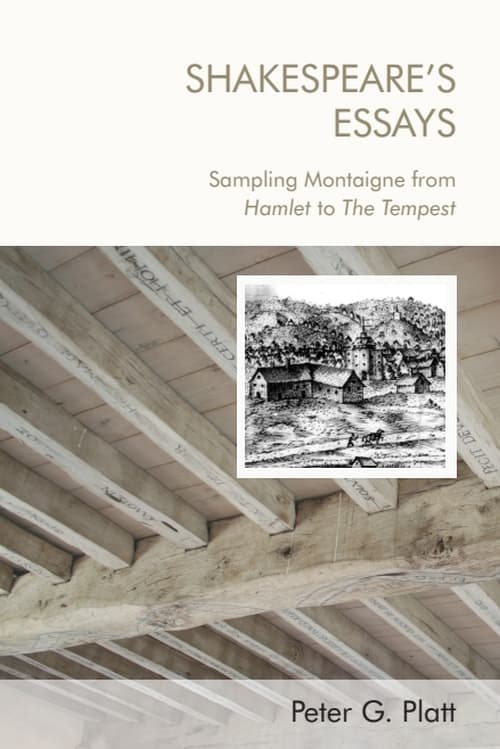
Shakespeare's Essays
Sampling Montaigne from Hamlet to The Tempest

Our ebooks are read in the Academic Reader app. After you buy, we’ll email you how to open your ebook in it.
Description
Argues that the Essais of Montaigne were a crucial factor in the composition of later Shakespearean drama
- A new way of accounting for the different sorts of plays that Shakespeare wrote later in his career
- A detailed history of the literary-critical interest in the Montaigne-Shakespeare connection, from the eighteenth century to the present day
- Case studies that, through sustained close-readings of Montaigne’s essays and Shakespeare’s plays, shows the shared concerns of the authors
- A new approach that differs from the more typical method of looking merely for verbal echoes, resulting in a deeper, richer sense of the way that Shakespeare’s reading of Montaigne shaped his writing
In this revisionist study, Peter G. Platt provides a detailed history of the literary-critical interest in the Montaigne–Shakespeare connection from the eighteenth century to the present day. Through sustained close-readings of Montaigne’s essays and Shakespeare’s plays, Platt explores both authors’ approaches to self, knowledge and form that stress fractures, interruptions and alternatives. While the change in monarchy, the revived interest in judicial rhetoric and the alterations in Shakespeare’s acting company helped shape plays such as Measure for Measure, King Lear and The Tempest, this book contends that Shakespeare’s reading of Montaigne is an under-recognised driving force in these later plays.
Contents
1. Introduction: "Were my mind settled, I would not essay but resolve myself"
2. Chapter One: Knowing and Being in Montaigne and Shakespeare
3. Chapter Two: "A Little Thing Doth Divert and Turn Us":Fictions, Mourning, and Playing in "Of Diverting or Diversion" and Hamlet
4. Chapter Three: Mingled Yarns and Hybrid Worlds:"We Taste Nothing Purely," Measure for Measure, and All’s Well That Ends Well
5. Chapter Four: "We are Both Father and Mother together in this Generation":Physical and Intellectual Creations in "Of the Affection of Fathers to Their Children" and King Lear
6. Chapter Five: Custom, Otherness, and the Fictions of Mastery: "Of the Caniballes" and The Tempest
7. Epilogue: Shakespeare before the EssaysWorks Cited
Author
Reviews
It was Nietzsche who in 1876 declared that Shakespeare was Montaigne’s "best reader"; but we’ve had to wait for Peter Platt’s Shakespeare’s Essays to show in all its complexity how and why this was so. Platt brilliantly illuminates Shakespeare debt to Florio’s translation of Montaigne, revealing how profoundly the Essays would shape his thinking from Hamlet to The Tempest. This is a deeply rewarding and insightful book, the product of sustained reflection, one that enables us to see afresh how the greatest Renaissance dramatist was challenged and inspired by the greatest essayist of the age.
When someone asks me who, among all the great writers of the past, would you most want to meet, I always find myself hesitating between Shakespeare and Montaigne. In this scholarly, thoughtful and persuasive book, Peter Platt brings the two Renaissance giants together in a richly illuminating conversation. Making good on Nietzsche’s claim that Shakespeare was Montaigne’s "best reader," Platt shows that the whole second half of Shakespeare’s career, from the problem comedies to the great tragedies to the late romances, was deeply marked by his encounter with Montaigne’s Essays.
Goes well with this book
From the same series or subject.
- Shakespeare's Essays, Ebook (EPUB), £22.99
- Narrative of the Life of Sir Walter Scott, Bart., Volume II, Ebook (EPUB), £125.00
- Intermedial Authorship, Ebook (EPUB), £110.00
More in Literary Studies
View allEbook (EPUB)£110.00
Ebook (EPUB)£90.00
Ebook (EPUB)£90.00
Ebook (EPUB)£90.00