Ebook (EPUB)£125.00
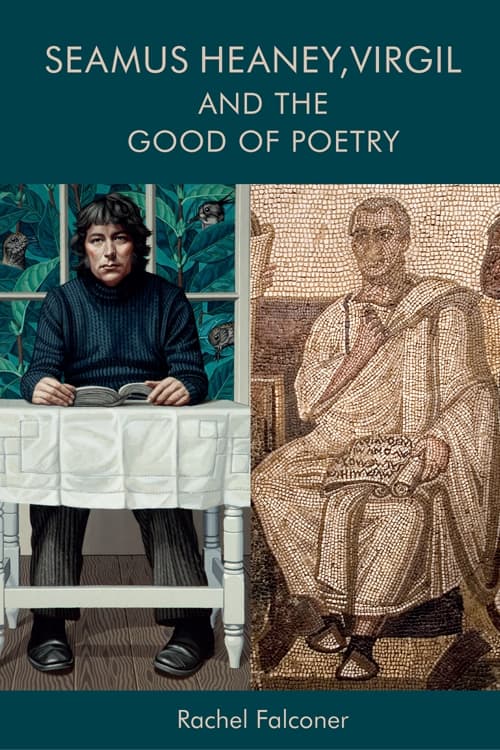
Seamus Heaney, Virgil and the Good of Poetry

Our ebooks are read in the Academic Reader app. After you buy, we’ll email you how to open your ebook in it.
Description
The first book-length study of Heaney’s dialogue with Virgil, one of Seamus Heaney’s major literary exemplars
- Offers a close reading of Heaney’s engagement in Virgil, with particular focus on the latter part of his career, from the mid-1980s onward
- Explores Heaney’s dialogue with Virgil in relation to his reading of other writers, ancient, medieval and modern
- Considers the full corpus of Heaney’s writing including translations, original poems, prose writing and radio interviews
This book demonstrates the ways in which Virgil’s are poems that Heaney ‘lived with long and dreamily’, especially the descent into the underworld in Aeneid VI. It shows that in his original English poems as well as his translations from Latin, Heaney conjures and transforms familiar Virgilian motifs. The rhythm, pace and musicality of Virgil’s hexameters can be heard in Heaney’s pastoral eclogues and sonnet sequences. And Virgil’s life and times, as well as his poetry, contribute to the shaping of Heaney’s prose poetics. In dialogue with Virgil, as well as other classical and modern poets, Heaney develops his notion of the redress of poetry: the counterbalance that poetry can offer against historical tragedy, suffering and loss.
The book explores Heaney’s intensely productive, thirty-year dialogue with Virgil, beginning with his translation of ‘The Golden Bough’ in the 1980s and extending through several major volumes, including Seeing Things, The Midnight Verdict, Electric Light, District and Circle, The Riverbank Field, Human Chain, and the posthumously published translation of Aeneid Book VI.
Contents
Introduction
1. The Golden Bough and the Absent Tree 2. Threshold Crossings in Seeing Things 3. Orpheus in a Major Key 4. Pastoral, Pietas and Stealth5. ‘Terra tremens’: District and Circle6. ‘In river country’: The Riverbank Field7. Raids, Settlement and Sounding Line 8. Cadence and Lapse in Human Chain 9. A Double Music: Aeneid Book VI
Coda: ‘Mossbawn via Mantua’Appendix: ‘Palinurus’Bibliography Index
Author
Reviews
To celebrate the book for its exhaustiveness is no faint praise. Anyone who ever wants to investigate Heaney’s engagement with Vergil will be grateful to Falconer for methodically drawing together and bringing to light an unprecedented hoard of primary materials, some archival, others ephemeral, many rare or hard to access. Radio essays and interviews, little-known Heaney poems, limited editions light up her subject from as many angles as possible. As a research tool, Falconer’s book is indispensable.
Virgil is there in the big heart of Heaney's poetic imagination, and readers wanting to understand this will need to take account of Falconer‘s patient and revealing work.
The research is scholarly and deep and students and critics will profit from it.
Virgil is there in the big heart of Heaney's poetic imagination, and readers wanting to understand this will need to take account of Falconer‘s patient and revealing work.
The research is scholarly and deep and students and critics will profit from it.
This is a fine, detailed guide to the persistence of the Virgilian in the emotional, imaginative and
ethical journeys of Heaney’s poetry and translations in the second half of his career.
Nobody who has read the poetry of Seamus Heaney would question the increasingly pervasive presence of Vergil in his oeuvre. Rachel Falconer’s impressive study, the first full-length review of the two poets’ interactions, demonstrates not only the importance of Vergil to Heaney, but, more, traces with great care the shifting form this influence took, especially over the course of Heaney’s later career.' Or this: 'In tracing these poetic interactions, Falconer offers wonderful, luminous readings of Heaney. To cite just one example: the adaptation of Charon’s boat in Seeing Things with Heaney’s insistence on the "shiftiness of the craft" (57) of both boat and poetry is marvelous. It is a metaphor Heaney repeats and one that captures the slipperiness of his relationship to ancient poetry.
Falconer’s powerful and probing study of Seamus Heaney’s career-long relationship with Virgil reveals the Latin poet to be Heaney’s "inner interlocutor". Her sensitive close analysis of the wide-ranging intertextualities of Heaney’s poetry brilliantly uncovers his complex identifications with Virgil as a poet with strong attachment to his rural roots.
Goes well with this book
From the same series or subject.
- Seamus Heaney, Virgil and the Good of Poetry, Ebook (EPUB), £26.99
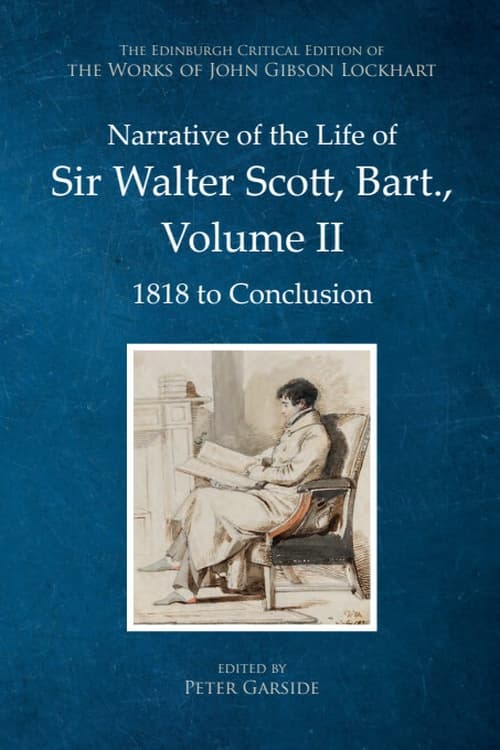
- Narrative of the Life of Sir Walter Scott, Bart., Volume II, Ebook (EPUB), £125.00
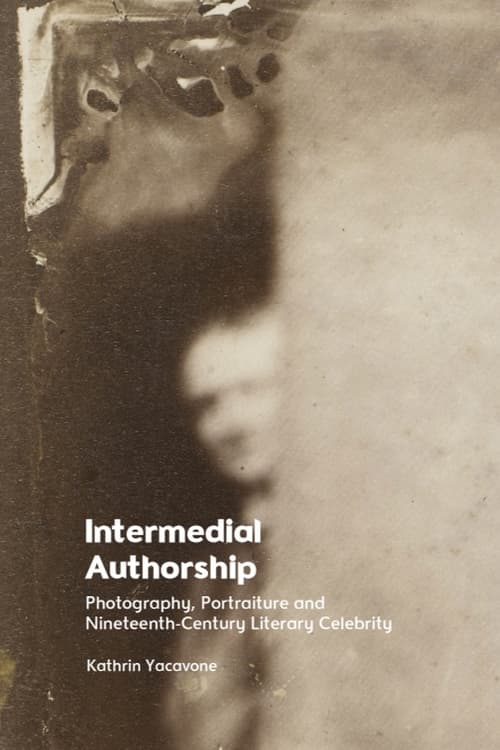
- Intermedial Authorship, Ebook (EPUB), £110.00
More in Literary Studies
View allEbook (EPUB)£110.00
Ebook (EPUB)£90.00
Ebook (EPUB)£90.00
Ebook (EPUB)£90.00