Ebook (EPUB)£95.00
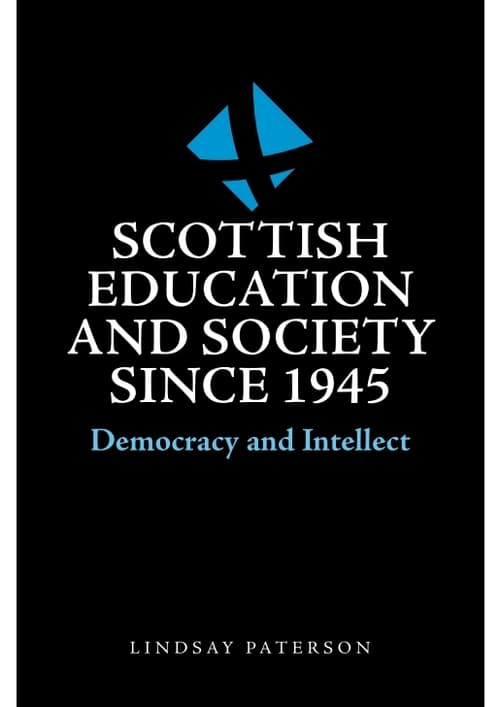
Scottish Education and Society since 1945
Democracy and Intellect
Open access
Open access under CC-BY-NC-ND 4.0
Description
Uses a unique series of social surveys to study education and social change in Scotland
- Presents Scotland's internationally unique series of surveys of school students, from the late 1940s to the new century, with no parallel internationally in its longevity, range of topic, and depth
- Uses Scotland as a case study as it experienced all the major educational changes of the developed world in the second half of the 20th century
- Draws comparison to domestic education reform in England and Wales
- Draws comparison internationally with the rest of Europe and north America, and especially with France, the Netherlands and Ireland
- The social basis of these changes is systematically investigated: who benefited, who did not, did these divides narrow or widen, and what are the consequences for opportunity and civic values?
- The debate about Scottish independence has been transformed by this growth of education, especially among young people born since the 1960s who have been the main beneficiaries of educational expansion.
Scotland developed a series of educational surveys between the late-1940s and the early-21st century that allow the country’s experience of education to be studied in systematic detail. No other country has an archive of this length and depth. The surveys include evidence on pupils’ curriculum, attainment, subjective experience of school, and destinations after leaving school, as well as details of their social characteristics and of the secondary schools which they attended. By linking also to archival evidence on the histories of schools, the book’s analysis investigates the interplay between deliberate policy and wider social change. The transformation of education in this period is accompanied by equally important economic restructuring which has led to unprecedented changes in the way that education relates to lifelong opportunity in the twenty-first century. The book investigates how these changes have underpinned Scotland’s civic values, and have contributed fundamentally to shaping the debate about the country’s constitutional future.
Contents
List of Figures List of Tables PrefaceAcknowledgements1. Scottish Education since the Middle of the Twentieth Century 2. Sources of Evidence: Scotland’s Unique Social Surveys 3. The Impact of Policy and Social Change on Schools 4. School Curriculum: Liberal Education for Everyone?5. Student Choice and Respect 6. Young People and the Labour Market 7. Schools and Higher Education8. Higher Education and Breadth of Study at School 9. Social Mobility and Lifelong Learning10. Education, Social Attitudes and Scottish Governance 11. Conclusions Further Information References Index
Author
Reviews
This book is essential reading not only for those interested in Scottish education – a fascinating story in its own right – but for all those committed to building education systems that meet our democratic and egalitarian ideals.
With an uncommon combination of quantitative rigour and lucid, humane prose, Lindsay Paterson weighs up Scottish claims to have cultivated the "democratic intellect". Has Scotland succeeded in delivering a broad, liberal education to all? The answer, defined and qualified in ways illuminating to policymakers as well as students and scholars, is yes.
goes well beyond... familiar claims and the counter-claims of sceptics. Paterson’s thesis is more nuanced, more qualified, more rigorous and thus more challenging—intellectually and personally.
[a] remarkable new study... with a detailed analysis of statistical evidence that is genuinely exciting
Goes well with this book
From the same series or subject.
More in Scottish Studies
View allEbook (EPUB)£95.00
Ebook (EPUB)£95.00
Ebook (EPUB)£95.00