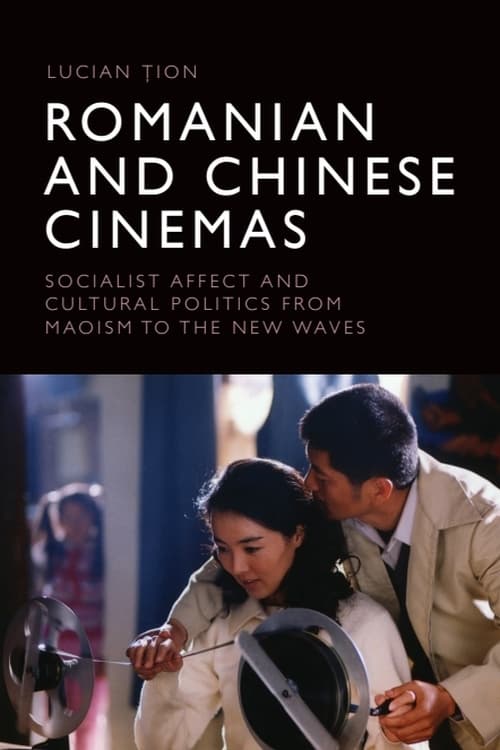
Romanian and Chinese Cinemas
Socialist Affect and Cultural Politics from Maoism to the New Waves

Our ebooks are read in the Academic Reader app. After you buy, we’ll email you how to open your ebook in it.
Description
Compares the cinema cultures of Romania and China before and after socialism
- Reconceptualises the role of socialist realism in the postsocialist history of Romanian and Chinese cinemas
- Rereads the allegedly propagandist films of the socialist period as genuinely popular proletarian cinema meant to both educate and entertain the masses
- Introduces the term “socialist affect” to describe a transcultural community which socialist cinema helped mould in the two countries, describing the effects this had on both socialist-era and postsocialist societies
- Finds correspondences between the sixth generation Chinese films of Jia Zhangke and Tian Zhuangzhuang and those of Romanian New Wave directors Cristi Puiu and Cristian Mungiu
Drawing on what used to be the erstwhile internationalist cultural space of Communist Eurasia, the author reads socialist-era and postsocialist films made in Romania and China as promoting a common aesthetics predicated on the miserabilism of Third Cinema. The book argues that, despite indictments that socialist cultures were saturated with the oppressing ideology of socialist realism in the 1950s and various forms of indoctrination thereafter, in practice, film directors had the leverage to tackle social issues even in those works that are deemed today “propagandist.”
Refusing to endorse contemporary theories that seek to align the Romanian and the Chinese New Waves solely to Western cinematic practices, the author argues that China’s fifth and sixth generation films as well as New Romanian Cinema are hugely indebted to socialist-era themes, as well as to the dogmatism of socialist realism. Identifying continuity rather than rupture between the socialist past and the capitalist present, the author seeks to redress an imbalance that contemporary scholars of Romanian and Chinese cinemas oftentimes ignore.
Contents
Introduction
Part I
1. Film and Socialist Affect
2. The Story of Romanian and Chinese Socialist Cinemas
3. Performativity
4. The 1970s and the 1980s
Part II
5. The 1990s and Postsocialism
6. The Romanian New Wave and China’s Sixth Generation
7. Postsocialism and Occidentalism
Author
Reviews
When Ceauşescu and Mao split with the USSR, they found each other. Bringing comparative and alternative socialisms to film studies, this refreshing read reveals parallels and differences in Romanian and Chinese socialist cinemas that extend into their encounters with the market economy and their successes on the international film festival circuit.
Goes well with this book
From the same series or subject.
- Romanian and Chinese Cinemas, Ebook (EPUB), £19.99
- Adapting American Adulthood, Ebook (EPUB), £90.00
- Isabelle Adjani, Ebook (PDF), £19.99

More in Film Studies
View all
Ebook (EPUB)£90.00
Ebook (PDF)£19.99

Ebook (EPUB)£95.00
£24.99