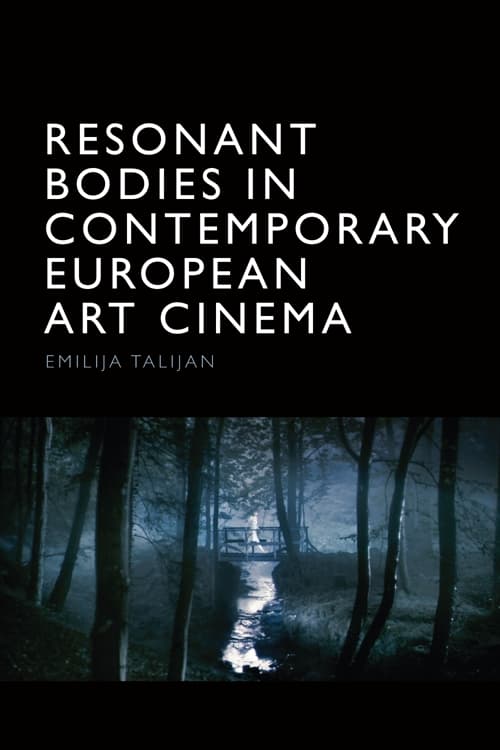
Resonant Bodies in Contemporary European Art Cinema

Our ebooks are read in the Academic Reader app. After you buy, we’ll email you how to open your ebook in it.
Description
- Offers detailed analysis of the underexplored dimension of sound in the work of some of the best-known contemporary European art film directors
- Provides a stimulating contribution to theories of cinematic spectatorship showing how sound, noise and listening can rethink all aspects of the filmic experience
- Explores the conceptualisation of cinema as a resonant body
- Considers the sonic dimensions of cinema alongside prescient current debates in European film and criticism about the body, migration and exile, as well as anthropocentrism and anthropocentric modes of representation
What does it mean to exist, in our experience of cinema, according to listening? How do sound and ‘noise’ reconfigure relations between spectators and screens, and by extension, spectators and their worlds? How do films raise questions about the ethics and politics of listening to different bodies?
Resonant Bodies in Contemporary European Art Cinema answers these questions through an analysis of films by Catherine Breillat, Gaspar Noé, Tony Gatlif, Arnaud des Pallières, Lars von Trier and Peter Strickland. These post-millennial European directors have worked with sound in ways that resist the full-definition and perfect hearing offered by Dolby technology. Instead, they have privileged ‘noise’ - sounds that take us to the limit of what we can hear - in a move that foregrounds the body on screen and constructs spectators as listening bodies.
Contents
List of IllustrationsAcknowledgements
Introduction
PART I: THE UNLISTENABLE
1. The Body at Close Range: Volume and The Unlistenable in Catherine Breillat’s Anatomy Of Hell (2004)
2. Sonic Subjection: Gaspar Noé’s Irreverisble (2004) and the Dystopian Limits of the Resonant Body
PART II: MIGRATORY NOISE
3. A Stranger Everywhere: The écho-monde of Tony Gatlif’s Exiles (2004)
4. Feedback, Asynchronicity and Sonic Sociabilities: Arnaud Des Pallières’s Adieu (2004)
PART III: NONHUMAN NOISE
5. Listening at the Limit: Nonhuman Noise in Lars von Trier’s Antichrist (2009)
6. Listening to Things: Foley as ‘Alien Phenomenology’ and Peter Strickland’s Berberian Sound Studio (2012)
Conclusion
BibliographyFilmographyIndex
Author
Reviews
This film-philosophical foray into a range of fascinating sonic problems—the aesthetics of volume, Foley as a formal restraint, violence and vibration, the nonhuman dimension of rustling—compellingly models the book’s thesis that listening is a radical mode of attention, and that deep attention is a form of thinking itself.
Taking us on a thrilling journey through sound, Emilija Talijan explores what it means to become ‘all ears’ in the experience of film. With eloquence and erudition, she articulates new critical perspectives on noise and listening, making this essential reading within both film and sound studies. An altogether exquisite book.
Goes well with this book
From the same series or subject.
- Resonant Bodies in Contemporary European Art Cinema, Ebook (EPUB), £20.99
- Adapting American Adulthood, Ebook (EPUB), £90.00
- Isabelle Adjani, Ebook (PDF), £19.99
More in Film Studies
View all
Ebook (EPUB)£90.00
Ebook (PDF)£19.99

Ebook (EPUB)£95.00
£24.99