Ebook (EPUB)£125.00
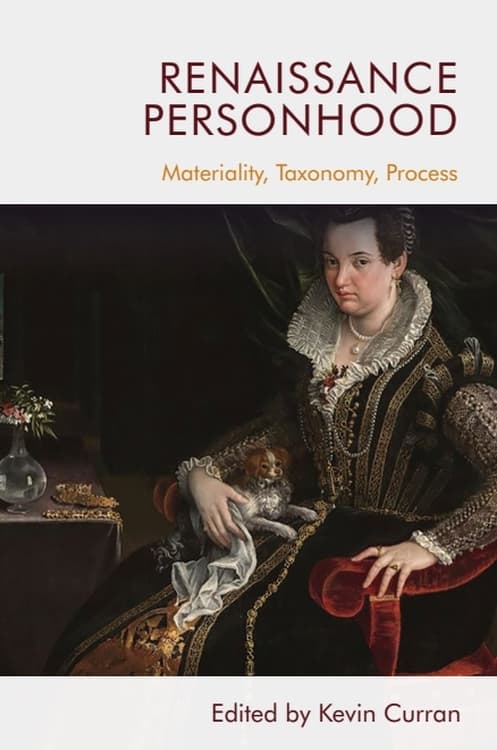
Renaissance Personhood
Materiality, Taxonomy, Process

Our ebooks are read in the Academic Reader app. After you buy, we’ll email you how to open your ebook in it.
Description
Explores the history and theory of personhood in the Renaissance period
- Offers the first sustained study of the history and theory of personhood in the Renaissance period
- Provides a study of personhood from a materialist perspective
- Models new way of entering posthumanist critique – animal studies, ecocriticism, and food studies – into conversation with legal theory, cultural history and literary studies
Unfolding as a series of materially oriented studies ranging from chairs, machines and doors to trees, animals and food, this book retells the story of Renaissance personhood as one of material relations and embodied experience, rather than of emergent notions of individuality and freedom. The book assembles an international team of leading scholars to formulate a new account of personhood in the sixteenth and seventeenth centuries, one that starts with the objects, environments and physical processes that made personhood legible.
Contents
Acknowledgments
List of Contributors
1. What Was Personhood?, Kevin Curran
Part I. Materialities of Personhood: Chairs, Machines, Doors
2. Daughters, Chairs, and Liberty in Margaret Cavendish’s The Religious, Stephanie Elsky
3. The Inner Lives of Renaissance Machines, Wendy Beth Hyman
4. Two Doors: Personhood and Housebreaking in Semayne’s Case and The Comedy of Errors, Colby Gordon
Part II. Taxonomies of Personhood: Status, Species, Race
5. Should (Bleeding) Trees Have Standing?, Joseph Campana
6. Aping Personhood, Holly Dugan
7. Race, Personhood, and the Human in The Tempest, Amanda Bailey
Part III. Processes of Personhood: Eating, Lusting, Mapping
8. Liquid Macbeth, David B. Goldstein
9. Things in Action: Shakespeare’s Sonnet 129, Macbeth, and Levinas on Shame, John Michael Archer
10. Edward Herbert’s Cosmopolitan State, Gregory Kneidel
Index
Author
Reviews
Merging law and literature with environmental humanities, this timely and innovative volume discloses personhood as a reifying machine that instrumentalises the liberty it protects and retools subjects as objects in institutions such as slavery and marriage. Yet the authors also present personhood, especially when it passes through literature and art, as an enduring resource for recognising potential subjects in their creaturely variety.
Goes well with this book
From the same series or subject.
- Renaissance Personhood, Ebook (EPUB), £22.99
- Narrative of the Life of Sir Walter Scott, Bart., Volume II, Ebook (EPUB), £125.00
- Intermedial Authorship, Ebook (EPUB), £110.00
More in Literary Studies
View allEbook (EPUB)£110.00
Ebook (EPUB)£90.00
Ebook (EPUB)£90.00
Ebook (EPUB)£90.00