Ebook (EPUB)£125.00
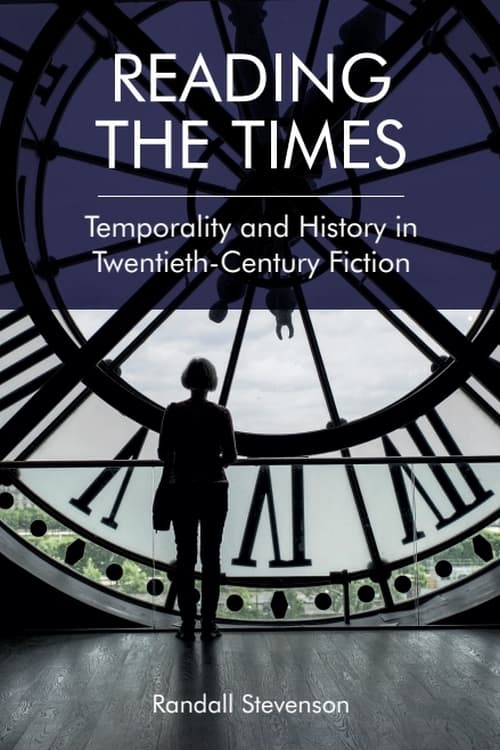
Reading the Times
Temporality and History in Twentieth-Century Fiction

Our ebooks are read in the Academic Reader app. After you buy, we’ll email you how to open your ebook in it.
Description
A wide-ranging study of shifting temporalities and their literary consequences in twentieth-century fiction
From the Prime Meridian Conference of 1884 to the celebration of the millennium in 2000; from the fiction of Joseph Conrad to the novels of William Gibson and W.G. Sebald, Reading the Times offers fresh insight into modern narrative. It shows how profoundly the structure and themes of the novel depend on attitudes to the clock and to the sense of history’s passage, tracing their origins in technologic, economic and social change. It offers a new and powerful way of understanding the relations of history with narrative form, outlining the development and demonstrating – through incisive analyses of a very wide range of literary texts from late nineteenth to early twenty-first century – their key role in shaping fictional narrative throughout this period. The result is a highly innovative literary history of twentieth-century fiction, based on an inventive, enabling method of understanding literature in relation to history – in terms, in every sense, of its reading of its times.
Key Features- Provides a detailed history of the role of the clock and temporality in twentieth-century life
- Includes incisive analyses of this role’s shaping of literary imagination traced in a very broad range of twentieth-century novels
- Provides a unique, highly original literary history of the period’s fiction
Contents
Introduction: Picnic Time, Prime Time, Story Time
I – ‘All Those Figures’: Joseph Conrad and the Maritimes
II – ‘Wheels within Wheels’: D.H. Lawrence, Industrial Time and War Time
III – Times in the Mind: Modernism in the 1920s
IV -- Not Like Old Times: the 1930s to Mid-Century
V – ‘Time is Over’: Postmodern Times
Conclusion: Millennial Times, Perennial Times
Author
Reviews
Think there’s nothing left to be said about time in the twentieth-century novel? Read Randall Stevenson’s Reading the Times, and think again. Stevenson gives us a new history of narrative form that is at the same time a compact cultural history of the century.
This book’s particular achievement lies in the comprehensive approach to combine a social history of chronometry with literary negotiations between "chronos" and "kairos" (in Frank Kermode’s sense, in brief: clock time and experiential time, respectively).
A rich and enjoyable narrative of fictions various experiments with time over the course of the twentieth century.
The impressively wide scope of the study is facilitated by Stevenson's great talents as a storyteller, Not only is Reading the Times a study of narrative, but it also deploys narrative in a highly skilful manner itself . . .light-footed summary . . . able to guide the reader through vast tracts of literary history . . . breathtakingA rich and enjoyable narrative of fiction's various experiments with time over the course of the twentieth centurygreat explanatory power . . great strengths . . . relates temporal experiments in fiction to a wide range of material and historical conditions . . .
Goes well with this book
From the same series or subject.
- Reading the Times, Ebook (EPUB), £31.00
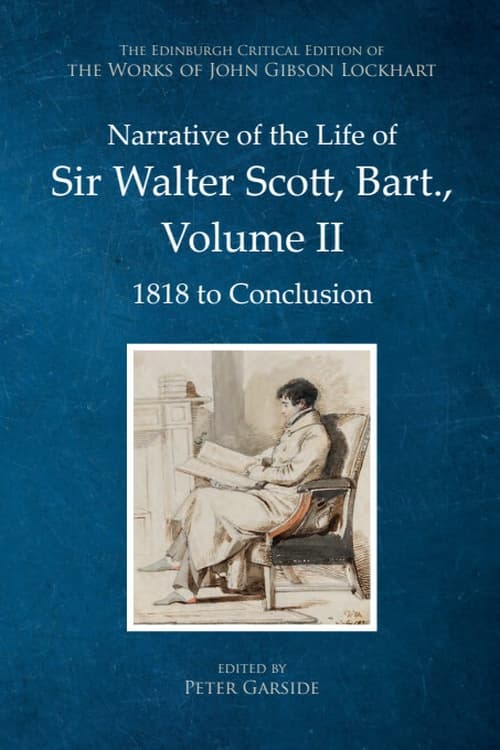
- Narrative of the Life of Sir Walter Scott, Bart., Volume II, Ebook (EPUB), £125.00
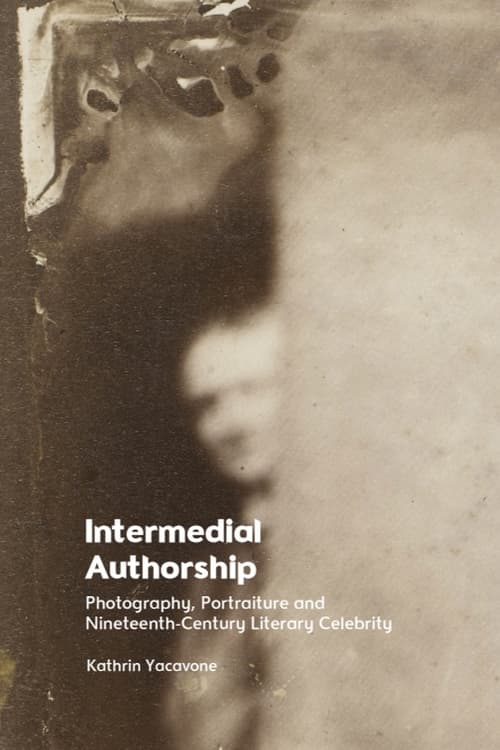
- Intermedial Authorship, Ebook (EPUB), £110.00
More in Literary Studies
View allEbook (EPUB)£110.00
Ebook (EPUB)£90.00
Ebook (EPUB)£90.00
Ebook (EPUB)£90.00