Ebook (EPUB)£85.00
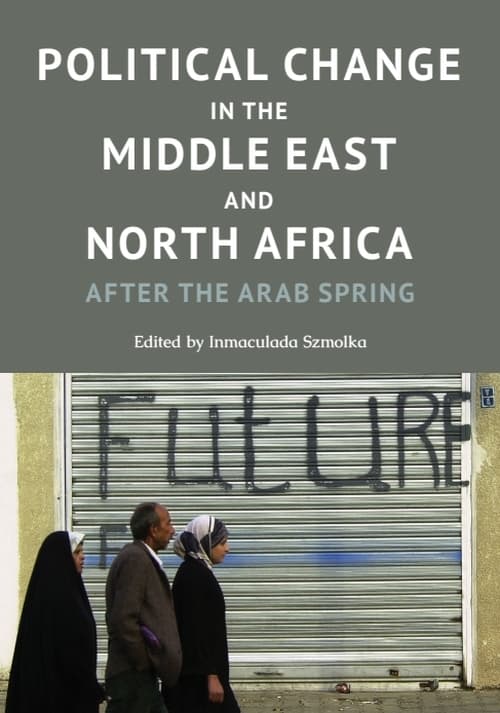
Political Change in the Middle East and North Africa
After the Arab Spring

Our ebooks are read in the Academic Reader app. After you buy, we’ll email you how to open your ebook in it.
Description
Analyses the democratic dimension of the recent political changes in MENA
Taking a comparative approach, this book considers the ways in which political regimes have changed since the Arab Spring. It addresses a series of questions about political change in the context of the revolutions, upheavals and protests that have taken place in North Africa and the Arab Middle East since December 2010, and looks at the various processes have been underway in the region: democratisation (Tunisia), failed democratic transitions (Egypt, Libya and Yemen), political liberalisation (Morocco) and increased authoritarianism (Bahrain, Kuwait, Syria). In other countries, in contrast to these changes, the authoritarian regimes remain intact (Saudi Arabia, Qatar, Arab United Emirates.
Key Features- Uses a comparative theoretical and methodological approach to analyse and explain the consequences of the political changes within political regimes at a country, regional and international level
- Develops an overview of the consequences of the Arab Spring for the political regimes in the region and for the wider world
- Takes a thematic approach, with chapters on parties and political groups, elections, constitutional frameworks, governance, civil society, rights and freedoms, regional powers, security issues, foreign policy, and media and media freedom
- Looks at EU and US foreign policy in the MENA region
- Countries covered: Algeria, Bahrain, Egypt, Iraq, Jordan, Kuwait, Libya, Morocco, Oman, Syria, Tunisia, Yemen
Contents
INTRODUCTION, Inmaculada Szmolka
SECTION IChapter 1. Analytical Framework for a Comparative Study of Change in Political Regimes, Inmaculada SzmolkaChapter 2. The Arab Spring Changes under the Prism of International Relations Theory, Rafael Bustos
SECTION IIChapter 3. Parties and Party Systems Change, Lise StormChapter 4. Elections and Electoral Integrity, Guadalupe Martínez-FuentesChapter 5. Constitutional reform processes, Ewa K. Strzelecka and Mª Angustias ParejoChapter 6. Government and Power Relations, Victoria VeguillaChapter 7. Good Governance in MENA Countries, Raquel Ojeda and Francesco CavatortaChapter 8. Civil Society and Social Movements, Carmelo Pérez-Beltrán and Ignacio Álvarez-OssorioChapter 9. Public Rights and Liberties, Luis MeliánChapter 10. Media and Media Freedom, Javier García-Marín
SECTION IIIChapter 11. Regional Order and Regional Powers in the Middle East and North Africa, Jordi Quero and Eduard Soler i LechaChapter 12. The Political and Security Repercussions of the Islamic State in the MENA Region, Marién Durán and Víctor BadosChapter 13. EU and EU Member States’ Responses to the Arab Spring, Irene Fernández-MolinaChapter 14. The foreign policy of the United States following the Arab Spring, Juan Tovar
SECTION IVChapter 15. Successful and Failed Transitions to Democracy, Inmaculada SzmolkaChapter 16. Political liberalisation processes, Inmaculada Szmolka and Irene Fernández-MolinaChapter 17. Autocratisation, Authoritarian Progressions and Fragmented States, Inmaculada Szmolka and Marién Durán
Author
Reviews
A broad look at the region since the Arab Spring, offering critical parallels and contrasts.
We finally have the first, rich comparison on the political changes that have been taking place in MENA countries, where domestic and international aspects are analysed in depth. Thus, the book is a compulsory reading for scholars, students and even more for all professionals who − with different responsibilities − are operating in the area.'
Goes well with this book
From the same series or subject.
- Political Change in the Middle East and North Africa, Ebook (EPUB), £31.00
- Biography of an Ottoman Provincial Town, Ebook (EPUB), £85.00
- Demographic Anxiety in Turkey, Ebook (EPUB), £90.00
More in IMES
View allEbook (EPUB)£90.00

Ebook (EPUB)£14.99
Ebook (EPUB)£100.00
Ebook (EPUB)£95.00