Ebook (EPUB)£90.00
Scottish StudiesHistories of the Scottish Atlantic
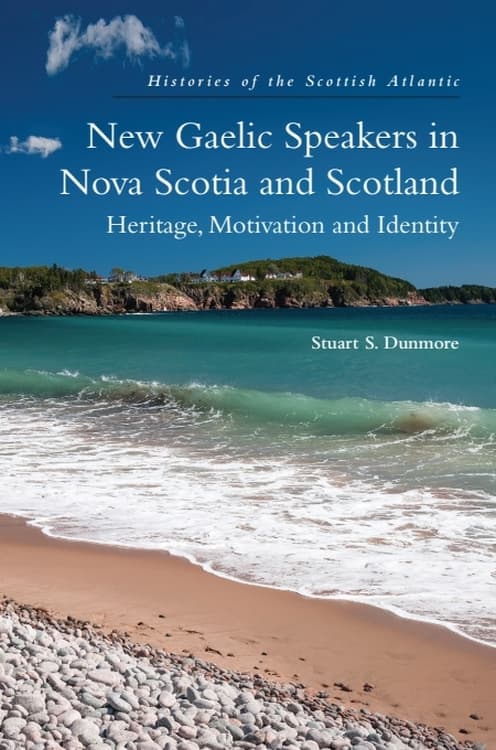
New Gaelic Speakers in Nova Scotia and Scotland
Heritage, Motivation and Identity
Open access
Open access under CC-BY-NC-ND 4.0
Description
Exploring the motivations, practices and ethnolinguistic identities of new Gaelic speakers
- Outlines the history of Gaelic language use in Scotland and Nova Scotia, juxtaposing its historical decline with contemporary revitalisation efforts in both territories
- Situates the discrete settings of Gaelic communities in Scotland and Nova Scotia with rich ethnographic portrayals
- Employs quantitative and qualitative analyses to examine Scottish and Nova Scotian ‘new’ Gaelic speakers’ language practices and the motivational factors underlying these practices
What are the main similarities between new cohorts of Gaelic speakers in Nova Scotia and Scotland, and what key differences distinguish them? In Scotland, public policy to support and maintain the language has increased substantially in the past 40 years. In addition to Scotland’s 57,602 speakers, however, Gaelic has persisted in Nova Scotia since the 18th century and a third of Nova Scotians are descended from families who spoke the language historically.
As a response to policymakers’ language planning priorities in both polities and drawing on three years of ethnographic research in Scotland and Nova Scotia, this book presents a comparative analysis of new speaker motivations, identities and linguistic ideologies. An innovative approach to examining bilingual discourses is employed to demonstrate key distinctions and commonalities among new Gaelic speakers, with a view to informing future policy to generate greater numbers of proficient speakers on both sides of the Atlantic.
Contents
List of Figures
List of Tables
Acknowledgements
1. Gaelic and Gaels in Scotland and Nova Scotia: A Historical and Contemporary Account
2. Language, Ethnicity and Identities: A Conceptual Frame
3. Gaelic Language Ideologies in Scotland and Nova Scotia: An Ethnographic Introduction to the Research Sites
4. New Gaelic Speakers’ Language Acquisition and Use
5. Contrasting Gaelic Identities: Heritage, Language Ideologies and Motivation
6. Quantitative Perspectives on New Gaelic Speakerhood in Scotland and Nova Scotia
7. New Worlds: Transatlantic Gaeldom and Twenty-first-century Linguistic Practice
Bibliography
Index
Author
Reviews
This book shines critical light on the understudied but statistically dominant category of new learners in Nova Scotia. Stuart Dunmore is making exciting inroads in the emergent field of North American Gaelic studies. He is a master of his topic, and his book is required reading for anyone seeking to understand the place of the language and the motivations of its speakers in Atlantic Canada today.
Goes well with this book
From the same series or subject.
From the same series
More in Histories of the Scottish Atlantic
Ebook (EPUB)£19.99
Ebook (EPUB)£22.99
More in Scottish Studies
View all
Ebook (EPUB)£95.00
Ebook (EPUB)£95.00
Ebook (EPUB)£95.00
Ebook (EPUB)£95.00