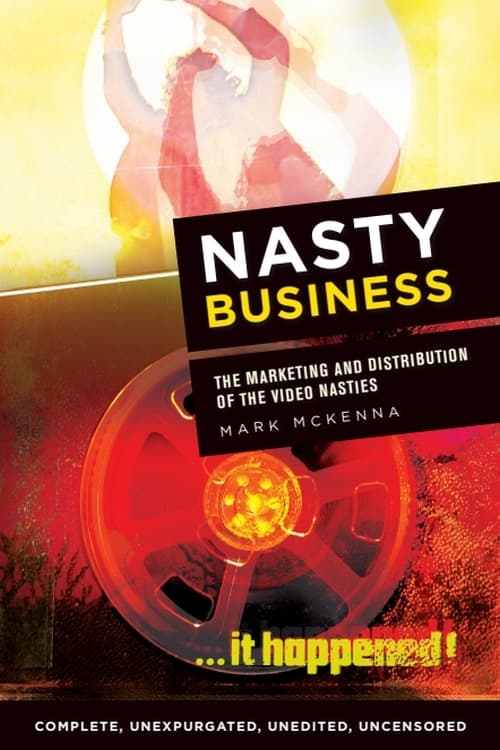
Nasty Business
The Marketing and Distribution of the Video Nasties

Our ebooks are read in the Academic Reader app. After you buy, we’ll email you how to open your ebook in it.
Description
- Offers a revisionist history that examines factors that contributed to the common understanding of the "video nasties moment" outside of the established and well documented social history
- Draws upon global technological histories to better understand how they relate and impact on the British marketplace in the early 1980s, considering how these forces and factors contributed to the economics of the early British video industry
- Historicises and examines the marketing materials/promotional strategies that are believed to have triggered the video nasties’ moral panic
- Examines the ways in which distributors have capitalised on the video nasties and how that has altered the aesthetic of exploitation / horror film promotion in the United Kingdom and beyond
In 1984, a disparate group of horror films imported from the USA and Europe were banned in the United Kingdom. It is popularly believed that these so-called ‘video nasties’ were the product of Britain’s immoral and disreputable independent video industry and that – following a series of public complaints about the advertising being used to promote these films – a moral panic spontaneously erupted that resulted in the introduction of the Video Recordings Act in 1984.
While neither of these statements is entirely accurate, both have contributed to a discursively constructed history that holds the independent video distributors entirely responsible for the events that followed, with the ushering-in of a scheme of government- sanctioned censorship that continues in Britain to this day.
Through an exploration of the marketing and distribution of the video nasties, foregrounding technological, economic and aesthetic concerns, Nasty Business complicates the established history and contextualises the video nasties within the broader global landscape of an emergent home video industry. It moves beyond the explicitly social readings that have positioned the video nasties as a quintessentially British concern, instead reconsidering them as part of a broader global film industry with promotions demonstrative of wider industrial practice. And it tracks the development of the category and reveals other possible motives and benefits in the introduction of the Video Recordings Act.
Contents
Introduction: It Was The Best Of Times. It Was The Worst Of Times…
1. A Very Nasty Business: Complicating the History of the Video Nasties
2. Tracking Home Video: Independence, Economics, and Industry
3. Historicising the New Threat
4. Trailers, Taglines and Tactics: Selling Horror Films On Video and DVD
5. Branding and Authenticity
6. Previously Banned: Building a Commercial Category
7. The Art of Exploitation.
Conclusion: The Golden Age of Exploitation?
Appendices
Bibliography
Author
Reviews
Through the employment of a range of new perspectives, Nasty Business makes a major contribution to scholarship on the video nasties and the Video Recordings Act, as well as to industrial studies of the (British and global) video industry and its history.
Goes well with this book
From the same series or subject.
- Nasty Business, Ebook (EPUB), £22.99
- Adapting American Adulthood, Ebook (EPUB), £90.00
- Isabelle Adjani, Ebook (PDF), £19.99

More in Film Studies
View all
Ebook (EPUB)£90.00
Ebook (PDF)£19.99
Ebook (EPUB)£95.00
£24.99