Ebook (EPUB)£85.00
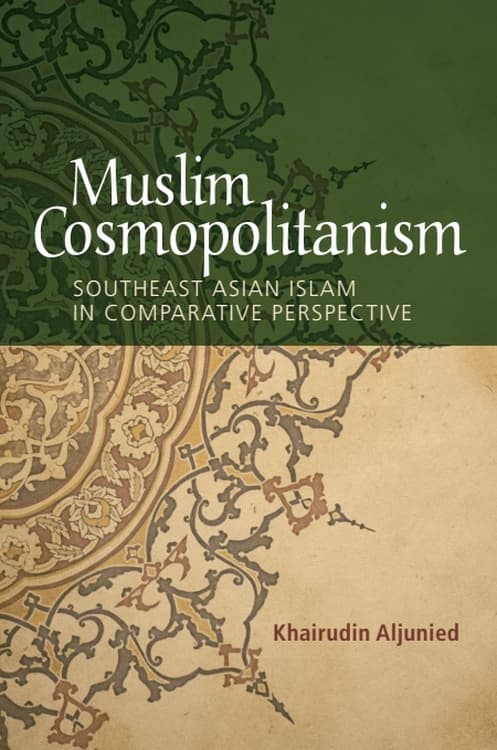
Muslim Cosmopolitanism
Southeast Asian Islam in Comparative Perspective

Our ebooks are read in the Academic Reader app. After you buy, we’ll email you how to open your ebook in it.
Description
Explores the various manifestations of Muslim cosmopolitanism in Southeast Asia
Cosmopolitan ideals and pluralist tendencies have been employed creatively and adapted carefully by Muslim individuals, societies and institutions in modern Southeast Asia to produce the necessary contexts for mutual tolerance and shared respect between and within different groups in society. Organised around six key themes that interweave the connected histories of three countries in Southeast Asia – Singapore, Malaysia and Indonesia – this book shows the ways in which historical actors have promoted better understanding between Muslims and non-Muslims in the region. Case studies from across these countries of the Malay world take in the rise of the network society in the region in the 1970s up until the early 21st century, providing a panoramic view of Muslim cosmopolitan practices, outlook and visions in the region.
Key Features- Organised around 3 key sections: places (covering trade, blogging, sacred spaces); people (covering intellectuals, women); and politics (covering states)
- Unique in focusing on Muslim cosmopolitanisms in Southeast Asia
- Shows how local, regional and global factors interact to give rise to cosmopolitan forms of thinking
- Provides a counterpoint to a perception of Islam as a divisive force in society
Contents
Acknowledgements
Abbreviations
List of Illustrations and Photographs
Preface Seeing like a Muslim Cosmopolitan
Part I: Places
Chapter One: Everyday Cosmopolitanism in the Marketplace
Chapter Two: The Cosmopolitan Mosque
Chapter Three: Blogging Muslim Cosmopolitanism
Part II: Personas
Chapter Four: Cosmopolitan Muslim Public Intellectuals
Chapter Five: Hijabis as Purveyors of Muslim Cosmopolitanism
Part II: Politics
Chapter Six: Constricting Cosmopolitanism: Secular States in Muslim Southeast Asia
Conclusion
Bibliography
Author
Reviews
Much of the world news focuses on the chaos of Arab Muslim states and the threats that Arab Muslim refugees bring to Western nations. Despite the region's ethnic identity issues, Aljunied (National Univ. of Singapore) asserts that Muslims living in the three Southeast Asia states (Singapore, Malaysia and Indonesia) have continued to live in relative harmony without the troubled dynamics present in parts of the Middle East. Aljunied asserts a cosmopolitan Southeast Asia where homes and houses of worship exist peacefully side by side. To make his argument, Aljunied takes readers on a narrative adventure: first through the marketplace and its multi-ethnic interactions; then to the mosque and its collaboration of forms; next to it, the oldest Hindu temple and the space exchanges between these two. He moves on to consider the place of women’s scarves in public life and offers brief autobiographies of leading public intellectuals. Considerations of diversity are even present in women’s headscarves. The one space where there is tension with cosmopolitanism is within the governments themselves. A good read.
'Muslim Cosmopolitanism: Southeast Asian Islam in Comparative Perspective, provides a multi-disciplinary perspective of everyday cosmopolitanisms in the market- place, the mosque, online spaces and in hijabi fashion…Scholars of cosmopolitanism would do well to identify (and research) alternatives to the neo-liberal global order and strident nationalisms that we witness in the world today, connect to the deep traditions and values of specific sites and communities that invoke cosmopolitan localism and identify the social practices that can sustain such visions. Aljunied’s book offers a model of scholarly practice in these directions.'
'Muslim Cosmopolitanism: Southeast Asian Islam in Comparative Perspective, provides a multi-disciplinary perspective of everyday cosmopolitanisms in the market- place, the mosque, online spaces and in hijabi fashion…Scholars of cosmopolitanism would do well to identify (and research) alternatives to the neo-liberal global order and strident nationalisms that we witness in the world today, connect to the deep traditions and values of specific sites and communities that invoke cosmopolitan localism and identify the social practices that can sustain such visions. Aljunied’s book offers a model of scholarly practice in these directions.'
Muslim Cosmopolitanism looks at Islam's existence in a new and unique manner. Rather than an ethnographic, historical or political study, as studies of the region tend to be, Khairudin Aljunied examines the states of Indonesia, Malaysia and Singapore from the perspective of a theoretical construct generally known as "Muslim Cosmopolitanism". In this construct, "cosmopolitan" Muslims seek to open themselves to the entire world, eschew narrow interpretations of race, religion and culture, and seek new knowledge and insights. The aim is to find peace and harmony within the Muslim community and avenues of understanding with non-Muslims.'
This book is a new “must read” not only for academic specialists and students in this field, but also for more general readers (including policy who want to understand what is really going on with Islam in Southeast Asia, without falling into the pitfall of orientalist or alarmist bias.
The interrelation of Islam, local culture and global forces has created a unique hybrid in Southeast Asia. This new book brings this complicated and compelling question into the present day, revealing a new Islamic cosmopolitanism in the 21st century.'
Muslim Cosmopolitanism is as timely as it is a pleasure to read. Timely because of widely held but mistaken perceptions in much of the non-Muslim world which associate Islam with violence and intolerance. Timely too, because of the current fixation in much academic and public discourse with the trials and tribulations that have beset Islam in the Middle East and West Asia. By refocusing our attention on Southeast Asia the book sheds useful light not just on this region but on the very core of Islamic belief, ethos and culture. Muslim Cosmopolitanism will delight any reader with an interest in religion, politics and culture and their fascinating interaction in the local sites where people live, pray, converse, trade and reflect. The book does not ignore the less than helpful, at times noxious role of the contemporary state in Indonesia, Malaysia and Singapore. But, while conscious of the stunting effects of authoritarianism and the politics of fear and polarisation, Dr Khairudin offers us an inspiring vision of what Islam can contribute to a cosmopolitan future in the making.'
This book offers new insights into the study of the historical fusion of religion and ethnicity in the evolution of Muslim cosmopolitanism in Southeast Asia. Through this critical study its author, who views his own personal life and experiences in the region as a fairly good reflection of the state of this particular cosmopolitanism since the 1970s, has succeeded in portraying it as at once unique and similar to cultural expressions of cosmopolitanism in other parts of the Muslim world. Khairudin Aljunied’s current work is a welcome contribution to the study of Muslim cosmopolitanism in Southeast Asia.'
Exhaustively researched and beautifully written, this is a path-breaking work that conceptualizes Muslim cosmopolitanism from the everyday social relations that mark Muslim societies in Southeast Asia. One of the most engaging books on modern Southeast Asia in a long time.
Goes well with this book
From the same series or subject.
- Muslim Cosmopolitanism, Ebook (EPUB), £31.00
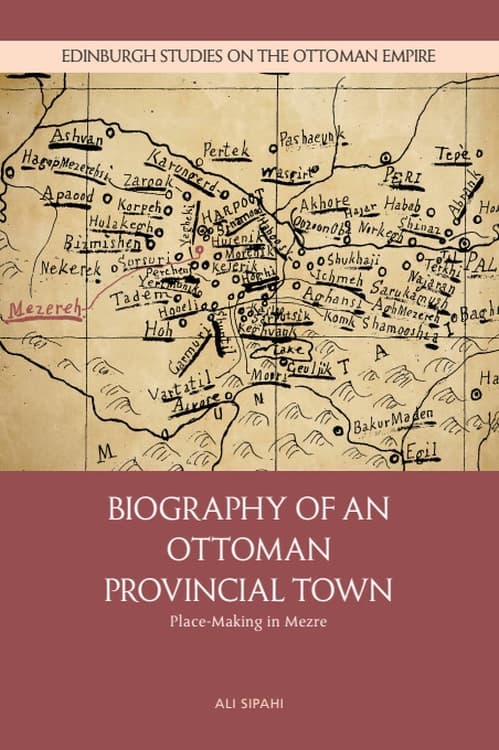
- Biography of an Ottoman Provincial Town, Ebook (EPUB), £85.00
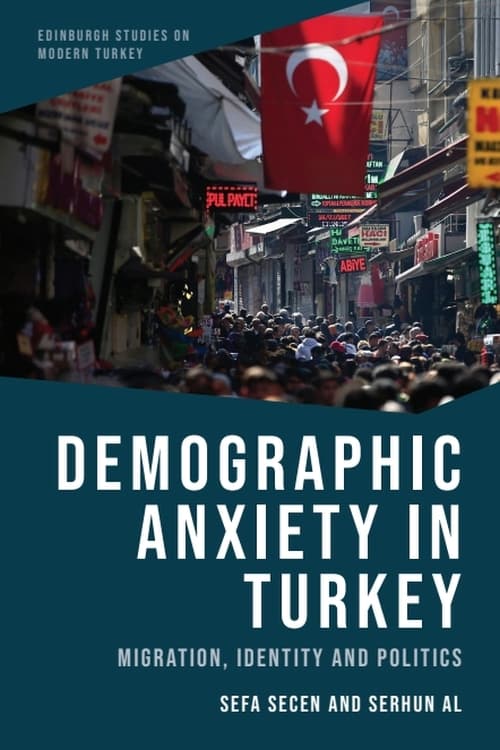
- Demographic Anxiety in Turkey, Ebook (EPUB), £90.00
More in IMES
View allEbook (EPUB)£90.00

Ebook (EPUB)£14.99
Ebook (EPUB)£100.00

Ebook (EPUB)£95.00