Ebook (EPUB)£85.00
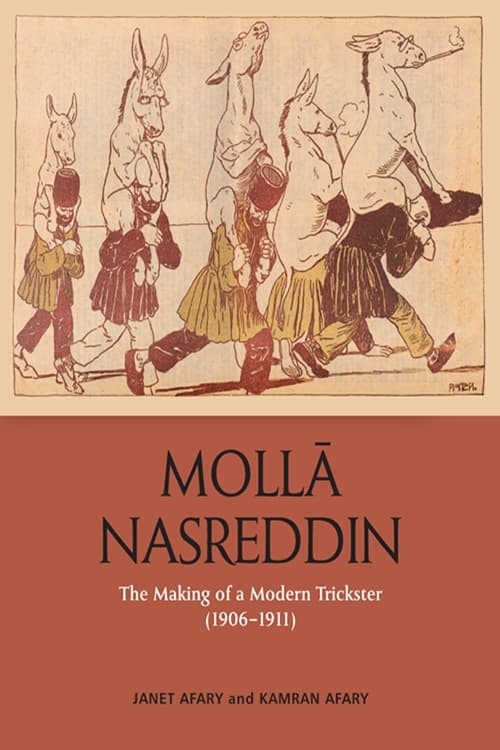
Molla Nasreddin
The Making of a Modern Trickster, 1906-1911

Our ebooks are read in the Academic Reader app. After you buy, we’ll email you how to open your ebook in it.
Description
Winner of the 2023 AHA Eugenia M. Palmegiano Prize in the History of Journalism Winner of the 2023 British-Kuwait Friendship Society Book PrizeExplores the iconic illustrated periodical Mollā Nasreddin, whose editors, writers and illustrators were Azerbaijani Muslims and Georgians of South Caucasus
- Provides a new reading of the text and illustrations of one of the most well-known journals in the Muslim region in the early 20th century
- Draws upon primary and secondary materials in Azerbaijani, Persian, Russian and Georgian languages, as well as English and French sources, collected on trips to Baku, Tbilisi, Moscow and Tehran, and translated with the help of a team of researchers from the region
- Gives insight to the first sophisticated graphic periodical to present a social democratic and anti-colonial discourse that reflected the points of view of the Muslim world, especially the impoverished classes
- Shows the significance of cultural exchanges among several transnational diasporic communities before the rise of modern nation states in the Middle East and Transcaucasia
- Carefully curates a selection of 250 images from Mollā Nasreddin reproduced in colour throughout the book
In the early twentieth century, a group of Azerbaijani and Georgian artists and intellectuals reinterpreted the Middle Eastern trickster figure Nasreddin in their periodical Mollā Nasreddin. They used folklore, visual art and satire to disseminate a consciously radical and social democratic discourse on religion, gender, sexuality and power in South Caucasus and Iran. The periodical reached tens of thousands of people in the Muslim world, impacting the thinking of a generation.
This highly-illustrated book explores the milieu in which Mollā Nasreddin was born, the way the periodical recreated the trickster trope, and the influence of European graphic artists, especially Francisco Goya, on the journal. It focuses on the most creative period, 1906-11, when the journal reflected the social and political concerns of three major upheavals: the 1905 Russian Revolution, the 1906–1911 Iranian Constitutional Revolution, and the 1908 Young Turk Movement.
Contents
Introduction
Part I. The World of the Journal
Chapter 1. South Caucasus at the Turn of the Twentieth Century
Chapter 2. The Editorial Board
Chapter 3. Tiflis and Its Hybrid Artistic Community
Part II. Reimagining the Folk Trickster and Rethinking Gender Norms
Chapter 4. The Wise Fool and the Trickster Nasreddin
Chapter 5. Recreating the Trickster Tales and Tropes
Chapter 6. A Champion of Women’s Rights
Part III. Dialogue with European Graphic Arts
Chapter 7. The Influence of Goya and Daumier
Chapter 8. A Conversation with Punch, Simplicissimus, and the World of Art
Epilogue
Authors
Reviews
This is an important book [...] and the authors have clearly taken considerable pains to treat carefully, even delicately, and indeed to anticipate, areas of possible controversy.
This is a beautifully produced book. The text is erudite but readable, and the authors have clearly taken considerable pains to treat carefully, even delicately, and indeed to anticipate, areas of possible controversy [...].
The authors’ masterful analysis touches on such pivotal issues as modernist critique of clerical Islam, women’s subordination, calls for modern education and shifting diasporic identities. With many illustrations and nuanced narrative, this book is for any reader interested in the role of the press in shaping national and trans-national identities.
Lucidly written and generously illustrated, Afary and Afary’s book offers a richly textured and compelling account of the periodical Mollā Nasreddin (publ. 1906-1931). The study presents a holistic analysis of the periodical’s contexts of production, development, its literary and visual forms, social criticism and anti-colonial discourse, and traces complex connections across media, regions, and languages from the Southern Caucasus and Iran to the Ottoman Empire and Europe.
The road to development runs through knowledge, critical thinking and civic activism. The periodical Molla Nasreddin illuminated this road, not only for Azerbaijanis but for the entire Muslim world. Readers of this book can follow the thorny life courses of its editors and writers during the rise of nation states in the Muslim World.
This work is a rich and pioneering exploration of cultural transmission and cosmopolitanism during the early twentieth century in the Caucasus and neighboring regions. It focuses on the legendary satirical illustrated journal Molla Nasreddin, which was published in Tiflis Georgia and read across the Muslim world. The journal was an early champion of social and religious reform, women’s rights and democratic ideals. Compellingly written and lavishly illustrated, this publication lays the groundwork for all future studies of the subject and is indispensable reading for the Middle Eastern scholar and general reader alike.
Goes well with this book
From the same series or subject.
- Molla Nasreddin, Ebook (EPUB), £105.00
- Biography of an Ottoman Provincial Town, Ebook (EPUB), £85.00
- Demographic Anxiety in Turkey, Ebook (EPUB), £90.00
More in IMES
View allEbook (EPUB)£90.00
Ebook (EPUB)£14.99
Ebook (EPUB)£100.00

Ebook (EPUB)£95.00