Ebook (EPUB)£24.99
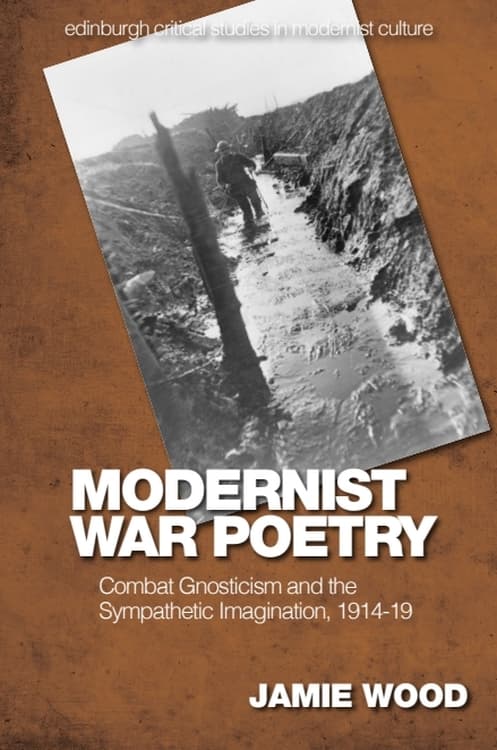
Literary StudiesEdinburgh Critical Studies in Modernist Culture
Modernist War Poetry
Combat Gnosticism and the Sympathetic Imagination, 1914–19

Our ebooks are read in the Academic Reader app. After you buy, we’ll email you how to open your ebook in it.
Description
Re-reading intra-war modernist poetics through war poetry
- Uniquely foregrounds the concept of ‘combat gnosticism’ bringing this influential thesis in war writing to bear on modernist studies
- Brings together combatant war poetry and the ignored war poems of ‘home front’ poets into a single genealogical account that also contains a theory of the modernist long poem
- Considers the work of a range of canonical modernists within a much broader artistic milieu than is the norm
- Recovers several neglected poems that serve to recalibrate the existing genealogy of intra-war aesthetics
- Demonstrates the centrality of the problem of imagining otherness within modernist poetics
This study examines the work of the principle architects of Anglo-American modernist poetics – T.S. Eliot, H.D., Ezra Pound, Gertrude Stein, Edward Thomas and Wallace Stevens – and their response to the challenge of combatant war poetries. It argues that these civilian poets sought to negotiate directly with the combatant’s gnosticism, specifically with the combatant’s assertion that only those present at a catastrophe could properly represent its horrors. The modernists rightly identified that gnosticism was a threat to their own representational claims on an increasingly traumatic modernity. How was the imagination to be salvaged in order that it could still feel into the wounded experience of others? In response to this challenge, the modernists drafted their own imagined war poems, developing in the process several different and contradictory poetic systems. Whereas scholarship ordinarily tells the story of intra-war modern poetry as a series of different schools – the trench lyric, the home front elegy and the modernist long poem – each moving in a different direction, this study brings those traditions back together into one history by treating them as idiosyncratic responses to the same aesthetic problem.
Contents
Timelines
AcknowledgmentsIntroduction
The problem with combat gnosticismModernisms and the warCombat gnosticism as threat Argument, structure, scope1.
Early Modernist Responses to Combatant Poetry: 1914–Spring 1915Modernist poetics on the eve of warRidicule and the new patriotic verseTheorising afterwardnessThe first modernist war poetries: D.H. Lawrence, Ford Madox Ford, Wallace Stevens, W.B. YeatsEzra Pound’s Cathay: the poem in nature2.
Reassessing Disaster: 1915Rupert Brooke, modernist piñataMay Sinclair’s combatant impressionImagining trenches at St. Eloi: T.E. Hulme/Ezra PoundGnosis and a model of shockDissenting modernisms: Mina Loy, H.D.3.
The Three Lives of Gnosticism: 1916–Summer 1917One, combat gnosticism: Henri Barbusse, C.R.W. Nevinson, Isaac RosenbergThe gnosticism of Gertrude SteinThe ends of the ImageTwo, combat agnosticism: H.D. and Edward ThomasModernist doubtsThree, non-combat gnosticism: Wallace Stevens and citation4.
An Emergent Critique of War Experience: Autumn 1917–Spring 1919Transmutations into poetryT.S. Eliot’s war, F.H. Bradley’s legacyTom, Maurice and the corridor into The Waste LandJohn Middleton Murry’s critique of crying aloudRedefining age and wisdom, countering The New Elizabethans5.
The Form and Practice of Modernist Distaste: Summer–Autumn 1919America and the war in PoetryA counter verse of the present moment‘All Life in a Life’ and T.S. Eliot’s racial slurA theory of non-combat gnosticism: ‘Tradition and the Individual Talent’Impersonality in practice: ‘Gerontion’Conclusion
BibliographyIndexAuthor
Reviews
This book is literary scholarship at its very best. The research is immaculate, the thinking profound and the style masterly. It magnificently illustrates developing poetic thought in relation to the First World War, experience and the imagination, guiding the reader authoritatively through the months of 1914 to 1920 to produce a brilliant micro-literary history.
Goes well with this book
From the same series or subject.
- Modernist War Poetry, Ebook (EPUB), £25.99
- Micromodernism, Ebook (EPUB), £24.99
- Reading Modernism's Readers, Ebook (EPUB), £19.99
From the same series
More in Edinburgh Critical Studies in Modernist Culture
Ebook (EPUB)£19.99
Free to read
Read Modernism and Religion
Ebook (EPUB)£24.99
Ebook (EPUB)£19.99
Free to read
Read Asbestos – The Last Modernist Object
Ebook (EPUB)£25.99
Ebook (EPUB)£22.99
Ebook (EPUB)£22.99
Ebook (EPUB)£22.99
Ebook (EPUB)£27.99
More in Literary Studies
View all
Ebook (EPUB)£125.00
Ebook (EPUB)£110.00
Ebook (EPUB)£90.00
Ebook (EPUB)£90.00
Ebook (EPUB)£90.00