Ebook (EPUB)£85.00
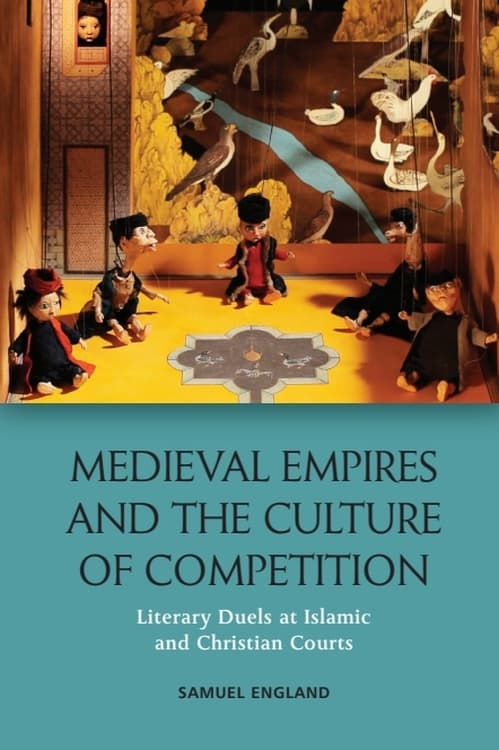
Medieval Empires and the Culture of Competition
Literary Duels at Islamic and Christian Courts
Open access
Open access under CC-BY-NC 4.0
Description
Shows how the interactive, confrontational practice of courtly arts shaped imperial thought in the Middle Ages
A probing inquiry into medieval court struggles, this book shows the relationship between intellectual conflict and the geopolitics of empire. It examines the Persian Buyids’ takeover of the great Arab caliphate in Iraq, the counter-Crusade under Saladin, and the literature of sovereignty in Spain and Italy at the cusp of the Renaissance. The question of high culture—who best qualified as a poet, the function of race and religion in forming a courtier, what languages to use in which official ceremonies—drove much of medieval writing, and even policy itself. From the last moments of the Abbasid Empire, to the military campaign for Jerusalem, to the rise of Crusades literature in spoken Romance languages, authors and patrons took a competitive stance as a way to assert their place in a shifting imperial landscape.
Key Features- Covers Classical Arabic poetry and official prose, Spanish court documents, Galician Portuguese lyric and Italian narrative works from 950-1350 CE
- Provides new critical context for historians’ work to reconcile the political violence of the late Middle Ages with the cosmopolitanism of that era’s Islamic and Christian empires
- Argues that medieval thinkers’ most pressing cultural challenge was to make the court appear as robust as possible in the face of major demographic change and regional war
- Shows how the ritual of artistic contest allowed elites to come to terms with religious and ethnic groups’ rival claims to legitimacy, and to subsume those claims into an overarching courtly ideal
Contents
Note on Arabic Translations
Abbreviations
Introduction: Courtly Gifts, Imperial Rewards
- "Baghdad is to Cities what the Master is to Mankind": The Rise of Vizier Culture
- The Sovereign and the Foreign: Creating Saladin in Arabic Literature of the Counter-Crusade
- Alfonso X: Poetry of Miracles and Domination
- Saladino Rinato : Spanish and Italian Courtly Fictions of Crusade
Conclusion: The Ministry of Culture
Bibliography
Author
Reviews
There is much to praise here...The basic idea that medieval courts negotiated their own identity through their literature(and through literary debates) – or, at the very least, that it is possible to unpick the way in which a medieval court negotiated its identity through an analysis of its literature – is entirely plausible and persuasive...This is a book that achieves the important objective of challenging its readers both to consider new questions and to ponder the surviving sources from new perspectives.
There is much to praise here...The basic idea that medieval courts negotiated their own identity through their literature(and through literary debates) – or, at the very least, that it is possible to unpick the way in which a medieval court negotiated its identity through an analysis of its literature – is entirely plausible and persuasive...this is a book that achieves the important objective of challenging its readers both to consider new questions and to ponder the surviving sources from new perspectives.
Defines the relationship between poetry and politics by asking new questions, focusing on the semantic field of contest, and examining the explicit regulations, the 'rules of the art', and the way they intertwine with the political and legal projects that govern the circulation of power, from the chancery to the Empire. This comparative study will help us think anew the bigger competitions in the Mediterranean basin during the Middle Ages.
This is an impressive book in terms of its scope, innovative close readings, and broad conceptualization.
Goes well with this book
From the same series or subject.
More in IMES
View allEbook (EPUB)£90.00
Ebook (EPUB)£14.99
Ebook (EPUB)£100.00
Ebook (EPUB)£95.00