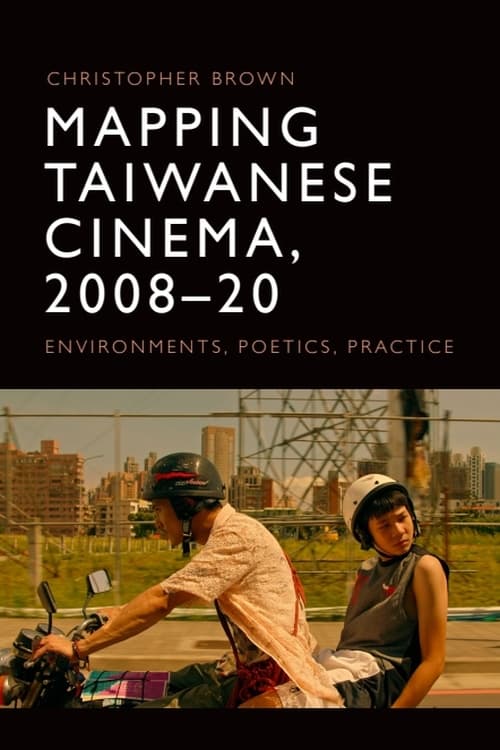
Mapping Taiwanese Cinema, 2008-20
Environments, Poetics, Practice

Our ebooks are read in the Academic Reader app. After you buy, we’ll email you how to open your ebook in it.
Description
- Offers a wide-ranging account of an under-researched period in Taiwanese film history, the years 2008 to 2020
- Foregrounds the importance of mapping in recent Taiwanese cinema, bringing together perspectives from cartography, film poetics, cultural history, design, gender and queer studies, East Asian studies, and production studies
- Analyses thematic, aesthetic, and historical trends, and films of diverse genres and styles, in contrast to the more typical focus on auteur directors and art cinema
- Draws on existing and original interviews with filmmakers, providing first-hand perspectives on the topics discussed
What is the relationship between filmmaking and mapping?
Accounting for the unique characteristics of Taiwan’s cinema from 2008 to 2020, this book examines how filmmakers have depicted and imagined the island’s diverse environments.
Drawing on cinema, cartography, and cultural studies, Christopher Brown argues that by refocusing attention on how films are shaped through a process of construction, the tradition of film poetics enables us to think about Taiwanese cinema differently: as a form of mapping. Wide-ranging in scope and drawing on original interviews with contemporary filmmakers, the analysis appraises case studies including works of popular entertainment, genre cinema such as comedies and horror, films about indigenous communities, LGBTQ+ cinema, and arthouse work. By asking what it means to map an environment onscreen, the book offers new insights into a critically neglected, yet creatively dynamic, period in Taiwan’s film history.
Contents
Acknowledgments
Note on Romanisation
1. Mapping Taiwanese Cinema
2. You are Here
3. Back to the Woods
4. Indigenous Land and Sea
5. Love in a Designer City
6. House Style
7. Quiet Places
Conclusion
Bibliography
Filmography
Author
Reviews
Mapping Taiwanese Cinema is an exciting breakthrough – the first book on Taiwanese cinema since 2008, with an original approach to cinema as not just including maps but itself a mapping technology, and combining analysis of poetics with the practices of filmmaking. A must-read.
Christopher Brown analyzes Taiwanese cinema, 2008-2020, by way of well-curated mise en scène, soundtrack, and cartographic imaginary. Maps are defined as "instruments of power" and are meticulously traced through multiple scenes like Wordsworthian "spots of time," or Brown’s spots in space.
Focuses on the concept and practice of mapping to investigate a substantial number of Taiwanese cinematic products. Post-2008 Taiwanese cinema has often been examined and studied with its commercial orientation and genre diversification in mind, in witness to the proliferation of film productions featuring a myriad of themes, styles, and narratives. In this book, Brown looks deeper into a broad range of filmmaking practices, employing mapping as his approach and trying to identify the aesthetic results of these oft-cited commercial successes.
The author excels in combining detailed film analyses with broader sociocultural contexts, providing a multifaceted understanding of recent transformations in Taiwanese cinema. One major achievement is its in-depth case studies that highlight the diversity of Taiwanese cinema, covering various genres, themes, and stylistic approaches. The book also examines the resurgence of rural settings and the representation of indigenous cultures and critically addresses regionalism and land rights. Overall, Mapping Taiwanese Cinema, 2008–20: Environments, Poetics, Practice is a meticulously researched work that significantly contributes to film studies.
Goes well with this book
From the same series or subject.
- Mapping Taiwanese Cinema, 2008-20, Ebook (EPUB), £19.99
- Adapting American Adulthood, Ebook (EPUB), £90.00
- Isabelle Adjani, Ebook (PDF), £19.99
More in Film Studies
View all
Ebook (EPUB)£90.00
Ebook (PDF)£19.99
Ebook (EPUB)£95.00
£24.99